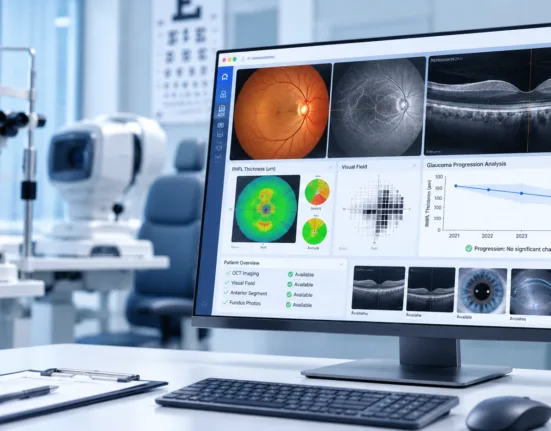
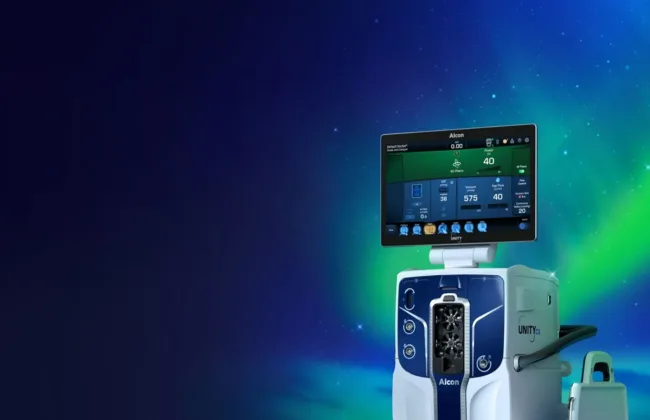
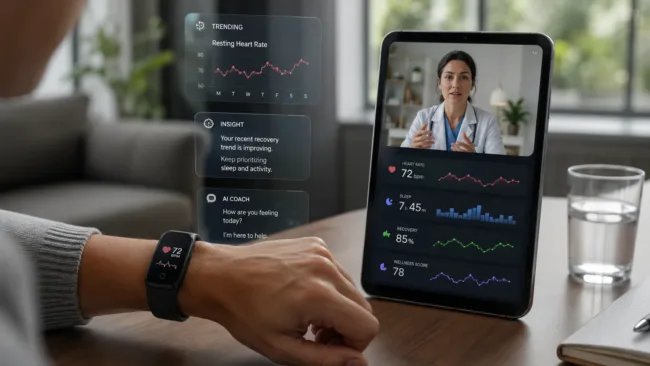
ZEISS Medical Technology said ahead of the 2026 American Society of Cataract and Refractive Surgery annual meeting that it is introducing a slate of ophthalmology workflow updates spanning cataract surgery tools, intraocular lens planning software, cloud-based care coordination platforms, and a human-reviewed artificial intelligence patient engagement system. The announcement places Carl Zeiss Meditec AG’s latest products and pending offerings squarely in the context of cataract, refractive, and retinal practice workflow modernization, with some features already commercialized in the United States and others still awaiting regulatory clearance.
What makes this announcement more strategically important than a standard conference product showcase is that it reflects how competition in ophthalmology is shifting away from stand-alone hardware and toward workflow capture. Cataract and refractive surgery have long been technology-rich specialties, but the next phase of competition increasingly appears to center on how well device manufacturers can tie diagnostics, planning, intraoperative tools, patient communication, referral management, and post-procedure coordination into a more unified operating model. In that sense, ZEISS is not merely adding instruments or formulas. It is trying to strengthen its role as a workflow orchestrator inside a fragmented care pathway.
That distinction matters because cataract surgery remains one of the highest-volume procedures in medicine, yet the surrounding practice infrastructure often remains administratively burdensome. Clinics must move patients from diagnostic imaging to lens selection, surgical planning, financial counseling, scheduling, referral coordination, and follow-up. Each handoff creates the possibility of friction, delay, data loss, or patient attrition. Industry observers increasingly note that the commercial value in ophthalmology is no longer just in better optics or more precise instrumentation, but in reducing those drop-off points while preserving clinician control and regulatory discipline.
How ZEISS is trying to turn cataract workflow software into a competitive moat
The most commercially significant element of the announcement may be the attempt to strengthen ZEISS’s cataract planning and workflow ecosystem rather than any single surgical accessory. The updated ZEISS IOLMaster 700 and ZEISS VERACITY Surgery Planner are designed to expand formula options, including support for toric intraocular lens calculations in more complex cases and management of post-laser vision correction cataract patients.
That is meaningful because modern cataract surgery is increasingly tied to refractive expectations. Patients no longer view lens replacement as a purely restorative procedure. Many expect sharper visual outcomes, reduced dependence on glasses, and a more customized planning pathway. Post-laser vision correction eyes are particularly challenging because previous corneal reshaping can reduce the reliability of standard lens power calculations. Any software enhancement that helps surgeons navigate that complexity may have practical relevance, especially in premium cataract settings where patient expectations are high and refractive miss is commercially painful.
Still, formula expansion alone is not revolutionary. The more important issue is whether ZEISS can embed those planning tools deeply enough into surgeon and staff routines that switching costs rise over time. That is where platform logic starts to matter. If diagnostics, planning, referral coordination, and downstream analytics all sit inside one increasingly connected stack, then ZEISS becomes harder to displace even if rival companies offer competitive products in individual categories. For hospital systems, ambulatory surgery centers, and larger ophthalmology groups, this kind of integration can matter as much as incremental device performance.
Why the human-reviewed AI model may reveal where ophthalmic automation is actually heading
The launch of ZEISS VisioGen is arguably the most interesting signal in the release because it shows how medical technology companies are approaching artificial intelligence in patient-facing settings with caution rather than full autonomy. ZEISS described the platform as a human-verified AI-powered engagement system for ophthalmology practices that captures demand, answers questions, and supports conversion to scheduled evaluations, while requiring review by ZEISS-trained optometrists before responses are delivered.
That governed model is important. Across healthcare, many AI deployments remain strongest in administrative triage, workflow support, and structured communication rather than independent clinical recommendation. In ophthalmology practices, especially those handling elective refractive procedures and premium cataract conversions, patient communications can directly affect trust, conversion economics, and regulatory exposure. A fully autonomous chatbot may promise labor savings, but it also introduces reputational and compliance risks if language drifts into inappropriate guidance, misleading claims, or inaccurate clinical framing.
By choosing a human-in-the-loop model, ZEISS appears to be positioning VisioGen less as a labor replacement tool and more as a controlled scalability tool. That could make adoption more realistic for practices that want extended responsiveness without surrendering oversight. Clinicians tracking the field generally view this middle ground as more commercially plausible in the near term than fully unsupervised AI. It preserves the speed and availability advantages of automation while reducing the chance that a patient-facing interaction becomes a legal or brand-management problem.
The limitation, of course, is scalability economics. Human review adds cost and operational complexity. The model may work well in premium procedure funnels where each converted patient carries substantial lifetime value, but the economics could be less compelling for lower-margin segments. The real commercial question is whether the platform improves conversion, scheduling efficiency, and patient satisfaction enough to justify its service layer. That will be watched closely.
Why cloud-based collaboration may matter more for referrals than for flashy software demos
ZEISS also used the ASCRS platform to highlight ZEISS Collaborative Care and preview ZEISS CLINIC 360, the latter still pending 510(k) clearance and not available for sale or use in the United States. The company said Collaborative Care is a browser-based application that enables secure data sharing, referrals, and networked coordination across ophthalmology providers, while CLINIC 360 is intended to aggregate clinical data and support advanced analytics across workflows.
This reflects a real pain point in eye care delivery. Cataract and refractive patients often move across optometrists, surgeons, imaging centers, and postoperative follow-up settings. Referral leakage and documentation inconsistency are persistent operational problems. If a cloud-based platform can streamline those transitions without introducing extra data-entry burdens, then its value may extend beyond convenience into measurable patient retention and capacity optimization.
Yet this is also where healthcare software ambitions frequently meet real-world resistance. Interoperability remains difficult, even when vendors describe solutions as seamless. Practices vary widely in their electronic record environments, staffing maturity, appetite for platform migration, and cybersecurity standards. Browser-based tools can lower deployment friction, but they do not eliminate the deeper challenge of workflow change management. Industry observers often note that the biggest obstacle to digital care coordination is not software availability but the difficulty of changing entrenched routines across loosely connected provider networks.
The pending 510(k) status of ZEISS CLINIC 360 also introduces an important regulatory distinction. While software aggregation and analytics platforms can sound commercially exciting, U.S. adoption ultimately depends on what claims are permitted, how the product is classified, and whether the practical benefits remain clear once cleared labeling defines the scope of use. Regulatory watchers will likely pay close attention to whether CLINIC 360 evolves into a true analytics engine with operational intelligence value or remains a more limited data aggregation layer.
Why the DORC EVA NEXUS accessory expansion suggests execution, not disruption, is the real play
The addition of new irrigation and aspiration handpieces, tips, and sleeves for the DORC EVA NEXUS surgical system might appear modest next to the AI and cloud announcements, but it reveals something important about ZEISS’s execution strategy. The company is broadening compatibility, incision options, and sustainability choices through both single-use and reusable configurations.
In mature procedural markets, that kind of incremental refinement can still matter. Surgeons and operating room teams care deeply about ergonomics, preference alignment, waste reduction, and efficiency at the case level. Product ecosystems that accommodate different incision styles and sustainability preferences can strengthen loyalty, especially in facilities under both economic and environmental pressure. This is not the kind of change that transforms the field overnight, but it can make a platform more usable across varied clinical settings.
That said, the impact here is likely operational rather than transformative. The accessories improve fit and flexibility within an existing surgical system, but they do not fundamentally alter how cataract surgery is performed. The bigger story is that ZEISS is trying to close small gaps across the procedural chain while simultaneously building higher-level digital stickiness. In other words, it is pursuing breadth and continuity rather than a single disruptive leap.
What clinicians, regulators, and ophthalmology investors are likely to watch after ASCRS 2026
The next question is not whether ZEISS can present a broad portfolio at a major specialty meeting. It is whether these offerings gain enough adoption to change practice behavior. For clinicians, the most immediate area of interest will likely be whether the new formula integrations and planning tools materially improve confidence in complex lens calculations, particularly in post-laser vision correction patients and toric cases. For practice administrators, the more pressing question may be whether VisioGen and Collaborative Care actually reduce friction, improve conversion, and support smoother referrals without creating new workflow burdens.
For regulators and compliance teams, the AI engagement model and pending software pathway deserve close watching. Human-verified communication may prove more durable than autonomous models in regulated clinical settings, but it still requires robust governance, documentation discipline, and a clear boundary between education, scheduling support, and anything that could be construed as clinical advice. For ZEISS CLINIC 360, the regulatory pathway could shape how ambitious the company can be in positioning analytics as part of ophthalmic workflow modernization.
Commercially, Carl Zeiss Meditec AG seems to be signaling that ophthalmology’s next growth frontier lies in connected workflow control, not only premium hardware differentiation. That is a logical strategy in a specialty where procedure volumes remain attractive, patient expectations are rising, and practices increasingly want tools that support both clinical precision and operational throughput. The risk is that broad platform visions can become difficult to execute if integration complexity, reimbursement ambiguity, or customer fatigue slows adoption.
Still, the release suggests ZEISS understands where the market is moving. The company is not treating cataract, refractive, and referral workflows as separate silos. It is treating them as parts of a shared data and engagement environment. If that thesis proves correct, then ASCRS 2026 may be remembered less as a product showcase and more as another marker in ophthalmology’s shift from device competition to workflow platform competition.