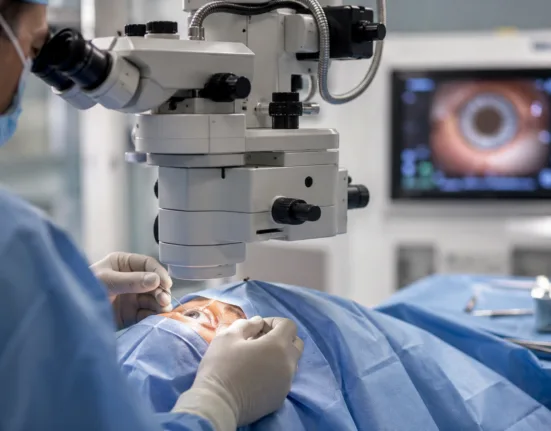
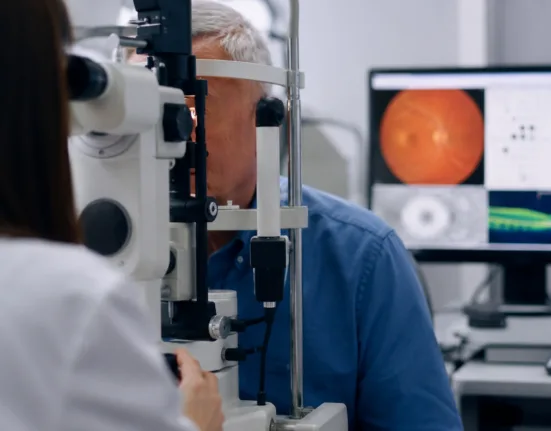
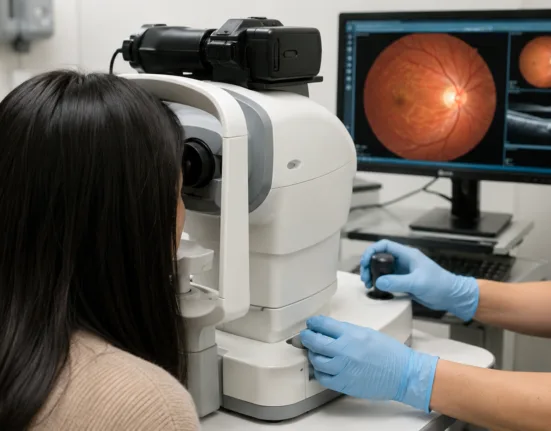
Glaukos Corporation said its glaucoma and corneal technologies will feature across multiple scientific sessions and posters at the 2026 American Society of Cataract and Refractive Surgery annual meeting, including presentations tied to trabecular micro-bypass stents, intracameral travoprost implants, keratoconus screening, and epithelium-on corneal cross-linking. The ophthalmic pharmaceutical and device developer is also using the meeting to spotlight Epioxa, which it described as the first and only United States Food and Drug Administration-approved epithelium-on, oxygen-enriched corneal cross-linking treatment, placing the company’s commercial and pipeline strategy in front of one of the specialty’s most influential audiences.
Why Glaukos appears to be shifting from product-by-product execution to platform reinforcement across ophthalmology
What makes this meeting update more important than a routine conference calendar item is that it reveals how Glaukos is trying to position itself less as a single-category innovator and more as a procedural ophthalmology platform company. The presentations span glaucoma intervention, sustained drug delivery, corneal disease treatment, and even screening technology. That breadth matters because ophthalmology has become increasingly competitive not only at the product level, but at the workflow level. Companies that can embed themselves across diagnosis, intervention, and follow-up care tend to build stronger physician loyalty and more resilient commercial franchises.
For Glaukos, that is especially relevant because its original identity was tightly linked to micro-invasive glaucoma surgery. That was once enough to define the company. It is no longer enough to sustain premium strategic positioning on its own. The ophthalmic market has matured, surgeons have more device choices, and payers remain sensitive to procedure value. In that setting, Glaukos needs to show that its installed base and clinical familiarity can be leveraged into adjacent categories. ASCRS provides a venue not just to share data, but to remind surgeons that the company now wants a larger share of the anterior segment decision chain.
The meeting lineup suggests exactly that ambition. Rather than pushing one headline asset, the company is presenting a mosaic of smaller readouts that collectively reinforce its ecosystem. That may be commercially smarter than chasing one dramatic conference moment. In ophthalmology, durable adoption often comes from repeated exposure, incremental comfort, and growing confidence in how technologies fit into existing surgical habits.
Why the Epioxa spotlight could matter more than the individual posters in defining Glaukos’ next growth chapter
The most strategically important element may not be the glaucoma abstracts at all. It may be the deliberate elevation of Epioxa through a dedicated educational symposium linked to ASCRS and EyeWorld. That emphasis suggests Glaukos sees epithelium-on cross-linking not as a side business, but as a defining growth lever in corneal disease.
That matters because keratoconus treatment has long been constrained by the tradeoff between efficacy and procedural burden. Traditional epithelium-off cross-linking has clinical credibility, but it comes with recovery discomfort, epithelial removal, and workflow frictions that can discourage earlier intervention or broad community-based adoption. An approved epithelium-on approach, if it proves durable in real-world practice, could widen the addressable market by making treatment more acceptable to both physicians and patients.
The catch is that ophthalmologists will want more than regulatory novelty. They will want reassurance that epithelium-on convenience does not come at the expense of long-term biomechanical effect. That is why the on-demand poster on persistence of treatment effect in keratoconus is more important than it may initially appear. In this category, durability is the commercial argument. Without convincing persistence data, the technology risks being viewed as a more comfortable but potentially less definitive option. With it, Glaukos could begin to reshape how cross-linking is positioned in routine care.
There is also a market-development angle. If Glaukos can help normalize earlier keratoconus detection through the novel screening device referenced in its schedule, it could eventually support a more vertically integrated corneal franchise. That would be strategically attractive because diagnosis-led expansion often creates more durable value than treatment-only selling. But here too, the company remains at an early stage. A design review and clinical plan is not commercial validation. Observers tracking the field will want to see whether screening performance, referral economics, and integration into clinical practice ultimately make sense.
How sustained-release glaucoma therapy is forcing a tougher conversation about convenience, durability, and procedural value
The glaucoma portion of the program reflects another important battleground. Glaukos is continuing to build evidence around travoprost intracameral implants and the interplay between implants and stent-based intervention. This is not a trivial extension of existing work. It reflects a broader shift in glaucoma care away from patient-dependent drop adherence and toward physician-controlled procedural therapy.
That shift is clinically intuitive. Glaucoma outcomes in the real world are often undermined by poor adherence, tolerability issues, and inconsistent persistence with topical therapy. Sustained-release intraocular drug delivery aims to reduce those variables. In theory, this can improve pressure control while easing the burden on patients who struggle with chronic self-administration. But the field is still determining which products can translate that promise into durable, scalable routine use.
Glaukos appears to be making the case that intracameral travoprost can become part of a broader interventional glaucoma toolkit rather than a standalone niche therapy. The company’s presentations on single-center outcomes, combination use with trabecular micro-bypass systems, and early open-label cohort data all point toward a convergence thesis: the future glaucoma procedure may combine device-based outflow enhancement with sustained pharmaceutical delivery.
Strategically, that is a compelling narrative because it makes Glaukos harder to displace. If surgeons begin thinking in bundled procedural logic rather than separate product silos, the company could benefit from cross-platform pull-through. But the evidence burden is also higher. Combination strategies need to show not just additive effect, but practical relevance. Surgeons will ask whether the incremental pressure reduction justifies added procedural complexity, cost, and follow-up expectations.
Why Glaukos still needs stronger proof that incremental ophthalmic innovation can translate into durable standard-of-care change
That leads to the core analytical question surrounding this ASCRS showing: how much of what Glaukos is presenting is genuinely practice-changing, and how much is incremental optimization of an already familiar commercial playbook?
At this stage, much of the program appears to fall into the incremental category. Several readouts focus on short-term outcomes, single-center experiences, or early cohort data. Those are useful for signal generation and physician engagement, but they do not by themselves settle questions about long-term comparative effectiveness, patient selection, retreatment needs, or reimbursement traction. In ophthalmology, conference visibility can build momentum, but it does not automatically create durable adoption.
That does not mean the data are unimportant. Rather, it means Glaukos is still in the stage of reinforcing a case, not closing it. For Epioxa, the unresolved issue is whether epithelium-on cross-linking can consistently prove durable enough to alter entrenched expectations. For intracameral travoprost and device combinations, the unanswered questions relate to longevity, procedural economics, and where these approaches fit relative to conventional surgery, topical therapy, or competing implant platforms.
There is also the question of evidence architecture. Real-world outcomes and single-center studies help physicians see how technologies perform outside tightly controlled trials, but they can also introduce selection bias and limit generalizability. Regulatory watchers and clinicians alike will want to see whether these datasets eventually connect to broader multicenter validation and more consistent long-term follow-up.
What clinicians, regulators, and commercial observers are likely to watch after ASCRS 2026
The next phase of scrutiny will likely center on three areas. First is durability. Across both corneal and glaucoma applications, Glaukos needs longer-horizon evidence that supports not just initial efficacy, but meaningful persistence of effect. Second is workflow fit. Even strong products can stall if they complicate clinic throughput, require difficult training, or create reimbursement friction. Third is segmentation. The company will need to define clearly which patients benefit most from each intervention and where combined approaches make clinical and economic sense.
Commercially, the ASCRS visibility is useful because ophthalmology remains a specialty where peer influence and meeting-based education can significantly shape adoption. But the advantage only lasts if the data mature into confidence. The company’s own disclosed risk language underscores that continued efficacy, safety, commercialization execution, and reimbursement remain live issues rather than solved problems.
The broader takeaway is that Glaukos is not arriving at ASCRS 2026 as a company with one breakthrough to defend. It is arriving as a company trying to prove it can turn a series of related technologies into a durable multi-franchise ophthalmic model. That is a more ambitious and potentially more valuable story. It is also a harder one to execute. The presentations may strengthen the narrative, but whether they meaningfully change practice will depend on how quickly the evidence moves from promising conference content to reproducible, scalable clinical use.