Co-Diagnostics, Inc. has received its first international patent for its Co-Dx PCR platform, with the Australian Patent Office granting coverage for the point-of-care molecular diagnostics system, including its PCR Pro instrument and disposable test cups. This development marks a critical step in the U.S.-based company’s international intellectual property strategy as it advances toward global commercialization of its decentralized PCR testing technologies.
What this patent reveals about Co-Diagnostics’ international strategy
The Australian patent is the first granted for the Co-Dx PCR platform, a system designed to bring lab-grade PCR testing to decentralized environments. The patent application was filed in May 2022 and granted in June 2025, with public announcement following in December. While the Co-Dx PCR platform is still pending regulatory clearance in the United States and other markets, the company is clearly investing ahead of potential commercialization by staking out patent protections in geographies that may serve as future launch sites.
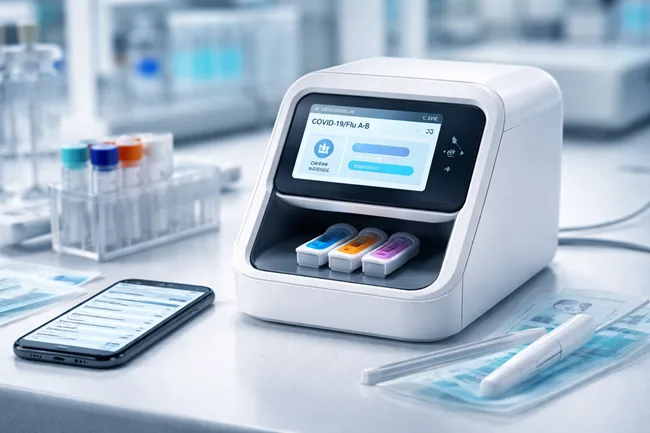
Industry observers note that Australia has been an early adopter of respiratory multiplex testing in outpatient and remote care settings, especially during recent influenza surges. Patent protection in this region may not only serve a defensive IP function but also indicate where Co-Diagnostics sees near-term commercial viability, particularly for its under-review Co-Dx PCR multiplex test for Flu A/B, COVID-19, and RSV.
This move also aligns with a broader trend among U.S.-based molecular diagnostics firms to secure early-stage IP protections in Asia-Pacific jurisdictions, anticipating future licensing, distribution, or partnership opportunities without immediately launching in regulated markets. Given that the platform leverages proprietary Co-Primers technology—previously central to the company’s COVID-19 test pipeline—Co-Diagnostics appears to be fortifying its patent moat to protect both technology and workflow design from duplication or workaround strategies by competitors.
Why Co-Dx is betting on PCR decentralization despite regulatory hurdles
The Co-Dx PCR Pro system aims to make high-sensitivity PCR diagnostics feasible outside centralized laboratories, competing with rapid molecular tests from companies such as Cepheid, BioFire (bioMérieux), and Roche. What distinguishes Co-Diagnostics’ approach is the focus on compact instrumentation, single-use test cups, and a modular software interface intended for home or point-of-care use—all while claiming to preserve PCR-grade analytical sensitivity and specificity.
However, unlike antigen or isothermal molecular platforms already cleared for point-of-care and at-home use, PCR-based systems face regulatory headwinds due to complexity, temperature sensitivity, and contamination control requirements. This remains a barrier to Co-Dx’s commercial rollout timeline, especially in the U.S., where Food and Drug Administration review is still pending.
Clinicians tracking decentralized testing innovation point out that while the promise of home PCR remains high, very few platforms have successfully cleared regulatory hurdles without sacrificing accuracy or usability. Industry observers suggest that Co-Diagnostics’ current pivot to solidify IP protections, rather than pursuing simultaneous multi-region launches, may reflect a pragmatic understanding of these regulatory complexities.
What scalability and adoption challenges still lie ahead
Even with patent coverage in hand, Co-Diagnostics will still need to prove that its platform can scale in terms of manufacturing, affordability, and real-world usability. For point-of-care use cases in low-resource settings, the ability to mass-produce affordable test cups with minimal cold-chain dependencies will be critical. While the company has publicly emphasized the modularity and simplicity of its design, practical constraints around training, quality control, and result interpretation at the patient level remain unresolved.
Furthermore, adoption in regions like Australia may hinge not only on clinical performance but also on reimbursement structures, distributor readiness, and post-market surveillance commitments. Without evidence of robust health economic modeling or implementation studies, industry analysts remain cautious about forecasting uptake timelines.
The company’s previous COVID-19 test offerings were often bundled with service partnerships or deployed through emergency-use channels—conditions that may not apply in a post-pandemic regulatory climate. As such, Co-Dx may need to invest further in clinical performance data, health system partnerships, and decentralized deployment pilots to validate its platform’s utility beyond controlled settings.
What competitors and regulators will be watching next
Regulators will be watching whether the Co-Dx PCR platform can demonstrate real-world analytical equivalence to centralized PCR labs, especially across a range of pathogens and viral loads. From a competitive standpoint, molecular diagnostics firms with entrenched decentralized offerings—such as Cue Health, Abbott’s ID NOW, and Visby Medical—will be closely watching whether Co-Diagnostics can undercut or outperform existing platforms on key parameters such as time to result, ease of use, and total cost of ownership.
Industry observers also point to the growing role of digital health integrations, including cloud-based result reporting, app-driven test interpretation, and automated physician notification. Any delays in finalizing the platform’s mobile software stack, privacy compliance features, or cloud infrastructure may hamper Co-Dx’s ability to meet the usability expectations of health systems and regulators alike.
Moreover, the market for multiplex respiratory tests has become increasingly competitive. Many systems now offer combined flu/COVID/RSV panels, and commercial success may hinge on diagnostic differentiation, pricing, and supply chain resilience as much as raw analytical accuracy.
Finally, broader questions persist about how the Co-Dx platform fits into the evolving diagnostics reimbursement landscape. Will payers treat at-home or point-of-care PCR as equivalent to central-lab testing? Will value-based care providers view this as a cost-effective surveillance tool, or an over-spec’d solution chasing narrow use cases? These are the questions that will shape the commercial trajectory of the platform—regardless of how many patents the company secures.
What this patent means for the decentralized PCR testing landscape
Co-Diagnostics’ newly granted Australian patent is a significant milestone, but it also underscores the uncertain road ahead for next-generation PCR platforms seeking to move outside the lab. While the company has fortified its IP position in a region where respiratory testing demand is high, regulatory clarity and practical deployment remain the real gatekeepers to adoption.
Analysts believe that the Co-Dx PCR system’s promise lies not just in technical novelty but in its potential to reshape how infectious diseases are tested and tracked in non-clinical settings. If Co-Diagnostics can execute on manufacturing scale, secure regulatory approval, and demonstrate user-friendly reliability, it could carve out a foothold in the competitive molecular diagnostics market. But until that trifecta is achieved, patents alone will not define the future of decentralized PCR.

Co-Diagnostics secures Australian patent for Co-Dx PCR platform, marking global IP expansion milestone added by Pallavi Madhiraju on
View all posts by Pallavi Madhiraju →