Curaleaf Holdings, Inc. has opened two new medical cannabis dispensaries in Florida, adding locations in Jacksonville Beach and Fernandina Beach as the cannabis retailer sharpens its Northeast Florida presence. The openings lift Curaleaf Holdings, Inc.’s Florida dispensary count to 73 and its nationwide retail footprint to 165 locations, reinforcing the importance of Florida as one of the most closely watched medical cannabis markets in the United States.
The move is not just another store-count update. For Curaleaf Holdings, Inc., the more important story is retail density in a state where scale, patient access, product availability, and local market positioning can determine whether a multistate cannabis operator converts footprint into durable revenue. Florida remains a medical-only cannabis market, which makes access, physician recommendations, patient retention, and product mix more important than casual adult-use foot traffic.
Why is Curaleaf expanding in Florida when the medical cannabis market is already crowded?
The Florida medical cannabis market is large, mature, and intensely competitive. The Florida Office of Medical Marijuana Use has reported more than 930,000 active qualified patients in 2026, while statewide dispensary counts have moved into the high hundreds, making the state one of the most structurally important medical cannabis markets in the United States.
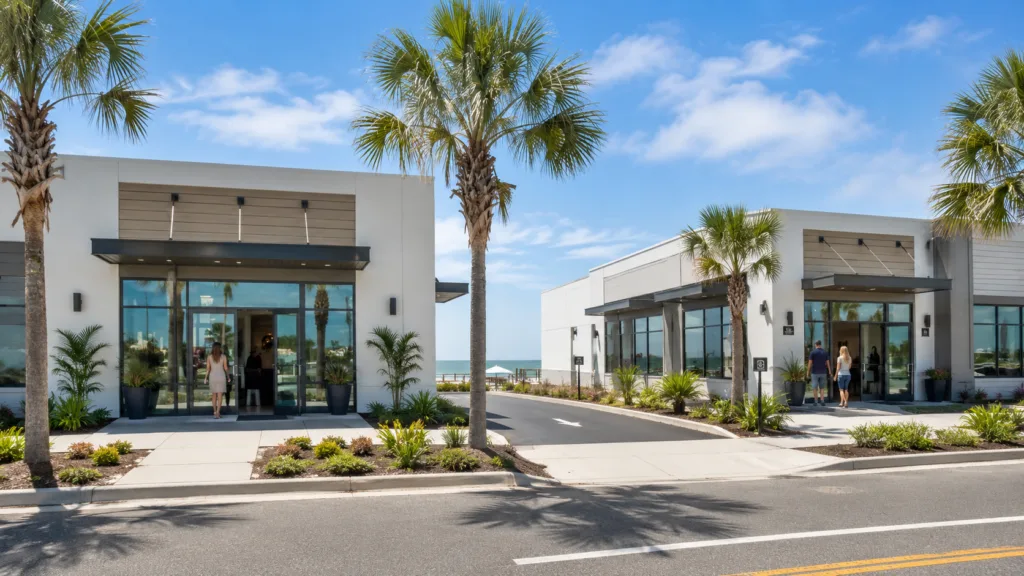
That scale is exactly why Curaleaf Holdings, Inc. is still expanding. In a market with a broad patient base, retail access is not only about opening more stores. It is about placing dispensaries near traffic corridors, coastal communities, local retail clusters, and patient populations that can support repeat medical purchases. The Jacksonville Beach site along Beach Boulevard and the Fernandina Beach site along South 8th Street give Curaleaf Holdings, Inc. more exposure to Northeast Florida’s coastal and suburban demand pockets, where convenience can influence patient loyalty.
The risk is that footprint alone no longer guarantees operating leverage. Florida’s medical cannabis market has become more competitive as dispensary expansion has outpaced or matched patient growth in several periods. If patient registrations grow slowly, operators may have to compete harder on pricing, promotions, product availability, and service experience. That can pressure margins, especially for companies that are also managing cultivation, processing, retail staffing, compliance, and capital costs.
What does the Jacksonville Beach and Fernandina Beach move reveal about Curaleaf’s retail strategy?
Curaleaf Holdings, Inc.’s two new dispensaries show a strategy built around regional clustering rather than isolated expansion. Northeast Florida is not as symbolically dominant as South Florida or Orlando, but it gives cannabis operators a different mix of local patients, coastal traffic, and underserved access points. For a medical cannabis operator, this type of market selection can matter because recurring patient purchases are more valuable than one-time promotional traffic.
The product lineup also hints at how Curaleaf Holdings, Inc. wants to defend its Florida position. The new locations are expected to offer Florida-exclusive Reef flower, Grassroots flower, Dark Heart flower, Anthem pre-rolls, and Select Briq 2. That matters because private-label and controlled-brand assortment can help cannabis retailers protect margins and differentiate stores in a market where many patients compare price, potency, availability, and product form across multiple operators.
However, brand depth comes with execution risk. Cannabis retail is still highly local. A product that performs well in one Florida market may not automatically dominate another, especially if patients are sensitive to price, strain availability, physician guidance, or promotional offers. Curaleaf Holdings, Inc. can use its scale to build consistency, but it still has to prove that additional stores can generate productivity rather than simply expand overhead.
How does this expansion fit with Curaleaf’s latest financial performance?
The timing is notable because Curaleaf Holdings, Inc. reported first-quarter 2026 net revenue of $324 million, up 6% year over year, with gross margin of 49% and adjusted EBITDA of about $63 million. The cannabis operator also reported first-quarter net income of $70 million, giving investors a stronger headline backdrop than many prior cannabis-sector updates.
That financial context makes the Florida expansion more interesting. Investors in cannabis companies have become less willing to reward growth for growth’s sake. They want evidence that new stores can support revenue, protect gross margin, and contribute to free cash flow. Curaleaf Holdings, Inc. reported first-quarter free cash flow from continuing operations of about $4.3 million after capital expenditure, which means capital allocation discipline remains central to the investment case.
The unresolved question is whether Florida expansion can improve the quality of Curaleaf Holdings, Inc.’s domestic growth. First-quarter domestic revenue grew more slowly than international revenue, and that puts more pressure on U.S. retail markets to show better store-level execution. Florida can help, but only if new locations avoid cannibalizing nearby stores and produce enough repeat patient activity to justify the incremental investment.
Why does Florida remain a key battleground for cannabis multistate operators?
Florida is strategically important because it combines a large medical cannabis patient base with a tightly regulated operating structure. Medical Marijuana Treatment Centers in the state operate under a vertically integrated model, meaning licensed operators must manage cultivation, processing, testing, and dispensing across the supply chain. That creates barriers to entry, but it also means operators carry more operational complexity than a retailer in a less integrated market.
For Curaleaf Holdings, Inc., that structure can be an advantage if scale produces better procurement, cultivation planning, inventory control, and product consistency. A 73-store Florida footprint gives the cannabis operator a meaningful platform to push branded products, manage localized demand, and support patient education. It also helps Curaleaf Holdings, Inc. remain visible in a state where competitors continue to defend strong regional positions.
The limitation is that Florida’s regulatory model can magnify mistakes. If cultivation planning misses demand, stores may face product gaps. If pricing becomes too aggressive, margins can weaken. If compliance costs rise, retail expansion can become less profitable than the headline store count suggests. In other words, Florida rewards scale only when scale is managed tightly.
What are investors likely to watch after Curaleaf’s latest Florida store openings?
Curaleaf Holdings, Inc.’s shares have already been moving in response to the broader Q1 2026 update. Curaleaf Holdings, Inc.’s U.S.-traded OTCQX shares closed at $3.89 on May 8, 2026, while the Toronto-listed shares closed at C$5.32 the same day.
Investor sentiment appears cautiously constructive, but not euphoric. Beacon Securities analyst Russell Stanley reportedly raised his price target on Curaleaf Holdings, Inc. to C$5.50 from C$5.00 while maintaining a Buy rating after the first-quarter update. That suggests some analysts see improving execution, but the narrow gap between the target and recent trading levels also implies that the market is already pricing in part of the recovery.
The next investor debate is likely to focus on whether Curaleaf Holdings, Inc. can convert its larger footprint into higher-quality earnings. Store openings in Jacksonville Beach and Fernandina Beach support the growth narrative, but cannabis investors are no longer dazzled by ribbon cuttings alone. They will watch same-store sales, gross margin, cash flow, debt management, patient growth, and the balance between domestic retail and international growth.
What could go wrong for Curaleaf despite the bigger Florida footprint?
The biggest risk is that Curaleaf Holdings, Inc. may be expanding into a market where competitive intensity keeps rising faster than per-store economics. Florida remains attractive because of its scale, but a larger dispensary base across the state can dilute traffic if patient growth slows. That creates a classic cannabis retail tension: the best markets attract the most operators, and the most attractive regions often become the most promotional.
Another risk is that the medical-only structure caps demand compared with adult-use markets. Unless Florida’s cannabis policy shifts in a way that broadens the addressable consumer base, Curaleaf Holdings, Inc. must keep competing for registered patients rather than the wider adult-use population. That makes patient retention, physician network visibility, product reliability, and local service quality more important than broad consumer branding.
There is also a capital discipline question. Curaleaf Holdings, Inc. has shown improved financial metrics, but cannabis operators remain under scrutiny because the sector has a long history of overexpansion, margin compression, and investor disappointment. New Florida stores must show they are not merely defensive openings designed to hold territory. They need to contribute to cash-generating growth.
Curaleaf’s Florida push is incremental, but the strategic signal is bigger
Curaleaf Holdings, Inc.’s Jacksonville Beach and Fernandina Beach openings are incremental in operational terms, but strategically meaningful in a market where convenience, density, and brand control matter. The cannabis operator is reinforcing its Florida network at a time when investors are demanding proof that multistate operators can grow without sacrificing margins or balance-sheet discipline.
The move strengthens Curaleaf Holdings, Inc.’s positioning in a high-value medical cannabis state, but the story now shifts from expansion to execution. The company has the store base, product portfolio, and market visibility to compete. The harder test is whether those assets can translate into stronger domestic growth, better cash flow, and more durable investor confidence.