Samsung Bioepis Co., Ltd. has entered into a global licence, development, and commercialisation agreement with Sandoz covering up to five biosimilar candidates currently in early-stage development, with SB36, a biosimilar candidate referencing Takeda Pharmaceutical’s vedolizumab (Entyvio), the most prominent disclosed asset. Under the terms of the deal, Samsung Bioepis retains responsibility for development, regulatory registration, and manufacture, while Sandoz will manage commercialisation across global markets excluding China, Hong Kong, Taiwan, Macau, and the Republic of Korea. The agreement expands an existing partnership between the two companies that has already yielded commercial launches in the ustekinumab biosimilar segment.
Why locking in a commercialisation partner at preclinical stage signals a strategic shift in biosimilar deal-making
The most analytically significant feature of this announcement is not what is being developed but when the deal was struck. SB36 remains in preclinical development, and the other four undisclosed assets are described only as being in early-stage development. Securing a commercialisation partner this far upstream is unusual even by the standards of an industry that has become comfortable with pre-approval commercial arrangements. It reflects a calculated judgement by Samsung Bioepis that the competitive window for locking in quality distribution infrastructure is narrowing as the vedolizumab biosimilar field begins to take shape.
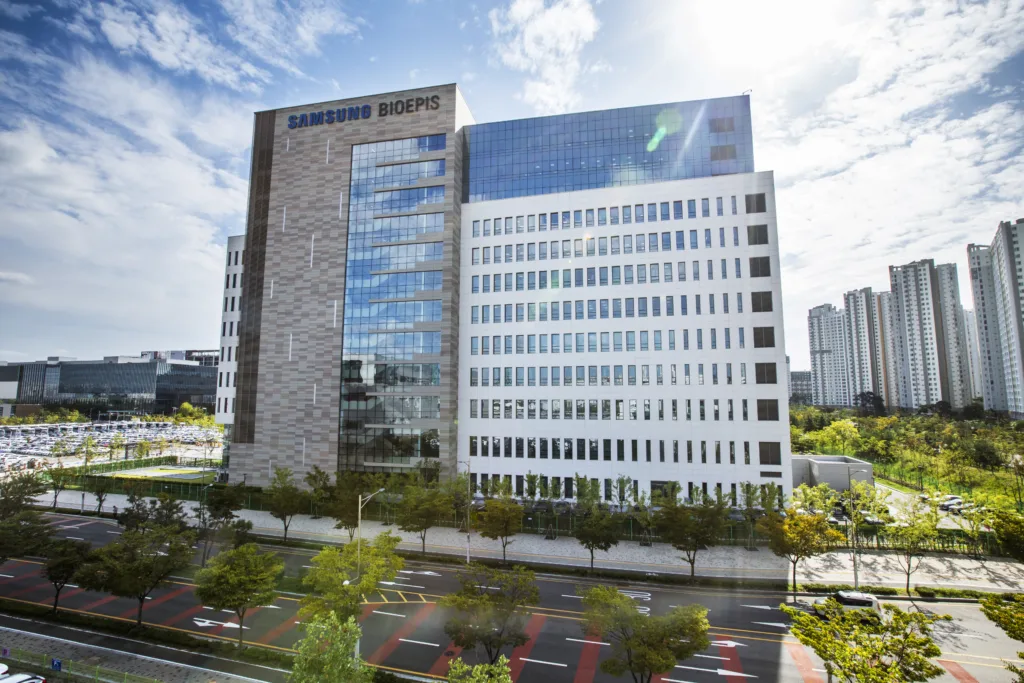
Industry observers note that biosimilar developers with an established commercial partner in place tend to move more efficiently through the late-stage regulatory and launch phases, avoiding the negotiation overhead that can delay market entry by six to eighteen months. By committing Sandoz to a basket of five candidates rather than a single molecule, Samsung Bioepis also reduces the transactional friction of deal-making during a period when its pipeline is expanding rapidly. The company publicly outlined at the J.P. Morgan Healthcare Conference in January 2026 a target of reaching twenty biosimilars in its product and pipeline portfolio by 2030, a schedule that requires sustained commercialisation infrastructure rather than asset-by-asset negotiations.
What the vedolizumab patent clock means for the SB36 development timeline and commercial viability
Vedolizumab occupies a protected but narrowing exclusivity position. Patent protection in the United States is expected to hold until approximately 2028, with European exclusivity expiring around 2027. Those dates make vedolizumab one of the next meaningful immunology biosimilar opportunities in both major markets, following the current wave of ustekinumab and adalimumab biosimilar activity. Takeda’s Entyvio has accumulated over one million patient-years of global exposure and generated revenues projected to exceed $2.5 billion annually, giving biosimilar developers a commercially sizeable target with a well-characterised clinical profile.
With SB36 currently at preclinical stage, Samsung Bioepis faces a demanding but not impossible development timeline to reach commercial readiness around or shortly after the European exclusivity window opens. Biosimilar development for a complex gut-selective monoclonal antibody like vedolizumab typically requires a Phase I pharmacokinetic equivalence study followed by a confirmatory Phase III efficacy and safety trial, a process that, even with efficient execution, takes five to seven years from preclinical work to approval. Regulatory watchers suggest that the company will need to initiate first-in-human studies no later than 2027 to remain competitive with developers already in Phase III, including Polpharma and Alvotech, whose vedolizumab biosimilar candidates are currently in late-stage clinical testing.
The structural complexity of vedolizumab adds another layer of development risk. As a gut-selective integrin antagonist targeting the alpha4beta7 pathway, vedolizumab has a differentiated mechanism compared with anti-TNF agents and IL-12/23 inhibitors, which means demonstrating analytical and clinical similarity requires careful attention to binding specificity and immunogenicity characterisation. Biosimilar developers targeting this molecule cannot rely on the accumulated regulatory precedent that now exists for infliximab or adalimumab, making the analytical comparability package more technically demanding.
How the Sandoz relationship has evolved and what it reveals about the two companies’ biosimilar strategy
The Samsung Bioepis and Sandoz partnership has developed through a series of agreements that collectively give Sandoz access to a broad slice of Samsung Bioepis’ immunology pipeline. The ustekinumab collaboration, signed in September 2023, resulted in the launch of Pyzchiva in Europe in July 2024 and in the United States in February 2025. A separate agreement signed in December 2025 added commercialisation of EPYSQLI, a biosimilar referencing eculizumab (Soliris), for the Middle East and Africa region. The current multi-asset agreement therefore represents the third distinct deal between the two parties within approximately two and a half years, a cadence that reflects deepening institutional familiarity rather than opportunistic one-off transactions.
For Sandoz, the strategic logic centres on maintaining pipeline density across the immunology and rare disease segments as its existing biosimilar portfolio matures. The company’s broader biosimilar catalogue already includes natalizumab, adalimumab, and its own aflibercept candidate, and adding early-stage vedolizumab and four undisclosed Samsung Bioepis assets gives Sandoz commercial optionality in categories where the reference drug revenue base remains large. Industry observers tracking the biosimilar commercialisation market note that the geographic exclusion of China, Hong Kong, Taiwan, Macau, and Korea from the agreement’s scope reflects Samsung Bioepis retaining direct market access in regions where it operates with greater regulatory and commercial independence, particularly Korea where it sells several products under its own brand.
What Takeda’s own vedolizumab lifecycle strategy means for the biosimilar competitive landscape
Takeda has not remained passive in the face of approaching biosimilar competition. In December 2025, the Japanese pharmaceutical company entered into a collaboration with Halozyme Therapeutics to access Halozyme’s ENHANZE drug delivery technology for use with vedolizumab, a move that regulatory watchers interpret as an attempt to introduce a reformulated subcutaneous version ahead of the biosimilar entry window. If successful, this strategy could shift prescribing toward a next-generation formulation that biosimilar developers would not immediately reference, effectively extending Takeda’s commercial runway and complicating market access negotiations for biosimilar manufacturers entering on the intravenous formulation.
Vedolizumab already has both intravenous and subcutaneous approved formulations in the United States, European Union, and over fifty other countries, and the subcutaneous version received FDA approval for ulcerative colitis maintenance in September 2023 and for Crohn’s disease maintenance in April 2024. A further enhanced formulation enabled by ENHANZE technology could create a two-tier market in which the originator occupies a more convenient patient experience position even as biosimilar manufacturers erode share on the standard formulation. For Samsung Bioepis, which is still at preclinical stage with SB36, the timing risk of entering a reference product segment that may be partially displaced by a next-generation originator formulation is a genuine commercial consideration, not merely a hypothetical one.
Why the undisclosed four assets in the agreement may carry more immediate commercial significance than SB36
SB36 is the only candidate Samsung Bioepis has named in the announcement. The remaining four assets are described only as biosimilar candidates under development, with no molecule names, therapeutic areas, or development stages disclosed. This deliberate opacity serves a competitive function. Naming early-stage assets creates reference points for competitors to monitor and potentially accelerate their own programmes against the same molecules. By structuring the deal as a basket agreement without disclosure of the other four candidates, Samsung Bioepis preserves intelligence advantage at a stage where competitive positioning matters.
The company’s January 2026 J.P. Morgan presentation, however, disclosed that its expanded pipeline will include dupilumab, guselkumab, ixekizumab, vedolizumab, and ocrelizumab as new molecules, alongside the ongoing pembrolizumab programme already in clinical stages. These disclosures suggest that some of the four undisclosed candidates in the Sandoz agreement may reference molecules in this expanded list. Dupilumab and guselkumab in particular reference biologics with very large revenue bases and approaching patent cliffs, making them commercially attractive targets for exactly the kind of early commercial partnership structure Samsung Bioepis has now established with Sandoz.
Risks, regulatory uncertainties, and the questions the biosimilar field will track from here
The preclinical status of SB36 carries development attrition risk that is easy to underweight in partnership announcements framed around access and availability. Biosimilar programmes do fail in clinical development, particularly when analytical characterisation does not survive contact with the full regulatory package review, or when confirmatory trials reveal unexpected immunogenicity differences. The agreement does not disclose milestone or financial terms beyond confirming that they remain confidential, which limits external assessment of the risk allocation between the two parties and whether Samsung Bioepis or Sandoz bears development cost exposure should any of the five assets fail to reach approval.
Reimbursement access for vedolizumab biosimilars will also require careful navigation. In markets where vedolizumab is already positioned as a preferred agent in inflammatory bowel disease treatment algorithms, the clinical inertia around switching stable patients to biosimilars has proven meaningful for other molecules. Clinicians managing IBD patients with well-controlled disease on vedolizumab maintenance therapy are likely to require substantial pharmacovigilance data and real-world evidence before routinely switching to a biosimilar version, adding commercial ramp risk even after regulatory approval. Industry observers tracking IBD prescribing patterns note that interchangeability designation in the United States, which enables automatic pharmacy-level substitution, will be a particularly important regulatory milestone for any vedolizumab biosimilar aspiring to meaningful market penetration.
The broader question the biosimilar field will watch is whether Samsung Bioepis and Sandoz can sustain coordinated execution across a growing number of concurrent early-stage assets. The ustekinumab programme demonstrated the partnership’s capacity to move from agreement through approval to commercial launch within approximately eighteen months of regulatory submission, a benchmark that will inform confidence in their ability to replicate that performance across a more complex and earlier-stage pipeline. With vedolizumab biosimilar competition building slowly but consistently, the companies that file first and execute launch most cleanly will likely determine the market structure that persists for years.