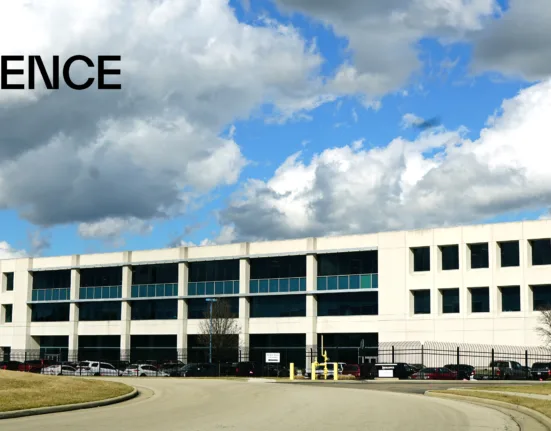
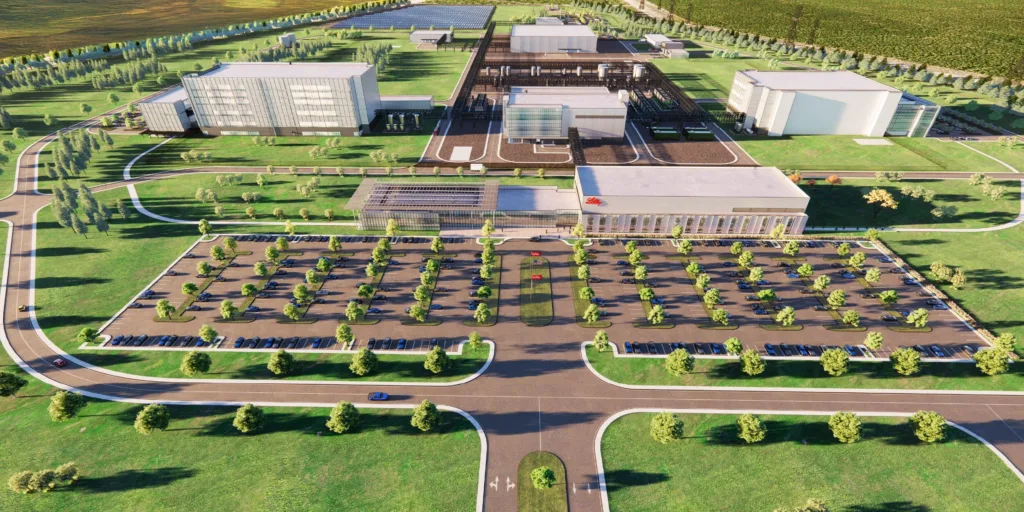
Eli Lilly and Company has announced a $6 billion investment to build a large-scale active pharmaceutical ingredient (API) manufacturing facility in Huntsville, Alabama. The site will support U.S. production of synthetic and peptide-based medicines, including the company’s first oral GLP-1 receptor agonist, orforglipron, which is expected to be submitted for obesity indications by the end of 2025. This major capital deployment marks the third of four domestic facilities Lilly has announced since 2020, reinforcing a strategy to re-anchor pharmaceutical manufacturing on American soil.
Why the Alabama site underscores Lilly’s reshoring commitment for GLP‑1 pipeline drugs
Eli Lilly and Company’s manufacturing footprint in the United States is expanding at an unprecedented scale. The new facility in Huntsville reflects the company’s resolve to internalize critical stages of drug production, particularly for orforglipron and future oral peptide assets. While reshoring in the pharmaceutical sector has often been discussed more than delivered, Lilly’s consistent follow-through—from North Carolina to Indiana and now Alabama—positions it as one of the few large pharmaceutical companies operationalizing this shift at scale.
Orforglipron, a first-in-class, orally bioavailable GLP‑1 receptor agonist, represents a potential blockbuster in the obesity treatment market, which is already being reshaped by injectables such as semaglutide and tirzepatide. Manufacturing this type of molecule domestically allows Lilly to maintain full quality control over a compound with complex synthesis requirements and to better manage the growing demand projected across global obesity care programs.
What the hybrid synthesis model reveals about future drug production infrastructure
Unlike traditional small molecule facilities, the Alabama plant will be built to accommodate both synthetic chemical APIs and complex peptide production. This hybrid infrastructure reflects an evolving manufacturing philosophy in the industry: one that embraces process diversity to support modular pipelines. Eli Lilly and Company is effectively positioning this site to handle both older small molecule assets and next-generation peptide candidates in parallel.
Advanced chemical synthesis for peptides remains a technical challenge, requiring specific purification, folding, and stability protocols. Manufacturing peptide APIs at scale often strains traditional infrastructure. The move to build this capability in-house, onshore, and at such scale suggests Lilly is pursuing long-term control over cost-of-goods and product consistency as competitive levers in the obesity and cardiometabolic markets.
How digital automation and AI could redefine GLP‑1 manufacturing economics
Eli Lilly and Company has stated that the Alabama facility will integrate machine learning, advanced data analytics, and full digital automation from the ground up. While this may sound aspirational, the choice to embed smart systems from day one is key to operationalizing high-volume, low-defect production of peptide APIs like orforglipron.
Digital manufacturing tools are increasingly seen as a requirement rather than an option for future GMP environments. For orforglipron specifically, whose oral formulation imposes tighter tolerances on purity and consistency than injectables, the use of real-time analytics, AI-guided quality control, and closed-loop automation could deliver both compliance reliability and economic scale.
The investment aligns with a broader industry trend in which process intelligence is being embedded at the molecule level. By enabling “right-first-time” manufacturing, these systems can help minimize batch rejection, ensure supply continuity, and accelerate scalability during commercial ramp-up.
Why the Alabama site may become a catalyst for biotech manufacturing ecosystems
The choice of Huntsville is being interpreted as more than just a real estate or logistics decision. Eli Lilly and Company selected the site from over 300 applicants, citing its proximity to the HudsonAlpha Institute for Biotechnology. This co-location with a research-focused bioscience campus offers strategic advantages in workforce development, R&D collaboration, and regional training programs.
The surrounding ecosystem includes access to utility infrastructure, favorable zoning laws, and state-level economic incentives. More importantly, it provides a platform for growing a skilled labor force in biotechnology manufacturing—a persistent bottleneck for U.S. firms trying to reshore production. The site is expected to create 450 high-skill jobs and generate over 3,000 construction roles through the build phase.
Observers suggest that the Alabama facility could become a model for future biotech hubs that combine API production, advanced process technology, and workforce integration into one location. It may also provide a template for other pharmaceutical companies seeking to expand outside legacy coastal clusters.
What the long timeline to 2032 completion means for risk management
Despite the headline investment, the Huntsville site is not expected to be fully operational until 2032. That long horizon presents both opportunity and risk. While it allows time for workforce development and regulatory planning, it also creates uncertainty around cost escalation, potential delays, and shifting pipeline priorities over the next seven years.
The site’s success is also partially contingent on orforglipron achieving regulatory approvals and commercial uptake at the pace Lilly anticipates. Any delay in the drug’s approval or post-marketing trajectory could affect production scheduling and resource allocation at the Alabama plant.
Industry regulators will also closely monitor how the company manages digital validation and GMP compliance in such a technology-heavy environment. While digital systems can streamline operations, they also introduce new validation challenges that must be addressed proactively during construction and commissioning.
How Lilly is shaping the future of U.S. API independence
Eli Lilly and Company’s cumulative U.S. capital expenditure has now surpassed $50 billion since 2020, making it the largest pharmaceutical manufacturing investment in U.S. history. This reshoring campaign is not confined to oral GLP‑1 drugs. The company has also announced new facilities in Texas and Virginia and plans to expand an injectable drug plant in Puerto Rico. A fourth new domestic location will be revealed soon, focusing on parenteral manufacturing.
Unlike many firms that limit reshoring to fill-finish stages or packaging, Lilly is betting on full-process, end-to-end domestic capability. This includes core API synthesis, purification, and quality control. That approach not only provides better control of supply chains but also sends a clear signal to regulators and legislators that U.S. manufacturing is a strategic imperative—not just a compliance checkbox.
The company has publicly credited the 2017 Tax Cuts and Jobs Act for enabling its aggressive U.S. investment plans. This alignment of corporate strategy with policy incentives is likely to shape ongoing debates about how to use tax, trade, and infrastructure tools to rebuild pharmaceutical manufacturing capacity nationally.
What investors and regulators are watching next
The most immediate focus remains on orforglipron’s regulatory submission, which Lilly expects to file globally by the end of 2025. The drug’s approval trajectory will likely influence how soon the Alabama facility begins process qualification for GLP‑1 APIs. Analysts are also watching for the announcement of the fourth domestic facility and how that site fits into the company’s overall modality diversification.
Institutional investors will likely evaluate this build-out as a long-term margin play rather than a short-term earnings driver. With obesity therapeutics projected to be a $100 billion global market, vertical integration of supply chains may become the differentiating factor in a crowded GLP‑1 space.
Meanwhile, state-level economic development agencies and industry regulators will assess the Alabama project’s scalability, compliance model, and regional economic impact as a case study in advanced pharma manufacturing.