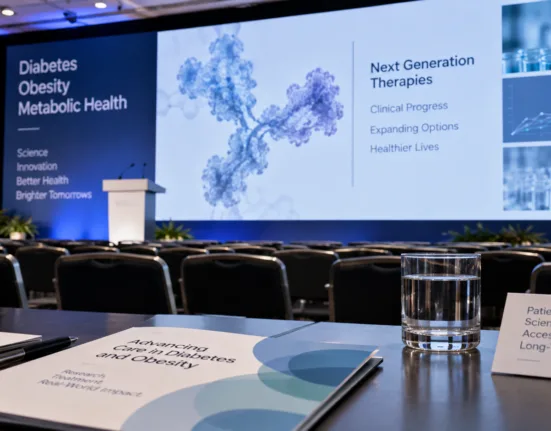
Eli Lilly and Company and NVIDIA have announced the formation of a co-innovation lab aimed at accelerating drug discovery using AI, robotics, and advanced compute. With a planned $1 billion investment over five years, the lab will leverage NVIDIA’s BioNeMo platform and Vera Rubin architecture alongside Lilly’s drug development expertise. The initiative represents one of the most ambitious attempts to fuse high-performance computing and wet-lab experimentation in the pharmaceutical sector to date.
Why the Lilly–NVIDIA model marks a shift from isolated to integrated AI infrastructure in drug development
The Lilly–NVIDIA partnership signals a clear evolution in how pharmaceutical research infrastructure is being architected. Instead of treating AI as an external bolt-on to legacy workflows, the co-innovation lab model integrates data generation, model building, and agentic experimentation into a continuous learning system. This “wet–dry lab” convergence is a marked departure from traditional pipeline-stage separation. It implies a rethink of both operational rhythms and regulatory readiness in preclinical and translational research.
For NVIDIA, this initiative extends its BioNeMo platform beyond foundational model development into a domain-specific, real-world deployment at scale. For Eli Lilly and Company, it creates a pathway to internalize AI experimentation cycles with access to supercomputing horsepower, which few pharma companies have built organically. The alliance reflects a shift toward purpose-built infrastructure where drug development is not only aided by AI but also potentially redefined by compute-native design.

What this enables beyond molecule screening: From AI agents to digital twin-based manufacturing
The most immediate focus of the lab appears to be the development of next-generation biomedical foundation and frontier models, leveraging NVIDIA’s compute stack. But the project’s ambition extends well beyond candidate screening or protein folding. By anchoring the lab in South San Francisco—a global biotech hub—the companies aim to establish a model environment where multimodal AI, physical automation, and supply chain simulations are part of a vertically integrated system.
NVIDIA’s role in this is not just as a compute provider but as a co-architect of experimental paradigms. With the use of NVIDIA Omniverse libraries and RTX Pro Servers, the lab is positioned to simulate manufacturing workflows before changes are made in the real world. This allows Eli Lilly and Company to explore “digital twins” of manufacturing plants—an approach more common in automotive or semiconductor sectors than in pharmaceuticals.
Industry observers see this as a precursor to broader changes in regulatory preparation, tech transfer processes, and GxP validation. If these digital twins can mimic physical environments with sufficient fidelity, regulators may begin incorporating AI-native infrastructure into quality review protocols.
Why agentic AI and robotics may be the lab’s most disruptive elements
While much attention has been given to foundation models, the Lilly–NVIDIA announcement’s most disruptive element could be its emphasis on physical AI and robotics. The co-innovation lab aims to enable 24/7 AI-assisted experimentation, with biologists and chemists receiving real-time feedback and design recommendations via a “scientist-in-the-loop” system.
This model draws heavily from AI-native disciplines like autonomous systems and real-time inference loops. It also introduces a new class of risk. If decisions on experimental pathways are informed dynamically by evolving models, the validation burden shifts from static model approval to continuous performance auditing. That has implications for reproducibility, regulatory approval cycles, and even publication standards in biomedical research.
The lab’s potential to support agentic AI—self-directed software agents that can initiate, modify, and optimize experiments based on evolving objectives—suggests the beginnings of a pharma R&D stack designed for iteration, not just execution. Clinicians watching this trend will likely focus on whether such agentic models can translate insights into clinically meaningful endpoints or if they will remain preclinical accelerators.
How NVIDIA’s BioNeMo and Clara platforms fit into Lilly’s strategic AI pivot
Eli Lilly and Company has already been positioning itself as one of the more AI-forward large-cap pharmaceutical companies. Its TuneLab platform, for instance, gives biotech collaborators access to AI tools built on decades of proprietary data. The collaboration with NVIDIA significantly expands this capability through the BioNeMo and Clara ecosystems, positioning Lilly to attract academic and startup partnerships across early-stage innovation.
Unlike closed AI stacks that restrict external participation, the co-innovation lab explicitly opens compute and tooling to NVIDIA’s Inception startup program and Lilly’s biotech collaborators. That dual openness—through both infrastructure and business models—differentiates this project from narrower AI partnerships focused on isolated indications or datasets.
Regulatory watchers suggest that this model of open AI innovation may also serve as a testbed for how regulators evaluate AI-based tools not just in isolation but as part of dynamic systems. Questions remain about how such systems will be validated, documented, and submitted as part of regulatory dossiers—especially for adaptive, real-time AI agents.
What this reveals about the AI talent gap and the rising cost of in-house compute capacity
The scale of the $1 billion investment is partly a reflection of the rising cost of talent and infrastructure in AI-driven biotech. With compute demand for foundation models ballooning, few pharma companies can afford to independently build the kind of hyperscale infrastructure that NVIDIA offers. This explains why the partnership’s structure emphasizes co-location: by placing Lilly domain experts alongside NVIDIA engineers, the lab effectively builds an AI-native culture in situ.
This co-location strategy also responds to the critical shortage of AI-fluent scientists in biopharma. Instead of retraining large portions of their workforce, companies like Eli Lilly and Company appear to be opting for deep integration with technical partners to seed next-generation AI culture from the inside out.
From a competitive standpoint, this lab may serve as a blueprint for others in the sector who lack either the compute scale (like mid-cap biotechs) or the domain depth (like AI startups). For now, it also raises the bar for AI alliances by emphasizing long-term capital commitment, rather than pilot-stage experimentation.
How this changes the calculus for pharma AI adoption in clinical and commercial domains
While the initial focus remains drug discovery, the broader roadmap includes applying AI to clinical development and commercial operations. This suggests that Eli Lilly and Company sees AI not just as a tool for preclinical acceleration, but as a horizontal capability across its entire value chain.
The mention of applications in imaging, manufacturing, and supply chain optimization points to an AI strategy that encompasses everything from patient stratification to product launch logistics. Whether this level of vertical integration is reproducible outside of Big Pharma remains to be seen, but the signal is clear: drug companies that treat AI as a whole-business capability may gain structural advantages in cost, speed, and innovation cycles.
Industry observers note that if successful, this lab could become a model for public-private consortia or international efforts to replicate such infrastructure across other therapeutic or regional domains.