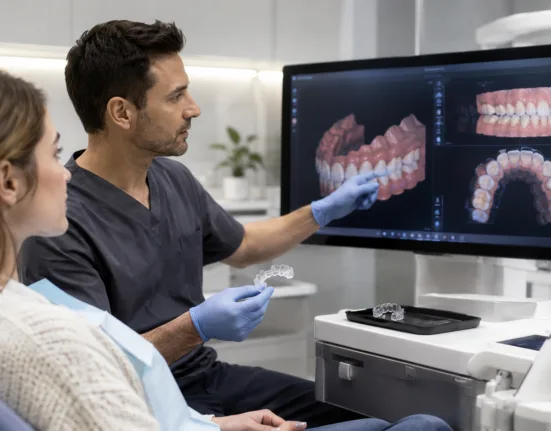
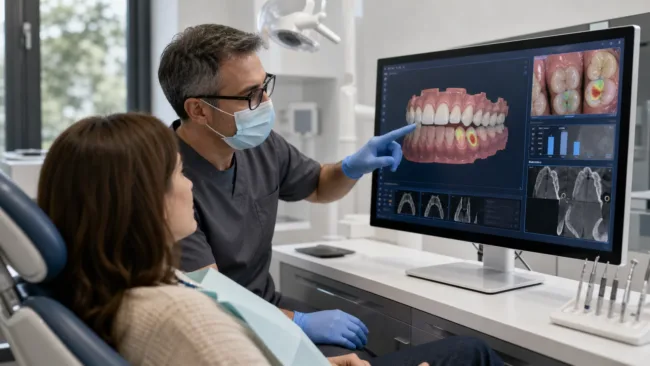
Henry Schein One has announced a direct data integration connecting Align Technology iTero intraoral scanners with its core practice management platforms Dentrix, Dentrix Ascend, and Dentally, enabling iTero scan data to flow directly into patient records and operational workflows. The integration is positioned within the broader context of accelerating digital dentistry adoption across North America and select international markets, following pilot completion with Heartland Dental and with additional regions pending regulatory clearance.
From an industry perspective, the importance of this move lies less in the mechanics of scan importation and more in what it reveals about how dental technology ecosystems are evolving. Digital dentistry is no longer defined by individual devices or standalone software platforms. Instead, competitive advantage is increasingly determined by how effectively diagnostic data, treatment planning tools, and administrative systems operate as a single, continuous workflow. This integration places Henry Schein One and Align Technology firmly within that platform-centric model.
Why embedding diagnostic imaging directly into practice management systems changes the economics of dental workflows
Industry observers have long noted that digital dentistry adoption often stalls not because of device capability, but because of workflow fragmentation. In many practices, intraoral scans exist in parallel systems that require manual uploads, redundant data entry, or context switching between clinical and administrative software. These frictions accumulate into measurable productivity losses, especially in high-volume group practices and dental service organizations.
By allowing iTero scans to appear natively within Dentrix, Dentrix Ascend, and Dentally patient records, Henry Schein One is effectively collapsing diagnostic imaging into the same environment where scheduling, billing, insurance documentation, and clinical notes already reside. This reduces operational drag and shifts the scanner from being a specialized diagnostic asset into a routine data source that feeds the full lifecycle of care delivery.
Clinicians tracking digital workflow adoption believe this matters because practices increasingly evaluate technology investments on time saved rather than on clinical novelty. When imaging data is immediately accessible within existing practice management software, the perceived return on investment improves. This is particularly relevant for practices managing orthodontic, restorative, and implant workflows simultaneously, where coordination between diagnosis and documentation directly affects throughput and reimbursement accuracy.
What this integration signals about the competitive positioning of Henry Schein One in dental software
For Henry Schein One, the integration reinforces its role not merely as a practice management vendor but as a central orchestrator of dental data. Dentrix and Dentrix Ascend already represent one of the largest installed bases in U.S. dentistry, with broad penetration among both independent practices and multi-location organizations. Adding deeper scanner integration strengthens platform stickiness at a time when cloud-native challengers are attempting to displace legacy systems.
Regulatory watchers and industry analysts note that the inclusion of Dentally extends this strategy beyond North America into markets such as the United Kingdom, Ireland, Australia, Canada, and New Zealand. This geographic expansion matters because regulatory frameworks and reimbursement systems differ across regions, making unified workflows harder to achieve at scale. By standardizing how scan data enters patient records across multiple jurisdictions, Henry Schein One is quietly building a global operating layer for digital dentistry.
This approach also reduces the risk of commoditization. Practice management software has historically faced pricing pressure as features converge. Tight integration with leading diagnostic hardware creates switching costs that are operational rather than contractual. Once scan data, treatment plans, and historical imaging are embedded into a single environment, the incentive to migrate platforms diminishes.
How Align Technology strengthens its ecosystem without selling another scanner
From Align Technology’s perspective, the integration advances a long-running strategy of ecosystem expansion rather than device proliferation. While iTero scanners are already deeply embedded in orthodontic workflows, particularly those linked to Invisalign treatment planning, their value increases when they become integral to daily practice operations rather than episodic diagnostic tools.
Industry observers suggest that embedding iTero data directly into practice management systems subtly shifts the scanner’s role. It becomes not just an input device for orthodontic cases, but a foundational imaging layer supporting restorative care, insurance documentation, and longitudinal patient records. This broadens usage frequency and reinforces Align Technology’s presence across the entire practice, even when Invisalign is not involved.
Importantly, this strategy does not rely on new hardware sales. Instead, it increases utilization of existing installed scanners, which can improve customer satisfaction and renewal dynamics for associated digital services. For a medical device manufacturer operating in an environment of capital expenditure scrutiny, deepening software integration offers a capital-light path to growth.
Clinical relevance and limitations of workflow-centric integrations in dentistry
Clinicians evaluating this development tend to focus on whether tighter integration actually improves clinical decision-making or merely streamlines administration. The immediate availability of high-resolution 3D scans within patient charts can support more consistent documentation and facilitate case reviews across teams. This is particularly relevant in group practices where hygienists, general dentists, orthodontists, and administrative staff interact with the same patient record.
However, regulatory watchers caution that integration alone does not guarantee clinical standardization. Practices still vary widely in how they interpret scans, document findings, and translate imaging into treatment plans. Without standardized clinical protocols layered on top of integrated systems, workflow efficiency gains may outpace improvements in care consistency.
There are also data governance considerations. As imaging data becomes more deeply embedded in practice management platforms, questions around data ownership, interoperability with third-party analytics tools, and long-term archival responsibilities become more salient. These issues are manageable but increasingly relevant as digital records accumulate over decades rather than years.
Why dental service organizations are likely to be early adopters and key validators
The completion of the initial integration program with Heartland Dental offers insight into where adoption momentum is likely to concentrate. Dental service organizations operate at a scale where small efficiency gains translate into significant financial impact. Reducing manual uploads, minimizing documentation errors, and accelerating case acceptance workflows directly affect margins.
Industry analysts believe that successful deployment within large dental service organizations serves as a validation mechanism for broader market adoption. If integrated workflows perform reliably across hundreds or thousands of locations, independent practices are more likely to follow, particularly when technology decisions are influenced by peer benchmarks rather than vendor claims.
At the same time, dental service organizations also exert pressure on vendors to maintain uptime, cybersecurity standards, and regulatory compliance. Scaling integrated workflows across large networks increases operational complexity and raises the stakes for system reliability.
What regulators and industry observers will watch next
Regulatory watchers are likely to monitor how these integrations are rolled out across international markets with differing data protection regimes. Cloud-based platforms such as Dentrix Ascend and Dentally must navigate regional requirements related to patient data residency, consent, and cross-border transfer. The pace at which additional regions are enabled may reflect the complexity of these regulatory environments.
Clinicians and industry observers will also watch whether integration depth expands beyond scan ingestion into bidirectional workflows. Future iterations could involve automated prompts for treatment planning, integration with revenue cycle management, or analytics that surface clinical insights based on aggregated scan data. Each step deeper into decision support introduces both opportunity and regulatory scrutiny.
Finally, competitors will be forced to respond. Practice management vendors without deep device integrations may find themselves pressured to form similar partnerships or accelerate internal development. Device manufacturers lacking embedded software relationships may face barriers to becoming routine components of daily workflows.
Strategic implications for the broader dental technology market
Taken together, the Henry Schein One and Align Technology integration reflects a broader maturation of the dental technology market. The focus is shifting from feature differentiation toward ecosystem coherence. In this environment, winning platforms are those that reduce cognitive and operational load on clinicians while quietly embedding themselves into the fabric of care delivery.
Industry analysts suggest that the next phase of competition will center on who controls the primary patient record and how extensible that record becomes. Integrations like this one move the market closer to a de facto operating system for dentistry, where devices, diagnostics, and administration converge within a single environment.
For practices, the promise is efficiency and consistency. For vendors, the challenge will be sustaining openness while defending platform advantage. The success of this integration will ultimately be measured not by press coverage, but by whether clinicians stop thinking about where their data lives and start assuming that it is simply there when needed.