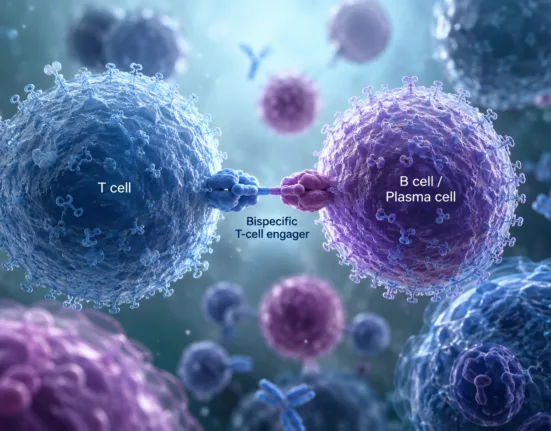
CPTx announced that it will present preclinical proof-of-principle data for its DNA-based in vivo CAR T platform at the American Society of Gene & Cell Therapy Annual Meeting 2026, highlighting early results from a targeted lipid nanoparticle delivery system carrying CAR-encoding single-stranded DNA. The Munich-based biotechnology firm reported that its non-viral, systemically administered approach achieved more durable tumor control in preclinical models compared with mRNA-based delivery, establishing an early translational rationale for in vivo generation of CAR T cells.
The strategic importance of this update extends beyond delivery optimization and instead signals an attempt to redefine how CAR T therapies are created and administered. Industry observers have long identified manufacturing complexity as the defining limitation of current CAR T approaches, where ex vivo engineering introduces cost, delay, and variability. CPTx’s platform directly targets that constraint by shifting the locus of engineering from centralized facilities to the patient’s body, raising the possibility that CAR T therapies could evolve from individualized products into more standardized medicines.
Why moving CAR T engineering in vivo could redefine scalability, cost structure, and clinical access
Conventional CAR T therapy relies on harvesting patient T cells, modifying them ex vivo, expanding them, and reinfusing them through specialized clinical infrastructure. This process is resource-intensive and time-sensitive, particularly in aggressive malignancies. Clinicians tracking the field frequently note that these logistical barriers limit patient access beyond major treatment centers.
CPTx’s in vivo approach attempts to bypass these constraints by delivering genetic instructions directly to T cells through targeted lipid nanoparticles. If this method can reliably generate functional CAR T cells within the patient, it could reduce manufacturing timelines and associated costs while expanding geographic reach. The implications extend to earlier-line use, where logistical barriers have historically constrained adoption.
However, the shift to in vivo engineering introduces a different set of challenges. Manufacturing control becomes dependent on biological variability within patients, raising questions around dose precision, reproducibility, and consistency of outcomes. These variables are likely to be central to regulatory evaluation.
How DNA-based payloads could change the durability versus control trade-off in in vivo CAR T therapies
One of the key findings highlighted by CPTx is improved durability of tumor control compared with mRNA-based delivery systems in preclinical models. mRNA approaches have gained traction due to their transient expression, which can reduce long-term safety concerns but may limit sustained therapeutic activity.
DNA-based payloads offer a different profile by enabling longer-lasting expression without integrating into the host genome. This creates a potential balance between persistence and safety that may be more suitable for oncology applications where durable responses are required. Regulatory watchers suggest that this balance could become increasingly relevant as the field matures.
The use of immune-silent DNA constructs further addresses a critical barrier in in vivo delivery. Immune responses against delivery systems can limit effectiveness and prevent repeat dosing. By reducing immunogenicity, CPTx aims to enable more controlled expression and potentially allow for redosing strategies, which could be important in relapsing disease settings.
What targeted lipid nanoparticle delivery reveals about the next phase of competition in non-viral gene therapy
The emphasis on targeted lipid nanoparticles reflects a broader shift toward refining delivery precision rather than focusing solely on payload innovation. Lipid nanoparticles have demonstrated clinical viability in other applications, but their use in targeted immune cell engineering remains an emerging frontier.
For in vivo CAR T therapies, delivery specificity is critical. Without effective targeting, systemic administration risks off-target transduction and reduced efficiency. Industry observers note that competitive differentiation is increasingly defined by the ability to reach intended cell populations with high fidelity.
CPTx’s approach combines targeting strategies with immune-silent DNA, suggesting a layered solution to delivery challenges. However, translating targeting efficiency from preclinical models to human systems remains uncertain. Differences in immune biology and biodistribution could impact performance in ways that are difficult to predict from animal data.
How preclinical tumor control data should be interpreted within the limits of translational relevance
The reported improvement in tumor control provides an early signal of potential efficacy, but the limitations of preclinical models must be considered. Mouse models often fail to capture the complexity of human disease, particularly in oncology.
Clinicians and researchers emphasize that endpoints such as durability of response, safety, and reproducibility can only be meaningfully assessed in human trials. The absence of clinical data means that key questions remain unanswered, including consistency of in vivo CAR T generation and potential adverse effects.
Regulatory agencies are likely to require extensive data on biodistribution, off-target activity, and immunogenicity before allowing progression into advanced clinical studies. The path to first-in-human trials will therefore depend on both efficacy signals and the robustness of the safety profile.
What this approach signals about the transition from personalized cell therapies to programmable medicines
CPTx’s strategy reflects a broader evolution toward programmable medicines, where therapeutic functions are delivered through genetic instructions rather than manufactured cells. This approach has the potential to simplify treatment paradigms and expand the range of treatable indications.
The applicability of in vivo CAR T therapies to autoimmune diseases highlights this potential. Unlike oncology, where one-time interventions may be sufficient, autoimmune conditions often require repeatable and controllable therapies. A platform that enables adjustable expression could open new therapeutic avenues.
Industry observers suggest that long-term impact will depend on the ability to demonstrate both clinical efficacy and operational advantages. Cost reduction, ease of administration, and scalability will be critical factors influencing adoption.
What risks, blind spots, and execution challenges could still limit CPTx’s translational trajectory
Despite the promise of CPTx’s platform, several risks could limit its progression. Delivery specificity remains a central challenge, as achieving consistent targeting of T cells in humans is complex. Variability in patient biology could further affect outcomes.
Safety considerations are equally significant. In vivo CAR T generation introduces the possibility of uncontrolled cell expansion, off-target effects, and immune-related adverse events. Regulatory scrutiny is expected to be high for first-in-class approaches.
Manufacturing, while simplified in concept, still requires robust processes for producing DNA constructs and lipid nanoparticles at scale. Ensuring consistency and quality will be essential for clinical and commercial success.
Another uncertainty is competitive positioning. Multiple companies are exploring non-viral delivery and in vivo CAR T strategies, and differentiation will depend on both technical performance and clinical outcomes.
What clinicians, regulators, and industry observers are likely to watch as CPTx advances toward clinical evaluation
The next phase of development will focus on translating preclinical findings into human studies. Observers will monitor early clinical data for signals of safety, feasibility, and initial efficacy. The ability to generate functional CAR T cells in vivo with predictable outcomes will be a key milestone.
Regulatory interactions will provide further insight into how agencies view non-viral in vivo CAR T approaches. Establishing a clear pathway could accelerate development not only for CPTx but for the broader field.
Commercial considerations will also become more prominent. Partnerships, funding strategies, and positioning within the competitive landscape will shape the pace of development and potential market impact.
The broader implication is that CPTx is contributing to a shift in how cell therapies are conceptualized and delivered. If the platform successfully navigates technical and regulatory challenges, it could help redefine CAR T therapy as a more accessible and scalable modality. If not, the field may continue to rely on ex vivo approaches with incremental gains rather than structural change.