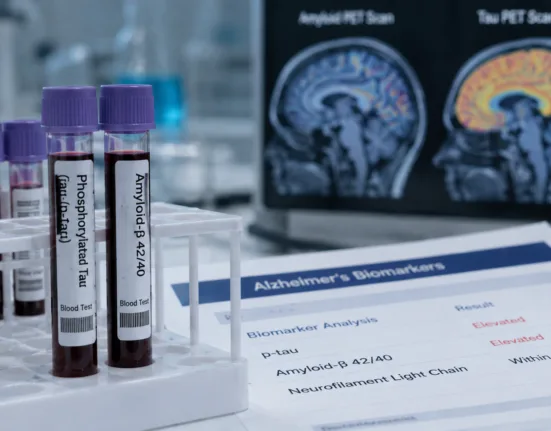
Lucent Diagnostics, a commercial brand of Quanterix Corporation, has entered a national partnership with Life Line Screening to offer its blood-based biomarker test for early detection of cognitive disease risk through community screening events across the United States. The collaboration will integrate Lucent’s non-invasive test into Life Line Screening’s mobile health model, beginning with active programs in Florida, California, and Texas, and expanding through its network of more than 15,000 annual community events.
The announcement signals more than a distribution agreement. It represents an attempt to reposition blood-based neurodegenerative diagnostics from specialist referral settings into mass community screening infrastructure. That shift has material implications for how Alzheimer’s disease risk is identified, how primary care physicians engage with biomarker data, and how regulators and payers may ultimately view population-level cognitive testing.
What this partnership changes for blood-based Alzheimer’s testing outside academic and specialty clinics
For more than a decade, blood-based biomarkers for Alzheimer’s disease have been largely confined to research laboratories and memory clinics. Quanterix Corporation built its scientific reputation on ultra-sensitive single molecule array technology, and Lucent Diagnostics was created to commercialize that science for clinical use. However, adoption barriers have persisted. Most cognitive biomarker testing remains reactive, triggered by symptom presentation rather than proactive risk identification.
By embedding Lucent’s test within Life Line Screening’s national preventive screening platform, the U.S.-based diagnostics company is effectively testing whether cognitive biomarker screening can follow the path of cholesterol testing or vascular ultrasound screening, both of which transitioned from specialist tools to routine community offerings.
Industry observers note that this model introduces scale and accessibility that traditional neurology referral pathways do not offer. Life Line Screening already reaches asymptomatic adults through churches, community centers, and senior venues. That infrastructure could expose cognitive biomarker testing to a far broader demographic, including individuals who may not yet recognize early memory changes.
The structural shift matters because Alzheimer’s disease pathology develops years before clinical dementia diagnosis. If biomarker-based detection moves upstream into asymptomatic populations, it could reframe how clinicians think about intervention timing, particularly as disease-modifying therapies gain regulatory traction.
How blood-based biomarkers compare with PET imaging and cerebrospinal fluid diagnostics in clinical practice
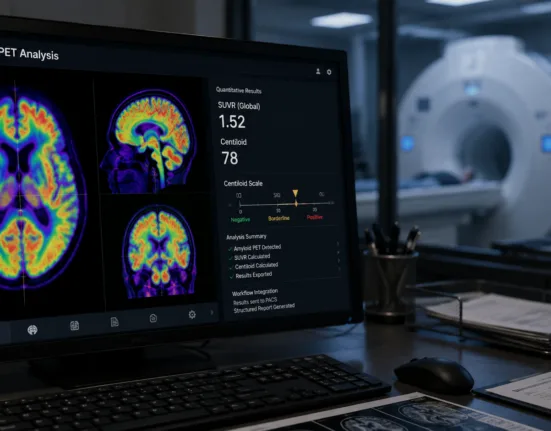
Blood-based Alzheimer’s diagnostics are often positioned as less invasive alternatives to amyloid PET imaging or cerebrospinal fluid analysis. PET scans provide high specificity but are expensive and geographically limited. Lumbar puncture offers direct cerebrospinal biomarker data but carries procedural barriers and patient hesitancy.
Lucent Diagnostics’ platform is built on Simoa technology, which is designed to detect low concentrations of neurodegenerative biomarkers in plasma. The analytical sensitivity is a competitive differentiator. However, clinicians tracking the field emphasize that analytical sensitivity does not automatically translate into clinical decision utility.
Key questions remain about how blood biomarker thresholds correlate with disease staging, how results should be interpreted in asymptomatic individuals, and whether community screening populations will produce higher false-positive rates compared to specialty cohorts.
The partnership therefore tests a hypothesis. Can blood-based biomarker screening function effectively in lower pre-test probability populations? If positive predictive value declines significantly outside memory clinics, regulators and payers may scrutinize the clinical and economic impact.
What this reveals about commercialization strategies in neurodegenerative diagnostics
The collaboration underscores a broader commercialization reality in neurodegenerative diagnostics. Even validated biomarkers struggle to gain traction without distribution scale and referral integration.
Lucent Diagnostics gains immediate national reach by aligning with a provider that already operates in 48 contiguous states. Life Line Screening, in turn, enhances its preventive screening portfolio with a cognitive health dimension that aligns with demographic aging trends.
From a strategic perspective, this move reflects a shift from specialist-driven adoption to consumer-adjacent access. The screening company’s model allows individuals to self-select testing rather than waiting for physician referral. That consumer-facing element could accelerate awareness but may also introduce interpretive complexity if primary care physicians are not fully aligned on follow-up protocols.
Regulatory watchers suggest that the success of such models will depend heavily on post-test pathways. If abnormal biomarker results do not translate into structured neurologist referrals, imaging confirmation, or therapy consideration, screening may generate anxiety without therapeutic benefit.
How reimbursement and payer dynamics could shape the viability of community-based cognitive biomarker testing
The press disclosure does not clarify reimbursement mechanics. Community screening programs often operate on direct-to-consumer payment models rather than traditional insurance billing.
That creates both flexibility and vulnerability. Direct payment bypasses payer coverage barriers but may limit uptake among lower-income populations unless subsidized models are introduced. Additionally, insurers may question the cost-effectiveness of broad asymptomatic screening without clear evidence that early detection reduces downstream healthcare expenditures.
Health economists frequently highlight the distinction between diagnostic accuracy and health outcome impact. For payer adoption, stakeholders will likely demand longitudinal data demonstrating that earlier biomarker detection leads to meaningful intervention timing, improved functional outcomes, or delayed institutional care.
Until disease-modifying Alzheimer’s therapies become broadly accessible and reimbursed with clear biomarker-driven eligibility criteria, large-scale screening may remain ahead of treatment infrastructure.
What clinicians and regulators are likely to watch as blood-based cognitive screening expands
Clinical stakeholders will focus on trial validation cohorts and real-world performance metrics. Many biomarker studies are conducted in controlled research populations enriched for symptomatic individuals. Community screening introduces heterogeneity in age, comorbidities, and baseline risk.
Regulatory authorities may also examine how test claims are framed. Biomarker detection of disease risk does not equate to clinical diagnosis. Clear communication will be essential to avoid overstating predictive certainty.

There is also the ethical dimension. Early identification of neurodegenerative risk carries psychological implications. Industry observers note that counseling frameworks, informed consent standards, and follow-up planning must evolve alongside expanded testing access.
If Lucent Diagnostics and Life Line Screening demonstrate that community-based biomarker deployment can be clinically responsible and operationally scalable, the model could influence other diagnostic categories, including Parkinson’s disease biomarkers or multi-analyte neurodegeneration panels.
Where this fits within the broader competitive landscape of Alzheimer’s diagnostics
The Alzheimer’s diagnostic market is increasingly crowded. Multiple biotechnology firms and diagnostic developers are pursuing plasma amyloid and tau assays. Academic spinouts and large reference laboratories are also entering the space.
Lucent Diagnostics differentiates itself through the Simoa platform’s analytical sensitivity and Quanterix Corporation’s research legacy. However, differentiation at the analytical level must be paired with physician confidence and payer clarity.
By leveraging Life Line Screening’s established infrastructure, the Massachusetts-based diagnostics player is testing a distribution advantage rather than solely a technology advantage. That shift suggests recognition that commercial scale, not only biomarker precision, may determine long-term success.
If uptake proves strong and referral networks adapt effectively, competitors may pursue similar partnerships with community screening providers, health system networks, or pharmacy chains.
What could go wrong and where blind spots remain in scaling cognitive biomarker screening
Several risks remain visible. False positives could increase in low-risk populations, generating unnecessary imaging or specialist referrals. Conversely, false reassurance from negative tests may delay evaluation of subtle cognitive symptoms.
Operationally, large-scale mobile screening requires robust sample handling, quality control, and data security protocols. Variability in phlebotomy environments could introduce pre-analytical challenges.
Strategically, the initiative assumes that earlier detection will soon align with therapeutic opportunity. If regulatory delays, pricing debates, or limited access to disease-modifying therapies persist, screening enthusiasm may soften.
Finally, equity considerations cannot be ignored. While Life Line Screening reaches rural communities, direct-to-consumer cost structures may still limit participation among underserved populations unless targeted outreach and affordability measures are implemented.
The partnership therefore represents both ambition and experimentation. It positions blood-based Alzheimer’s diagnostics at the edge of mainstream preventive health infrastructure while testing unresolved questions about predictive accuracy, reimbursement viability, and therapeutic readiness.
For industry leaders, clinicians, and regulators, the coming years will determine whether community-based cognitive biomarker testing becomes a routine preventive service or remains a transitional experiment awaiting stronger treatment alignment.