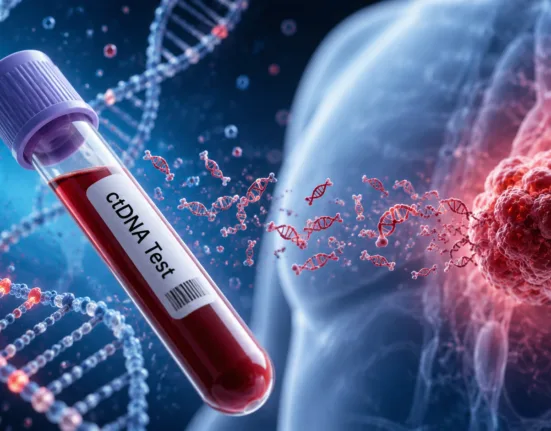
New England Biolabs Inc. has launched the Monarch Mag Cell-free DNA Extraction Kit, a magnetic bead-based system designed to enable scalable and reproducible isolation of circulating cell-free DNA from plasma, serum, urine, and cerebrospinal fluid. The launch positions the U.S.-based molecular biology supplier more directly within the upstream sample preparation layer of liquid biopsy research and diagnostics development, an area where reproducibility and automation compatibility remain persistent constraints.
Why cfDNA extraction remains a bottleneck rather than a solved problem
Cell-free DNA extraction is often treated as a commoditized upstream step, yet clinicians and diagnostics developers tracking the liquid biopsy space consistently point out that sample preparation variability remains one of the largest contributors to assay failure, noise, and irreproducibility. Circulating cell-free DNA is typically present at very low concentrations, is highly fragmented, and exists within biofluids that vary widely in nuclease activity, protein content, and contaminant burden.
Small differences in extraction chemistry, bead binding efficiency, or wash conditions can disproportionately affect recovery of short DNA fragments, which are often the most clinically relevant for oncology, prenatal testing, transplant monitoring, and minimal residual disease detection. As a result, cfDNA extraction has quietly become one of the most scrutinized steps in assay validation, particularly as liquid biopsy workflows move from exploratory research into regulated diagnostics.
Industry observers note that while sequencing chemistry and bioinformatics pipelines have advanced rapidly, upstream sample preparation has lagged in standardization, especially across different biofluid types and input volumes. This imbalance has created a market opportunity for suppliers that can deliver not just yield, but consistency across variable real-world samples.
What is genuinely new versus incremental in New England Biolabs’ approach
The Monarch Mag Cell-free DNA Extraction Kit does not introduce an entirely new extraction principle. Magnetic bead-based cfDNA isolation is already well established. What distinguishes the launch is the emphasis on broad biofluid compatibility, short fragment recovery down to approximately 50 base pairs, and seamless scaling from manual to automated processing without protocol redesign.
Regulatory watchers suggest that this focus reflects a growing recognition that future diagnostic workflows must be automation-first, not automation-adaptable. Many existing cfDNA kits perform adequately in small batch, manual research settings but exhibit variability or workflow friction when migrated to higher-throughput clinical or translational environments.
New England Biolabs appears to be positioning this product less as a standalone consumable and more as a foundational component within a larger, tightly integrated sample-to-result ecosystem. This is a subtle but important strategic distinction, particularly as diagnostics developers seek to minimize vendor fragmentation during assay troubleshooting and regulatory submission.
How this compares with existing cfDNA extraction solutions on the market
The cfDNA extraction market is crowded, with offerings from established diagnostics suppliers, sequencing platform providers, and specialized sample preparation companies. Many solutions perform well under controlled conditions but impose trade-offs between input volume flexibility, fragment size recovery, automation compatibility, and consumables complexity.
Clinicians familiar with cfDNA workflows often describe having to maintain different extraction protocols for plasma versus urine, or for low-volume versus high-volume samples, complicating both validation and routine operations. Kits optimized for plasma frequently underperform with urine or cerebrospinal fluid, while high-volume workflows may sacrifice short fragment recovery.
By supporting multiple biofluid types across a defined input range using a single workflow, New England Biolabs is addressing a practical pain point rather than competing solely on headline yield metrics. Industry analysts note that such operational simplification can be as valuable as marginal performance gains, particularly in laboratories scaling beyond pilot studies.
Implications for liquid biopsy assay development and validation
From a diagnostics development perspective, consistency often outweighs peak performance. Regulators and payers are less concerned with maximum theoretical yield than with reproducibility across sites, operators, and sample conditions. A cfDNA extraction method that behaves predictably across heterogeneous inputs reduces the burden of assay bridging studies and site-to-site comparability assessments.
This matters acutely for emerging applications such as minimal residual disease detection, where signal levels approach the limits of detection and extraction inefficiencies can directly translate into false negatives. Industry observers believe that improvements in upstream cfDNA recovery consistency may have a disproportionate impact on clinical confidence compared with incremental advances in sequencing depth.
The ability to recover very short DNA fragments also has implications beyond oncology. Prenatal testing, transplant rejection monitoring, and certain inflammatory or neurological indications rely on fragment size distributions that are easily distorted during extraction. A workflow that preserves these distributions may enable more robust biomarker development.
Why automation compatibility is becoming a non-negotiable requirement
Laboratories transitioning from research to clinical-grade workflows increasingly view manual extraction as a temporary state rather than a long-term solution. Labor constraints, error reduction, and throughput demands are driving automation adoption even in mid-sized diagnostic laboratories.
Regulatory watchers note that workflows requiring manual intervention at scale are increasingly viewed as operational risks, not cost savings. Automation-compatible extraction methods reduce operator-dependent variability and support more defensible quality management systems.
By designing the Monarch Mag Cell-free DNA Extraction Kit to function consistently across manual and automated contexts, New England Biolabs is aligning with a broader industry shift toward automation-native assay design. This approach may be particularly attractive to diagnostics developers planning phased commercialization, where workflows must scale without fundamental redesign.
Strategic context within New England Biolabs’ broader portfolio
New England Biolabs has historically been known for enzymes, reagents, and library preparation tools rather than as a primary supplier of diagnostic sample preparation kits. Expanding into cfDNA extraction represents a strategic move upstream in the molecular diagnostics value chain.
Industry analysts suggest this reflects an effort to reduce dependency on external sample preparation vendors and offer customers a more cohesive workflow spanning extraction, amplification, and sequencing library preparation. In regulated environments, minimizing vendor handoffs can simplify validation documentation and supplier audits.
This expansion also aligns with growing interest in integrated workflow solutions rather than best-in-class point products. As diagnostics developers face tighter development timelines and regulatory scrutiny, suppliers capable of supporting multiple workflow stages may gain a competitive advantage.
Environmental and consumables considerations as a secondary differentiator
While performance and reproducibility dominate purchasing decisions, sustainability considerations are increasingly entering procurement discussions, particularly within academic and publicly funded laboratories. Reductions in plastic usage and packaging waste, while unlikely to drive adoption alone, can influence vendor selection when technical performance is comparable.
Industry observers note that such considerations are becoming more visible in grant-funded and institutional procurement processes, even if they remain secondary to analytical performance.
Risks, blind spots, and unanswered questions
Despite the strategic rationale, several uncertainties remain. Performance claims across diverse biofluids and fragment sizes will need to be validated independently by users operating outside controlled evaluation settings. Real-world sample heterogeneity, particularly in urine and cerebrospinal fluid, can expose edge cases not captured in initial performance data.
Adoption may also depend on how seamlessly the kit integrates with existing laboratory automation platforms, as laboratories are often locked into specific liquid handling ecosystems. Any friction at this interface could limit uptake despite strong core chemistry.
Finally, as cfDNA workflows increasingly intersect with regulated diagnostic applications, documentation quality, lot-to-lot consistency, and long-term supply reliability will become as important as analytical performance. Regulatory watchers suggest that sustained adoption will hinge on how effectively New England Biolabs supports these downstream requirements.
What clinicians, developers, and regulators are likely to watch next
Going forward, industry observers will be watching whether New England Biolabs leverages this launch as a foundation for deeper involvement in clinical-grade workflows, potentially including co-development with diagnostics partners. Independent validation data, particularly in minimal residual disease and early cancer detection settings, will be closely scrutinized.
There is also interest in whether the company extends this approach to RNA or multi-analyte extraction workflows, reflecting the broader move toward integrated liquid biopsy panels. If successful, this expansion could further reposition New England Biolabs from a reagent supplier to a more central workflow enabler within molecular diagnostics.