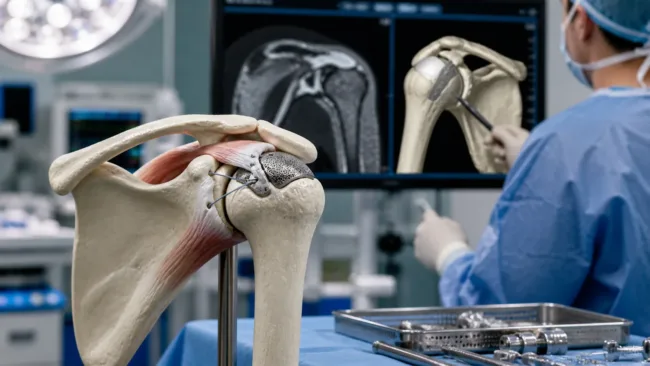
Smith+Nephew has signed a definitive agreement to acquire Integrity Orthopaedics, a U.S.-based developer of the Tendon Seam rotator cuff repair system, in a deal worth up to $450 million. The move strengthens the medical device manufacturer’s presence in the sports medicine market by adding a novel repair platform designed to reduce re-tear rates, improve workflow simplicity, and accelerate recovery in rotator cuff surgeries. The system received 510(k) clearance in 2023 and joins a shoulder-focused portfolio that includes the REGENETEN bioinductive implant and the recently launched AETOS Shoulder System.
Why the rotator cuff repair failure rate remains a stubborn problem in orthopedics
Rotator cuff repair is among the most frequently performed orthopedic procedures in the United States, with nearly half a million cases annually and a market estimated at $875 million. Despite this scale, clinicians continue to face high failure rates. Re-tear rates have historically ranged between 20 and 40 percent, particularly in elderly patients or those with chronic tendon degeneration. This has fueled a wave of innovation aimed at enhancing both mechanical fixation and biological healing.
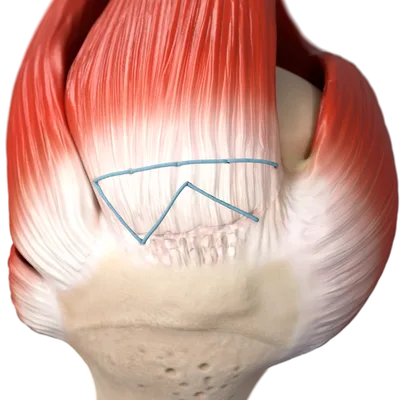
The Tendon Seam platform attempts to solve the structural failure challenge through an integrated approach. It deploys a continuous suture system anchored by a patented micro-anchor design, enabling stronger, distributed fixation. Each stitch is individually locked, and the entire system is delivered through a single instrument. This architecture could eliminate suture convergence, reduce procedure variability, and support faster rehab protocols. Early surgical reports suggest shorter sling times and lower pain scores, but comprehensive trial data has not yet been made public.
How Tendon Seam aligns with Smith+Nephew’s biologic-to-mechanical shoulder strategy
Smith+Nephew has spent nearly a decade building a broad and modular shoulder repair platform, blending biologics, mechanical constructs, and arthroplasty. Its 2017 acquisition of Rotation Medical and the subsequent success of the REGENETEN bioinductive implant positioned the company as an early leader in biologic enhancement for rotator cuff healing. More than 200,000 procedures have since used REGENETEN, with published data supporting improved tendon thickness and reduced revision rates.
The addition of Tendon Seam complements this biologic edge with a mechanical innovation focused on tear prevention and surgical reproducibility. By offering both a healing scaffold and a resilient suture platform, Smith+Nephew can now address both failure modes in rotator cuff surgery—biological non-integration and mechanical overload. This dual-layer offering may appeal to surgeons managing complex tears, revision cases, or high-demand patients seeking faster recovery timelines.
The acquisition also reflects a clear continuity in leadership and product vision. Integrity Orthopaedics was founded by Tom Westling, one of the original developers of the REGENETEN platform, suggesting that Smith+Nephew is doubling down on a trusted product development model with proven clinical insight and commercial discipline.
What this reveals about Smith+Nephew’s capital allocation priorities in 2026
The $225 million upfront payment, with a further $225 million in performance-based milestones over five years, aligns with Smith+Nephew’s RISE strategy, which emphasizes strategic growth through targeted acquisitions. The company is funding the deal through existing cash reserves while maintaining its leverage ratio below 2x EBITDA. The transaction is expected to be accretive to group trading profit margins by 2028, underscoring a disciplined financial outlook.
This transaction marks a continuation of Smith+Nephew’s focused capital deployment toward platform technologies rather than single-product assets. Rather than targeting companies with significant revenue today, the medical device manufacturer appears more willing to underwrite adoption risk if the clinical and commercial potential is compelling enough. Analysts tracking the sector suggest that this model—based on milestone-based payments and integrated procedural platforms—is increasingly becoming the standard structure in high-value device M&A.
Where the clinical evidence gap and commercial execution risks still linger
Despite the compelling mechanical proposition of Tendon Seam, the platform remains early in its adoption cycle. Regulatory clearance was granted in 2023, but robust head-to-head studies versus conventional anchor-based systems or competitive suture bridges have not been publicly disclosed. Clinicians seeking evidence-based adoption may wait for post-market data, especially in reimbursement-constrained health systems or value-based care environments.
There is also a potential pricing challenge. Integrated systems typically command a premium, and cost-sensitive providers may resist switching without clear proof of superior outcomes. While faster surgical times and fewer complications could offset some of the cost concerns, those benefits must be verified through multi-center studies or real-world registries.
On the operational side, Smith+Nephew must integrate the Integrity Orthopaedics team, ramp manufacturing, and deliver surgeon training at scale to ensure the platform’s success. Commercial execution, particularly in competitive U.S. ambulatory surgery centers, will determine how quickly Tendon Seam can displace existing repair methods.
Why an integrated shoulder ecosystem could become the new competitive battleground
Smith+Nephew is now one of the few orthopedic companies offering a full ecosystem for shoulder management. The portfolio spans biological repair (REGENETEN), mechanical fixation (Tendon Seam), soft tissue anchors (Q-FIX), and joint replacement (AETOS). This positions the company to win in both repair and replacement scenarios, which often coexist in aging populations or post-failure cases.
Competitors such as Arthrex, Stryker, and Zimmer Biomet continue to innovate across the same categories, and consolidation in sports medicine is accelerating. What sets Smith+Nephew apart is its ability to bundle platforms into cohesive workflows. Surgeons increasingly prefer systems that reduce variability and simplify decisions across a range of shoulder pathologies. An integrated toolkit also improves account stickiness and procedural standardization—key metrics for hospital systems and group purchasing organizations.
What industry observers are watching next as the shoulder market evolves
The U.S. shoulder market continues to be one of the fastest-growing segments in orthopedics, fueled by demographic trends, outpatient migration, and rising sports injury volumes. Rotator cuff repair, in particular, is seeing increased complexity as patients present later and surgical expectations rise. In this environment, device makers offering both ease of use and improved outcomes stand to gain significant share.
Industry observers will now look for signs of Tendon Seam’s commercial uptake. This includes procedural volumes, registry data on re-tear rates, and feedback from early adopter surgeons. Payers may also scrutinize the platform’s economic value, especially if Smith+Nephew positions it as a premium construct.
In parallel, Smith+Nephew’s performance in deploying the AETOS Shoulder System, launched in 2024, will signal how well the company can cross-sell within its shoulder franchise. If it can successfully integrate Tendon Seam without compromising the growth of its other platforms, the company could shift the competitive balance in shoulder surgery in its favor.
The transaction is expected to close before the end of January 2026.