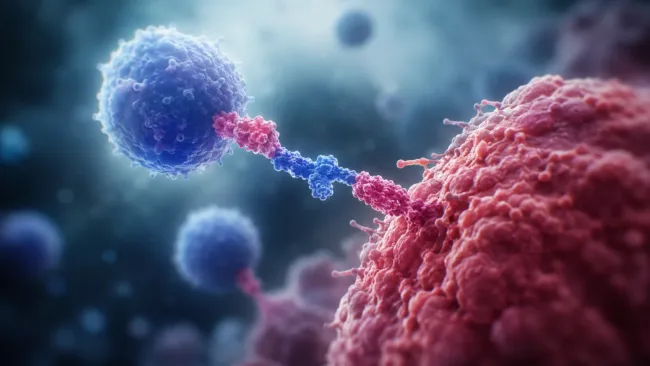
Whitehawk Therapeutics, Inc. presented real-world analyses at the Society of Gynecologic Oncology 2026 Annual Meeting supporting MUC16 as a highly expressed and stable target in ovarian and endometrial cancers, reinforcing the development rationale for its investigational antibody-drug conjugate HWK-016. The clinical-stage oncology company said the findings support continued Phase 1 evaluation of HWK-016 in advanced ovarian and endometrial cancers, with initial clinical data expected in the first half of 2027.
What makes this update more consequential than a routine target-expression poster set is that Whitehawk Therapeutics is trying to reposition MUC16 from a familiar biomarker-associated molecule into a more credible next-generation delivery address for antibody-drug conjugates. That is not a trivial shift. In gynecologic oncology, the field has already seen multiple waves of enthusiasm around target selection, only for real-world development to expose problems in heterogeneity, antigen shedding, payload tolerability, or patient-selection limitations. Whitehawk Therapeutics is effectively arguing that MUC16 deserves renewed attention not because it is novel, but because earlier development strategies may have gone after the wrong part of the protein.
Why stable MUC16 expression could matter more than raw abundance in the next ADC cycle
Expression alone rarely wins the ADC race anymore. Oncology developers increasingly need a target that is not only abundant, but also durable across disease stage, histologic subtype, and treatment history. That is the main message Whitehawk Therapeutics is trying to send with these data. The company reported that MUC16 remained highly expressed across ovarian cancer subtypes, particularly high-grade serous ovarian carcinoma, and also stayed stable across metastatic status, disease stage, and platinum sensitivity in that subtype. In endometrial cancer, it reported similarly high and stable expression, especially in serous adenocarcinoma and endometrioid adenocarcinoma.
If those findings hold up under deeper clinical validation, that stability could be more commercially and clinically useful than a simple headline about high expression. A target that remains present from earlier-line disease through heavily pretreated settings potentially broadens development optionality. It can support monotherapy testing in refractory disease, biomarker-enriched expansion strategies, and possibly future combination approaches without requiring the developer to keep redefining where the target is still relevant. For clinicians and trial designers, that matters because ovarian and endometrial cancers can become biologically more complex as patients cycle through lines of therapy.
The other reason stability matters is that it can reduce one of the recurring anxieties in ADC development: whether a promising target fades as the disease evolves. Whitehawk Therapeutics is clearly trying to distinguish MUC16 from targets whose expression may be more uneven or narrower across subpopulations. The company’s claim that MUC16 showed the highest median expression compared with several validated and emerging ADC targets in ovarian and endometrial cancer is central to that positioning. But the more important competitive implication is not simply that MUC16 may be higher. It is that Whitehawk Therapeutics wants investors and oncologists to see it as consistently actionable.
What this reveals about the competitive pressure building around gynecologic ADC target selection
The gynecologic cancer ADC field is no longer just about proving that a payload can be delivered. It is increasingly about proving that the selected target offers a cleaner, broader, and more durable foundation than alternatives. Whitehawk Therapeutics explicitly compared MUC16 expression with NaPi2b, HER2, folate receptor alpha, TROP2, B7-H4, CDH6, and CLDN6 in ovarian cancer, and with NaPi2b, HER2, TROP2, folate receptor alpha, and B7-H4 in endometrial cancer.
That comparison is strategic. The company is not merely presenting biology. It is trying to carve out competitive white space in a crowded ADC landscape where several targets already carry varying degrees of validation, developer interest, or clinical familiarity. By framing MUC16 as at least two-fold higher than other emerging targets in ovarian cancer, and meaningfully higher than comparator targets in endometrial cancer, Whitehawk Therapeutics is sending a signal that MUC16 could justify a differentiated development path rather than a catch-up program.
Still, target-expression superiority on paper does not automatically translate into clinical superiority. ADC history is full of targets that looked compelling in translational datasets but then ran into narrower-than-expected efficacy, toxicity trade-offs, or enrollment complexity once moved into broader patient populations. That is why the Whitehawk Therapeutics update is best read as an important biological validation step, not yet as a competitive clinical breakthrough. The company strengthened the rationale for HWK-016, but it did not yet answer the questions that actually determine clinical adoption: whether the drug can deliver meaningful response durability, whether toxicity is manageable over repeated dosing, and whether any efficacy signal stands apart from what physicians can already access or expect from competing mechanisms.
Why Whitehawk Therapeutics is emphasizing the non-shed portion of MUC16 so heavily
The most technically important part of the announcement may not be the expression rankings themselves, but Whitehawk Therapeutics’ argument that earlier MUC16-directed ADCs targeted the cleaved extracellular portion of the protein, commonly associated with CA125, which is shed into circulation and may limit tumor delivery. HWK-016 is being positioned as a next-generation attempt to solve that problem by targeting the membrane-bound, non-shed portion of MUC16 instead.
That distinction is crucial because it addresses a known ADC problem in practical rather than theoretical terms. If a target sheds into circulation, a therapeutic antibody can be soaked up before it reaches tumor cells efficiently. In effect, the biology creates a decoy effect, weakening tumor delivery and making a superficially attractive target less useful. Whitehawk Therapeutics is arguing that HWK-016 was engineered around that failure mode, not despite it. That gives the program a clearer scientific identity than a standard “me-too” ADC claim.
The company also highlighted a stable, cleavable linker and a topoisomerase I inhibitor payload, placing HWK-016 within a payload class that continues to attract strong interest across solid tumors. But this also raises the bar for differentiation. Topoisomerase I payloads are no longer unusual enough to stand out on their own. For Whitehawk Therapeutics, the burden will be to show that the combination of membrane-bound MUC16 targeting and linker-payload engineering yields a therapeutic window that earlier MUC16 strategies could not achieve.
What clinicians and regulators are likely to watch before treating HWK-016 as more than a biologically elegant idea
From a regulatory and clinical perspective, the next stage of scrutiny will shift rapidly from target biology to execution risk. Whitehawk Therapeutics has a Phase 1 trial underway in advanced ovarian and endometrial cancers, with initial data not expected until the first half of 2027. That means the program is still at the point where elegant rationale must survive first contact with human dosing realities.
Clinicians tracking the space are likely to focus on several issues. The first is whether expression stability translates into actual tumor delivery and meaningful antitumor activity. The second is whether efficacy appears broad across histologies or is concentrated in narrower subgroups despite the broad expression claims. The third is whether safety supports dose intensity high enough to exploit the target without undermining tolerability.
Regulatory watchers are also likely to pay attention to how clearly Whitehawk Therapeutics can define the biomarker strategy around HWK-016. If MUC16 truly functions as a highly prevalent and stable target, the company may eventually argue for broader applicability. But regulators generally respond better when development paths become more precise rather than more expansive. That means the eventual success of the program may depend on whether Whitehawk Therapeutics can identify the patient segments where expression, safety, and efficacy align most convincingly.
Manufacturing and scalability questions also remain quietly important. Many ADC programs generate early excitement only to face later pressure around consistency, supply, and commercial economics. Whitehawk Therapeutics has not yet reached that stage, but it is part of the forward-looking risk profile. A biologically interesting target is only valuable if the drug built around it can be scaled, priced, and positioned credibly within an increasingly competitive treatment ecosystem.
Why this SGO 2026 presentation strengthens the case for HWK-016 without resolving the hardest questions yet
The main value of the SGO 2026 posters is that they make Whitehawk Therapeutics’ story more coherent. Instead of presenting HWK-016 as simply another gynecologic ADC, the company now has a sharper thesis: MUC16 is not only widely expressed, but unusually stable, potentially more attractive than several competing ADC targets, and better approached through the membrane-bound non-shed portion of the protein than through earlier strategies tied to shed antigen biology.
That is a stronger story than many preclinical or translational oncology updates offer. It gives the market a reason to view HWK-016 as a mechanistically deliberate asset rather than a speculative platform extension. But it is still an early story. The dataset supports biological plausibility and program rationale. It does not yet establish clinical differentiation, commercial inevitability, or regulatory clarity.
For now, the Whitehawk Therapeutics update is best understood as a target-validation milestone with real strategic value. It improves confidence that HWK-016 is pointed at a relevant address in ovarian and endometrial cancer. Whether that address leads to a clinically meaningful therapy will depend on the next layer of evidence, where target biology stops being the headline and drug performance becomes the whole argument.