Aviva Bio has received formal FDA feedback clarifying the development pathway for AVA‑291 (d3‑Testosterone), a next-generation, non-aromatizing testosterone therapy for women. The company also disclosed preclinical data showing a thousand-fold lower potential for breast cancer cell proliferation compared to standard testosterone.
Why a female-specific testosterone therapy remains elusive despite decades of off-label use
The absence of any U.S. Food and Drug Administration–approved testosterone therapy specifically for women remains one of the more conspicuous gaps in endocrine medicine. For decades, off-label testosterone formulations developed for men have been repurposed for women, despite lacking gender-specific safety profiles and clinical validation. At the heart of regulatory resistance lies one unresolved biological risk: aromatization. When testosterone is converted to estrogen in breast tissue, it can fuel hormone-sensitive cancers—making aromatase activity the key clinical hurdle to approval.
Aviva Bio, a clinical-stage biotechnology company based in Concord, Massachusetts, is betting that its deuterated testosterone analog AVA‑291 (d3‑T) may finally shift that regulatory stalemate. The company disclosed that it has received formal guidance from the U.S. FDA via a Type B meeting, outlining the development pathway for AVA‑291 as a female-focused testosterone therapy. While the agency reaffirmed long-standing concerns about breast cancer risk, it also acknowledged the need for novel strategies that reduce aromatization without compromising androgen activity.
This alignment between FDA scrutiny and molecular design marks a pivotal inflection point for a field that has struggled to demonstrate both efficacy and safety in the same candidate.
What makes AVA‑291 structurally different—and potentially safer for long-term hormone use
AVA‑291 is a deuterium-substituted isotopologue of testosterone, meaning it retains testosterone’s chemical identity and androgen receptor affinity but is designed to resist aromatization. Preclinical studies presented by Aviva Bio have shown that AVA‑291 exhibits approximately 1,000-fold less potential to stimulate breast cancer cell proliferation compared to standard testosterone, according to data accepted for presentation at the American Association for Cancer Research (AACR) 2026 Annual Meeting.
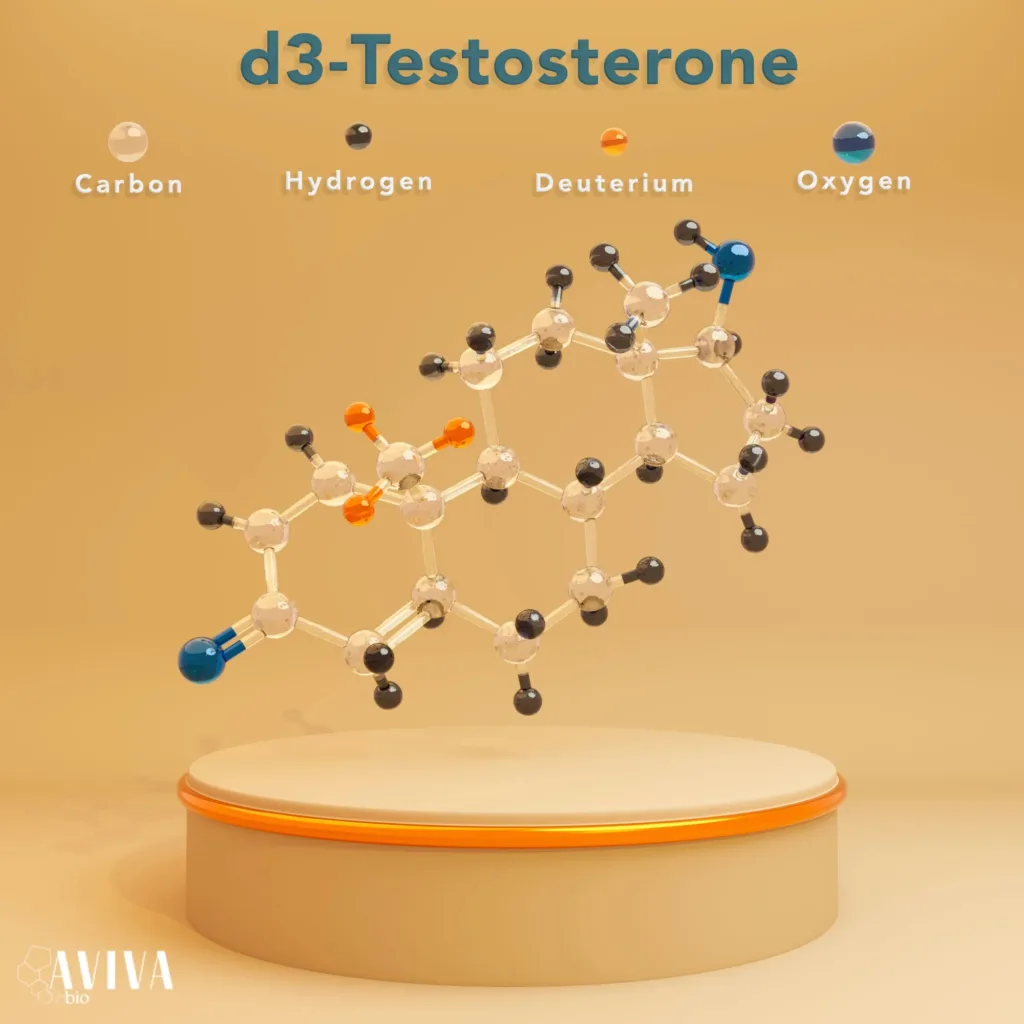
These findings suggest a decoupling of androgen efficacy from estrogen-related oncogenic risk, addressing one of the most stubborn trade-offs in testosterone therapy for women.
Industry observers note that the strategy of using deuterium substitution to slow enzymatic conversion is not entirely new—it has precedent in metabolic disorder drugs and cancer therapeutics. However, applying this principle to testosterone, particularly in the context of breast cancer risk, represents a novel regulatory hypothesis.
Regulatory experts tracking the field suggest the FDA’s willingness to engage in structured feedback at this stage is a positive signal, though it does not yet indicate a fast-track or breakthrough designation. Nonetheless, the clarity of guidance allows Aviva Bio to tailor its clinical program with fewer uncertainties around trial design and endpoint expectations.
What this FDA interaction reveals about the agency’s stance on hormone therapies for women
The U.S. FDA’s formal feedback represents more than a procedural checkpoint. It suggests a potential evolution in how the agency approaches hormone therapies historically viewed as risky for female patients. Until now, the lack of a validated safety model—and the persistent reliance on male-derived formulations—has created a regulatory Catch-22: there is no female-specific testosterone therapy because none have cleared the safety bar, but none have cleared the safety bar because the development frameworks were inadequate.
Regulatory watchers believe the agency’s recognition of aromatization as the central risk—and its receptivity to molecular solutions that directly address it—may open the door for a new class of precision hormone therapeutics. That door is not yet wide open, but AVA‑291 appears to be among the first candidates with a plausible mechanism to walk through it.
Critically, this could also set a new precedent for FDA interactions with hormone-focused therapies more broadly. If AVA‑291’s pathway succeeds, similar development strategies could be deployed for estrogen, progesterone, and combination therapies where off-target metabolism has historically constrained innovation.
Why safety is now the dominant lens for market acceptance and clinical adoption
While testosterone therapy for women is often framed around quality-of-life endpoints—low libido, fatigue, or muscle loss—the key to mainstream adoption lies in safety perception. Clinicians tracking the space believe that, for AVA‑291 to be viable commercially, it must not only demonstrate non-inferiority to testosterone in symptomatic relief but also offer clearly superior safety metrics in breast tissue and estrogen-sensitive pathways.
That’s where the latest AACR-bound data may become pivotal. Preclinical results showing significantly reduced proliferation of breast cancer cells, coupled with the agent’s resistance to aromatase-mediated conversion, give AVA‑291 a profile that is easier to position as a therapeutic innovation rather than just a reformulation.
However, translational hurdles remain. Endocrinologists emphasize that even a strong preclinical anti-proliferation profile must be validated in long-term human data, especially in peri- and postmenopausal women with elevated baseline risk for hormone-sensitive cancers.
The company’s ability to design trials that stratify these populations while isolating the pharmacodynamic impact of AVA‑291 will be essential in determining whether the early promise translates to durable, approvable outcomes.
What happens next: manufacturing, indication selection, and commercial viability
Now that FDA guidance has been issued, the next 12 to 18 months will likely be dominated by trial design finalization, manufacturing scale-up, and indication prioritization. While Aviva Bio has stated its intention to pursue multiple indications, including menopausal hormone replacement therapy and testosterone-related muscle loss in patients on glucagon-like peptide-1 (GLP‑1) agonists, the first approval target will likely be a narrow, high-need subgroup with clear risk-benefit calculability.
That may include women with low testosterone symptoms post-hysterectomy or those experiencing sexual dysfunction related to endocrine disorders. Such populations offer cleaner baselines, lower comorbidity interference, and more rapid demonstration of both efficacy and safety.
On the manufacturing side, analysts expect that the deuterated nature of AVA‑291 may require specialized synthesis but should be scalable given its chemical similarity to testosterone. The fact that it can be substituted into existing testosterone formulations provides downstream flexibility for formulation, dosing, and distribution.
Intellectual property is not expected to be a constraint, with Aviva Bio holding multiple U.S. patents on AVA‑291 that extend into the 2040s. Still, commercial viability will hinge on payor coverage, especially if the therapy is priced at a premium due to its molecular design.
Reimbursement experts suggest that demonstration of reduced downstream oncology risk may justify pricing above generic testosterone, but real-world cost savings would need to be modeled rigorously.