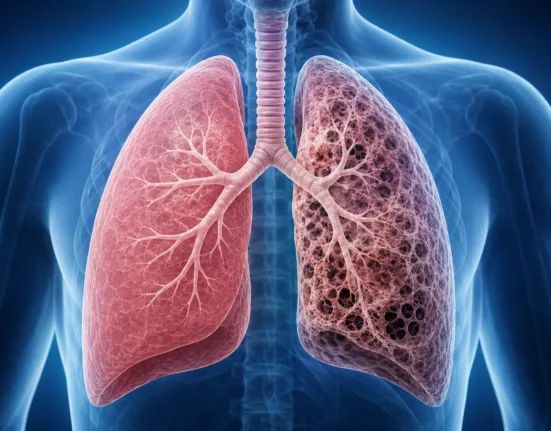
Baseimmune, a London-based biotechnology company using computational protein design, has announced a strategic expansion into fibrosis, launching a pipeline program targeting idiopathic pulmonary fibrosis as its lead indication. The company disclosed key preclinical proof-of-concept efficacy readouts expected in 2026 and 2027, alongside the formation of a Scientific Advisory Board drawn from leading fibrosis research centers in the United States. The announcement marks Baseimmune’s first public disclosure of a disease-specific pipeline program beyond its foundational immunotherapy platform.
Why IPF has resisted single-target drug development for decades despite sustained investment
IPF occupies a uniquely challenging position in respiratory medicine. Two approved antifibrotic agents, pirfenidone and nintedanib, have been on the market for over a decade and remain the standard of care. Both slow the rate of forced vital capacity decline but neither halts disease progression, and neither has demonstrated meaningful reversal of established fibrosis in clinical use. The five-year survival rate remains poor, broadly comparable to many solid tumours, and patients face progressive respiratory failure with limited pharmacological options beyond transplant for those who qualify.
The biological explanation for this therapeutic ceiling is increasingly well characterised. IPF is not driven by a single dysfunctional pathway but by a self-reinforcing network of pro-fibrotic signals involving transforming growth factor beta, platelet-derived growth factor, the lysophosphatidic acid axis, and dysregulated immune and stromal cell interactions. When one pathway is suppressed, compensatory activation through parallel circuits sustains fibrotic progression. Pirfenidone and nintedanib address portions of this network but leave compensatory mechanisms intact. Industry observers have long noted that this redundancy, not a lack of potent single-target agents, is the primary constraint on outcomes.

The past several years have seen a significant number of late-stage trial failures in IPF, including programs targeting lysyl oxidase-like 2, connective tissue growth factor, and integrin alphav. Each represented rationally selected single targets with supporting mechanistic data. Each failed to demonstrate clinically meaningful benefit in phase three trials. The pattern has shaped the current consensus that therapeutic progress in IPF requires strategies capable of addressing multiple pathways simultaneously rather than optimising inhibition of any individual target.
What Baseimmune’s antigen-design platform proposes that differentiates it from existing modalities
Baseimmune’s stated approach involves engineering antigens designed to engage the immune system against multiple pro-fibrotic pathways simultaneously, using what the company describes as a computational protein design platform integrating structural modelling and experimental screening. The company’s framing positions the strategy as one of immune modulation rather than direct pathway inhibition: instead of pharmacologically blocking a target, the approach seeks to harness endogenous immune responses to interrupt and reset the dysregulated fibrotic network. This places Baseimmune’s platform conceptually closer to cellular immunotherapy and therapeutic vaccine approaches than to the small molecule or monoclonal antibody programs that have dominated IPF development.
The relevance of that framing is underscored by the background of one SAB member, Joel Rurik, whose early academic work on in vivo cellular immunotherapy for fibrotic disease provided proof-of-concept for approaches now being advanced by Capstan Therapeutics, which was acquired by AbbVie. That work demonstrated the feasibility of redirecting immune cells to target fibroblasts in fibrotic tissue, a directionally similar concept to what Baseimmune is pursuing through a different design architecture. The inclusion of Rurik on the SAB signals that Baseimmune is positioning itself within the emerging cellular and immune-redirecting modality space for fibrosis, rather than as an incremental refinement of existing antifibrotic pharmacology.
At this stage, Baseimmune has not disclosed specific molecular targets, antigen design details, or delivery modalities, citing preclinical-stage confidentiality. The company has referenced integration with emerging delivery platforms, though it has not named partners or specific technologies. Clinicians tracking immune-based approaches to fibrosis will note that delivery remains a significant unresolved challenge in this space: achieving durable immune modulation in lung tissue without triggering inflammatory exacerbation requires precise control that has proven difficult across multiple modalities.
How the SAB composition signals which fibrosis indications Baseimmune intends to pursue beyond IPF
The composition of Baseimmune’s Scientific Advisory Board is informative beyond its immediate IPF focus. The SAB spans lung, liver, kidney, and cardiac fibrosis expertise, covering the four major organ-specific fibrotic disease categories that represent the primary commercial and clinical opportunity in this space. Scott Friedman at Mount Sinai is one of the most cited researchers in hepatic fibrosis globally, with foundational contributions to stellate cell biology and the translational science underpinning current NASH and liver fibrosis drug development. John Cijiang He brings expertise in renal fibrosis and chronic kidney disease, a market of substantial scale given the prevalence of fibrotic progression in diabetic nephropathy and IgA nephropathy. The breadth of the SAB suggests that Baseimmune’s stated IPF lead is the first disclosed program in a broader multi-indication fibrosis strategy, though timelines for indications beyond lung have not been disclosed.
Paul Noble’s election to the National Academy of Medicine in 2025 adds institutional credibility to the pulmonary fibrosis advisory capacity. Toby Maher, as Director of Interstitial Lung Disease at the Keck School of Medicine of USC, brings operational clinical trial experience in IPF, which will be relevant as the company moves toward IND-enabling studies and first-in-human planning. The SAB’s collective depth in fibrosis biology, particularly across the translational spectrum from cellular mechanism to clinical endpoint design, addresses a gap that many early-stage platforms in this space have struggled with: the distance between in vitro proof-of-concept and a trial-ready program with clearly defined endpoints.
What the 2026 and 2027 proof-of-concept readouts will need to demonstrate to justify clinical advancement
Baseimmune’s announced timeline of preclinical proof-of-concept efficacy readouts in 2026 and 2027 places the company at an early but meaningful decision point. In fibrosis preclinical development, the key benchmark is functional reversal or arrest in established animal models rather than merely prevention of fibrosis induction, which has limited translational relevance to the clinical setting. The bleomycin mouse model remains the most widely used screening tool for IPF despite its acknowledged limitations in capturing the chronic progressive biology of human disease. More predictive models including aged mouse systems, humanised mouse models with human immune components, and in vitro precision-cut lung slice assays have gained traction in the field, and regulatory watchers suggest that the quality of preclinical data packages submitted to the FDA in support of IPF INDs is under increasing scrutiny following the high rate of clinical attrition.
For Baseimmune’s multi-pathway immune modulation strategy specifically, preclinical readouts will need to demonstrate not only activity against relevant fibrotic endpoints but also the absence of immune-mediated toxicity or paradoxical inflammatory activation in lung tissue. Immune modulation in a fibrotic microenvironment carries the risk of driving acute exacerbation, the leading cause of rapid deterioration and mortality in IPF. Any preclinical signal suggesting inflammatory over-activation would be a critical barrier to IND progression and would need to be resolved before regulatory authorities would accept a first-in-human application.
Competitive positioning and what the broader IPF pipeline landscape reveals about unmet need
The IPF pipeline in early 2026 is more active than at any point in the condition’s therapeutic history, reflecting both the scale of unmet need and the field’s growing mechanistic sophistication. Several programs targeting autotaxin inhibition of the LPA axis are in phase two and three, including from Blade Therapeutics and others. Inhaled delivery strategies for antifibrotic agents are being advanced as a means of improving lung tissue exposure while reducing systemic adverse effects. Senolytic approaches, aimed at clearing senescent fibroblasts implicated in sustained pro-fibrotic signalling, have entered early clinical evaluation. Against this backdrop, Baseimmune’s entry as a computational antigen-design company is differentiated in modality but faces a competitive landscape where clinical proof of concept has become the primary currency.
The broader commercial context is significant. Analysts tracking the fibrosis market have noted that approved therapies generate several billion dollars annually globally, with nintedanib generating substantial revenue for Boehringer Ingelheim across IPF, systemic sclerosis-associated ILD, and other progressive fibrosing ILDs. Any therapy demonstrating meaningful disease modification beyond the current standard of care would address a gap that major pharmaceutical companies have failed to fill despite sustained investment. That commercial scale has attracted both large pharma and well-funded biotechs, meaning Baseimmune’s path to partnership or acquisition will depend on the quality and differentiation of its early data package.
Risks, blind spots, and what investors and partners will want to see in the next 24 months
Several unresolved questions will define Baseimmune’s credibility in the period before its 2026 proof-of-concept readout. The company has not yet disclosed the specific immune mechanism it is targeting, the molecular architecture of its designed antigens, or which delivery modality it is pursuing. In the current funding environment for early-stage biotechs, the absence of mechanistic specificity makes it difficult for potential partners or investors to assess the program’s risk profile. Computational protein design platforms have generated significant interest across oncology and infectious disease, but fibrosis presents a distinct challenge: unlike tumour antigens or viral epitopes, pro-fibrotic fibroblasts are host cells expressing host proteins, making specificity of immune targeting considerably more complex.
The manufacturing and scalability pathway for computationally designed antigen-based immunotherapies at commercial scale also remains an open question. Unlike small molecules with established chemistry, manufacture, and control processes, novel protein antigens require bespoke analytical characterisation and may present formulation challenges that only become apparent in late-stage development. Regulatory watchers note that the FDA’s Center for Biologics Evaluation and Research has been engaged in ongoing guidance development around novel immune modulation approaches, and any first-in-human application for a multi-pathway antigen program in IPF would likely require extensive Chemistry, Manufacturing and Controls documentation alongside the pharmacology and toxicology package.
What clinicians, regulators, and industry observers will watch most closely over the next 24 months is whether Baseimmune’s proof-of-concept data demonstrates functional activity in established fibrosis models, a clean safety profile in the context of lung immune modulation, and a mechanistic signal that is sufficiently specific and translatable to support a credible IND package. The SAB assembled is capable of helping the company design experiments that meet that bar. Whether the platform’s underlying computational design logic can generate antigens that deliver on the multi-pathway hypothesis in a complex tissue-specific immune environment is the question that preclinical readouts in 2026 and 2027 will begin to answer.