
Better Life Science said on April 3 that it is using the start of tick season to spotlight prevention, rapid post-bite response, and the commercial availability of its Tick Bite Hero at-home Lyme disease test, a direct-to-consumer product processed through the company’s CLIA-certified laboratory. The announcement matters less as a product launch than as a signal that Lyme disease is becoming part of the broader at-home diagnostics playbook, where convenience, consumer anxiety, and regulatory ambiguity increasingly collide.
Why Better Life Science is really selling speed, reassurance, and access rather than a standalone Lyme answer
The strongest commercial logic behind Tick Bite Hero is not that it replaces standard Lyme disease workups, but that it inserts Better Life Science into the emotionally charged gap between a tick bite and a clinician visit. That gap is real. CDC guidance emphasizes immediate tick removal, post-exposure vigilance, and medical follow-up if rash or fever develops, because many bites go unnoticed and early decisions are often made before a patient ever enters the formal healthcare system. A direct-to-consumer company does not need to displace the doctor to win; it only needs to become the first stop for worried consumers who want a concrete next step.
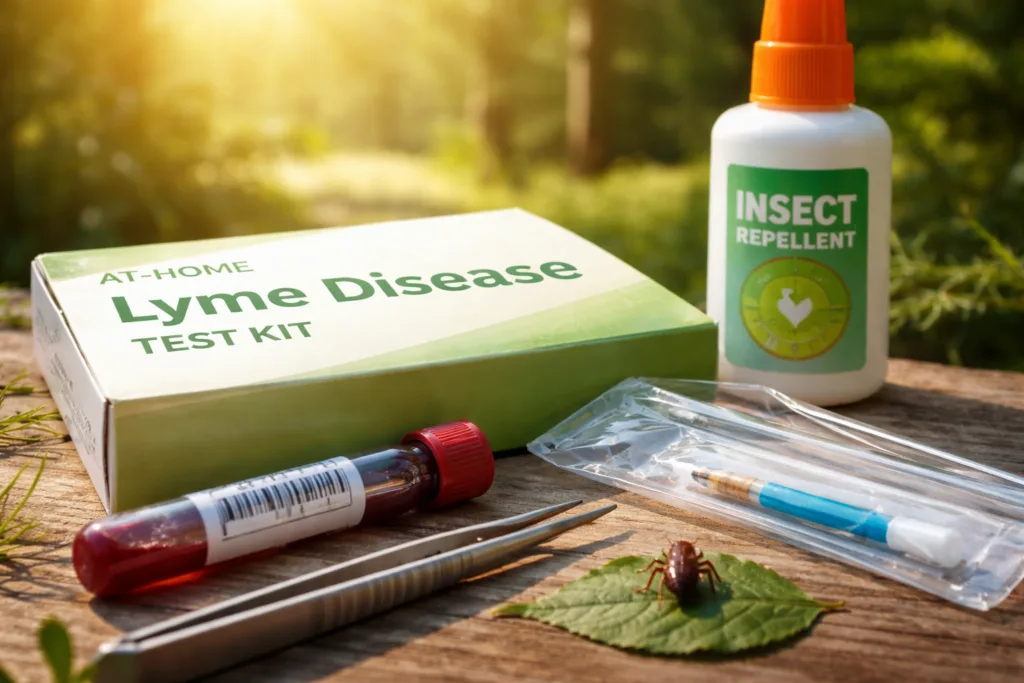
That positioning is commercially savvy because Lyme disease sits in an awkward diagnostic zone. CDC says laboratory testing is helpful when used correctly, but also notes that diagnosis still depends on symptoms, physical findings, and exposure history. In other words, Lyme disease is not purely a lab-defined condition in the way a straightforward respiratory pathogen test might be. The companies most likely to succeed in this space are not necessarily those with the most aggressive consumer messaging, but those that can frame home sampling as one component of a broader care pathway rather than as a self-contained answer. Better Life Science hints at that balance by stating that final diagnosis and treatment should be made by a medical professional, even as it markets a consumer-facing kit at $149 and highlights fast access through its own lab infrastructure.
The more interesting industry point is that Better Life Science is extending a now-familiar direct-to-consumer diagnostic formula into vector-borne disease. The company’s broader platform already spans sexual health, allergy, and other home-testing categories, all tied to a CLIA-certified laboratory model with physician-reviewed results and direct ordering. That means Tick Bite Hero should be read less as an isolated Lyme product and more as another proof point in the fragmentation of routine health access, where consumers increasingly expect home collection, digital result delivery, and less gatekeeping at the front end.
Where Tick Bite Hero fits awkwardly with current Lyme testing practice in the United States
The main analytical tension is methodological and geographic. Better Life Science says Tick Bite Hero uses PCR technology on a blood sample and looks for Borrelia burgdorferi, Borrelia garinii, and Borrelia afzelii. Yet CDC says Lyme disease in the United States is caused by Borrelia burgdorferi and, rarely, Borrelia mayonii. CDC also states that FDA-cleared antibody tests are the recommended laboratory approach for Lyme diagnosis, while warning that antibody tests can be falsely negative in the first few weeks of infection. That creates a complicated picture: the company is implicitly leaning into PCR as an early, precise molecular tool, but the standard U.S. diagnostic conversation is still centered on serology, symptoms, and clinician judgment.
This does not automatically invalidate the product. PCR has intuitive appeal because it sounds direct, modern, and specific, and Better Life Science explicitly markets it as a way to minimize false positives. For consumers, that message is powerful. For clinicians and regulators, however, appeal is not the same thing as established practice. The Infectious Diseases Society of America, together with the American Academy of Neurology and the American College of Rheumatology, recommends serum antibody testing rather than PCR or culture in several Lyme assessment settings, including neuroborreliosis and Lyme arthritis. Those recommendations do not address every possible early-use consumer scenario, but they do underscore that PCR-on-blood is not the default anchor of mainstream Lyme diagnosis guidance in North America.
The species mix in the test also invites scrutiny. Better Life Science includes Borrelia garinii and Borrelia afzelii among the organisms it measures, but CDC says those species are not found in the United States in the ordinary clinical sense and are instead associated primarily with Europe, where Lyme presentations can differ from those seen in North America. There is nuanced scientific literature on Borrelia garinii detection in limited North American contexts, but that is not the same as saying it is a routine U.S. Lyme pathogen for mass-market consumer testing. For a company selling into the American spring tick season, the inclusion of European-associated species may broaden marketing language, but it may also complicate the intended-use story unless Better Life Science more clearly defines whether the kit is aimed at domestic exposure only, travel-linked exposure, or a broader global risk profile.
What regulators, clinicians, and diagnostics competitors are likely to watch next as home Lyme testing expands
The biggest near-term issue is not whether consumers want this category. They almost certainly do. The bigger issue is whether the product can earn durable trust without overstating what home testing can deliver. FDA explains that direct-to-consumer tests generally involve self-collected specimens sent to a company for analysis, but the oversight environment around laboratory-developed tests has been unstable. FDA notes that its 2024 final rule on laboratory-developed tests was vacated by a federal district court in March 2025, with a later rule reverting the regulatory text. That matters because companies like Better Life Science are building in a zone where CLIA certification, consumer marketing, and evolving device oversight do not always align neatly in the public mind. CLIA status speaks to laboratory quality systems, but it is not the same thing as broad validation of every consumer interpretation that marketing might imply.
Clinical credibility will also depend on how the company handles the timing problem. CDC makes clear that Lyme tests can behave differently depending on how long a person has been infected, and that early infection can produce false negatives on antibody assays. That opens a window for a molecular-testing pitch, but it also raises the burden of evidence. If Better Life Science wants Tick Bite Hero to be taken seriously beyond consumer convenience, it will need to show not just that the lab can process samples quickly, but that its test performs reliably in the messy real-world period immediately after exposure, when patients may have nonspecific symptoms, low pathogen burden, or no symptoms at all. The difference between “practical option” and “clinically useful tool” is where this market will be won or lost.
There is also a reputational question. Better Life Science’s message bundles prevention advice with product access, which is smart from a funnel perspective. But Lyme disease is one of those categories where public concern can easily outrun diagnostic clarity. CDC says prompt removal of an attached tick is essential and that people who develop rash or fever should seek medical care. That means the most credible home-testing brands will probably be those that reinforce clinical escalation, not those that appear to substitute for it. Better Life Science does include physician review and acknowledges that diagnosis and therapy belong with a medical professional, which helps. The next test for the company is whether it can make those guardrails central enough to build trust, while still preserving the convenience-first sales pitch that makes direct-to-consumer diagnostics attractive in the first place.
In that sense, the Better Life Science announcement is less about Lyme disease alone and more about the maturation of the home diagnostics sector. Tick Bite Hero is entering a market where consumer demand for immediacy is obvious, but clinical acceptance depends on careful claims, transparent intended use, and a realistic understanding of what one home-collected sample can and cannot resolve. The product may find a commercial audience this season simply because it offers anxious consumers a sense of action. Whether it becomes a durable part of the Lyme testing landscape will depend on something tougher than seasonal awareness marketing: demonstrating that convenience can coexist with diagnostic discipline.
