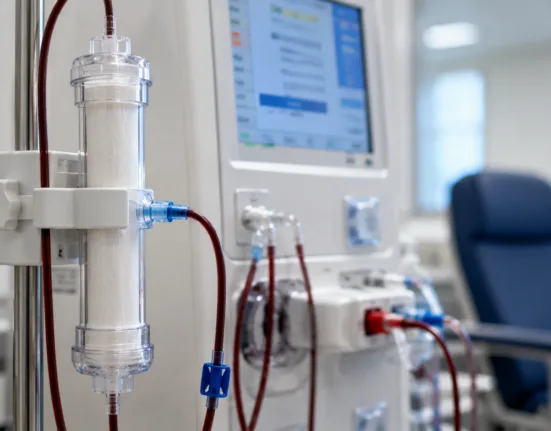
Humacyte, Inc. has highlighted its Acellular Tissue Engineered Vessel for arteriovenous access in hemodialysis patients with end-stage renal disease through a clinician-focused event, alongside referencing a completed Phase 3 trial in high-risk patients and an ongoing Phase 3 study with interim results expected this quarter. The product remains investigational for dialysis access, even as the United States-based biotechnology firm advances its positioning as an alternative to traditional arteriovenous fistula creation.
The growing attention around the platform reflects a structural tension within dialysis care rather than a single product milestone. Arteriovenous fistulas have long been considered the preferred standard due to their durability and lower infection risk, yet their performance is inconsistent in patients with compromised vasculature. Clinicians managing elderly, diabetic, or otherwise high-risk populations frequently encounter maturation failures or prolonged delays before fistulas become usable, forcing reliance on central venous catheters. Industry observers note that this gap has persisted despite decades of incremental improvements, creating space for alternative approaches that can deliver more predictable access outcomes.
What ATEV’s positioning reveals about the structural limits of fistula-based access in complex ESRD cohorts
Humacyte, Inc.’s Acellular Tissue Engineered Vessel is being positioned as a response to this variability. Unlike autologous fistulas, which depend on the patient’s own vascular quality, the bioengineered vessel is designed to provide a standardized conduit that can be implanted without waiting for biological maturation. This distinction is particularly relevant in high-risk cohorts, where vessel quality often undermines the success of traditional approaches.
Clinicians tracking vascular access trends suggest that the ability to bypass the maturation phase could alter treatment planning in patients who require rapid dialysis initiation. The existing pathway often involves temporary catheter placement while waiting for fistula maturation, exposing patients to infection and hospitalization risks. If ATEV can reliably reduce time to usable access, it could shift the sequencing of interventions rather than simply replacing one modality with another.
However, this positioning also raises questions about how the platform fits within established clinical hierarchies. Fistulas remain the gold standard in patients with favorable anatomy, meaning ATEV is more likely to compete in a defined subset rather than across the entire ESRD population. The strategic focus on high-risk patients therefore appears less like a limitation and more like a deliberate entry point into a complex market.
How Phase 3 data will determine whether ATEV represents incremental progress or a step change in vascular access outcomes
The completed Phase 3 trial in high-risk patients is central to evaluating whether ATEV offers meaningful clinical differentiation. While the company has indicated potential advantages compared with autologous fistulas in this population, the depth of that advantage will determine how the platform is perceived. Incremental improvements in usability or patency may support niche adoption, but broader impact requires clear gains in reliability, complication rates, or procedural efficiency.
The ongoing V012 Phase 3 trial introduces an additional layer of scrutiny. Trial endpoints such as primary patency, intervention frequency, and time to cannulation are critical in assessing real-world utility. Regulatory watchers suggest that success across multiple endpoints, rather than a single favorable outcome, will be necessary to support approval and guideline inclusion.
Durability remains a particularly important factor. Vascular access solutions are judged over extended periods, with repeated interventions often driving both patient burden and healthcare costs. If ATEV demonstrates sustained performance with fewer interventions, it could strengthen its economic argument as well as its clinical one. Conversely, if early benefits diminish over time, the platform may struggle to justify widespread adoption.
What regulatory positioning indicates about the complexity of expanding bioengineered tissue use into dialysis access
The regulatory pathway for ATEV highlights both progress and constraint. Approval in extremity vascular trauma provides evidence that the platform can meet safety and manufacturing standards in a defined setting. Expanding into dialysis access, however, introduces additional complexities related to chronic use and repeated vascular access procedures.
Regulatory observers indicate that demonstrating consistent performance across diverse patient populations will be critical. End-stage renal disease patients often present with multiple comorbidities, which can influence outcomes in ways that are difficult to predict. This variability raises the evidentiary threshold for approval and may extend timelines even if Phase 3 data are positive.
The investigational status of ATEV in this indication also shapes how clinicians and institutions approach adoption. Without regulatory clearance, engagement remains largely exploratory, limiting real-world experience that could otherwise accelerate uptake. This creates a feedback loop in which broader adoption depends on approval, but approval requires robust data that often benefit from real-world use.
How adoption dynamics and reimbursement pressures could shape the commercial trajectory of ATEV in dialysis care
Even with strong clinical data, adoption will depend on alignment across multiple stakeholders. Dialysis access decisions involve surgeons, nephrologists, and healthcare systems, each with their own priorities and constraints. Introducing a new modality requires not only evidence but also changes in workflow and training.
Reimbursement is likely to be a defining factor. ATEV may carry higher upfront costs compared with traditional fistula creation, making its value proposition dependent on downstream savings. Reduced intervention rates, fewer hospitalizations, and lower complication burdens could support favorable reimbursement decisions, but these benefits must be clearly demonstrated and quantified.
Healthcare systems may also weigh operational advantages. An off-the-shelf vascular conduit could reduce scheduling delays and improve procedural predictability, particularly in high-volume centers. However, integration into existing protocols may take time, especially in settings where established practices are deeply entrenched.
Manufacturing scalability adds another dimension. Humacyte, Inc. has emphasized its ability to produce bioengineered tissues at commercial scale, but maintaining consistency and cost efficiency in large-scale production remains a challenge unique to this class of products. Any constraints in supply or variability in product quality could influence both pricing and adoption.
What unresolved risks and competitive dynamics could still influence whether ATEV achieves sustained clinical relevance
Despite the strategic momentum, several uncertainties remain. Translational risk is a persistent concern, as outcomes observed in controlled trials may not fully translate into routine clinical practice. Variability in surgical technique, patient characteristics, and institutional protocols can all influence real-world performance.
Long-term safety is another area of focus. While bioengineered vessels are designed to integrate with host tissue, the durability of this integration over years of repeated use must be clearly established. Regulatory watchers suggest that extended follow-up data will be essential in shaping both approval decisions and clinical confidence.
Competitive dynamics may also evolve as the platform gains visibility. Established providers of synthetic grafts and dialysis infrastructure could respond with incremental innovations or pricing strategies that reinforce their market position. This could limit the speed at which ATEV penetrates the market, even if clinical data are favorable.
Finally, the broader platform strategy introduces both opportunity and complexity. Humacyte, Inc. is positioning its technology as a foundation for multiple vascular and tissue engineering applications. Success in dialysis access could validate this approach, but each additional indication will require its own clinical and regulatory pathway, extending timelines and capital requirements.
The near-term focus will remain on the upcoming Phase 3 data readout, which is likely to serve as a pivotal moment for the platform. Industry observers suggest that clear evidence of improved outcomes in high-risk patients could establish ATEV as a meaningful addition to the vascular access toolkit. Whether it evolves into a broader standard will depend on the interplay of clinical performance, regulatory clarity, and healthcare system adoption in a field that has historically been resistant to rapid change.