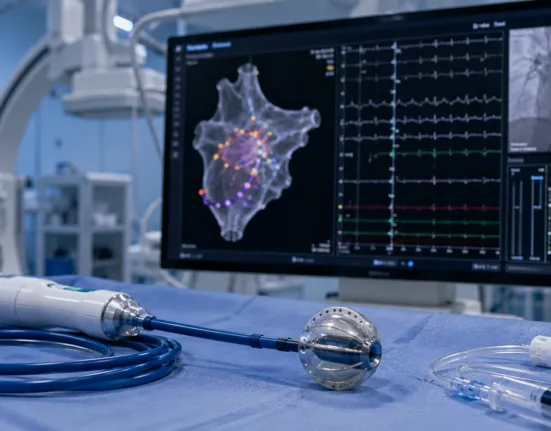
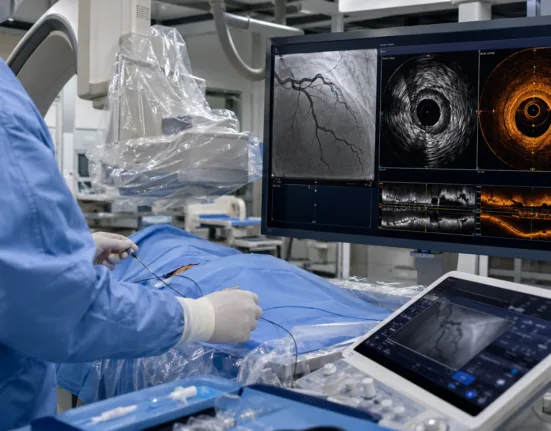
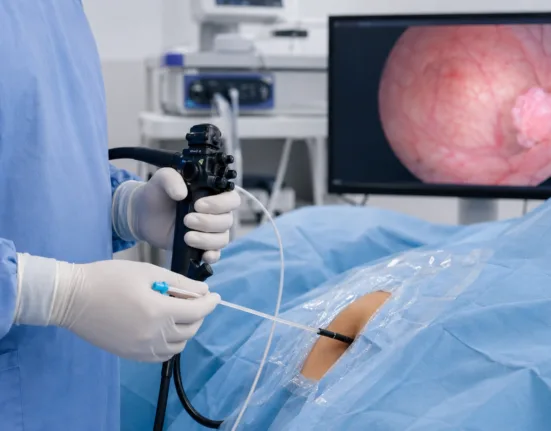
Adagio Medical Holdings, Inc. has reported positive six-month pivotal results from the FULCRUM-VT Investigational Device Exemption trial of its vCLAS Ventricular Ablation System in patients with drug-refractory ventricular tachycardia. The data, presented during a late-breaking clinical trial session at Heart Rhythm Society 2026, will support the U.S.-based medical device developer’s planned Food and Drug Administration premarket approval application for the ultra-low temperature cryoablation system.
Why Adagio Medical’s FULCRUM-VT trial could matter in ventricular tachycardia treatment
The significance of the FULCRUM-VT readout is not simply that Adagio Medical Holdings met safety and effectiveness endpoints. The more important industry question is whether the vCLAS Ventricular Ablation System can offer a more reproducible endocardial approach for a patient group that remains difficult to treat with current ablation technologies. Ventricular tachycardia in structural heart disease is one of the more technically demanding segments of electrophysiology, partly because the arrhythmia substrate can sit deep within scarred or diseased myocardial tissue.
That distinction matters because ventricular tachycardia ablation is not a mature device market in the way atrial fibrillation ablation has become. In atrial fibrillation, procedural innovation has increasingly focused on speed, safety, workflow, and competition between radiofrequency, cryoballoon, and pulsed field ablation platforms. In ventricular tachycardia, the challenge is more fundamental. Clinicians are often treating sicker patients with reduced left ventricular function, recurrent implantable cardioverter defibrillator shocks, congestive heart failure, and prior drug failure. A device that can create deeper, durable lesions through an endocardial-only workflow could therefore occupy a clinically meaningful position if the FDA ultimately views the pivotal dataset as sufficient.
The unresolved question is durability beyond six months. A six-month endpoint can show whether acute procedural success translates into meaningful early clinical benefit, but ventricular tachycardia recurrence can remain a longer-term problem in progressive structural heart disease. Regulators, electrophysiologists, and hospital technology committees are likely to look closely at whether future follow-up confirms sustained reductions in shocks, arrhythmia burden, antiarrhythmic drug use, and hospitalization.
How the vCLAS Ventricular Ablation System differs from conventional VT ablation approaches
Adagio Medical Holdings is positioning the vCLAS Ventricular Ablation System around ultra-low temperature ablation, a catheter-based cryoablation approach designed to create large, durable lesions through the depth of cardiac tissue. The technology is intended to address one of the persistent limitations of ventricular tachycardia ablation, namely the difficulty of reaching deeper scar-related substrates from inside the heart without resorting to more complex procedural strategies.
The key strategic claim is not only lesion creation, but workflow simplification. The FULCRUM-VT results point to an endocardial-only approach across both ischemic cardiomyopathy and non-ischemic cardiomyopathy patients. That is important because non-ischemic ventricular tachycardia can be more challenging for endocardial ablation, with arrhythmogenic tissue often located in deeper or less accessible myocardial regions. If an endocardial-only technology can deliver comparable outcomes across both patient groups, it could reduce the need for more invasive or technically complex procedures in selected cases.
However, this is where the competitive bar will be high. Radiofrequency ablation remains established in ventricular tachycardia care, and pulsed field ablation is attracting industry attention as a non-thermal energy modality with potential safety advantages in some cardiac applications. Adagio Medical Holdings will need to show not only that ultra-low temperature ablation works, but that it meaningfully improves the balance of efficacy, safety, procedure complexity, training burden, and hospital economics.
What the six-month FULCRUM-VT results reveal about clinical effectiveness
The six-month dataset reported by Adagio Medical Holdings included several clinically relevant signals. The trial showed 98 percent non-inducibility of targeted ventricular tachycardias at the end of the procedure, 84 percent freedom from implantable cardioverter defibrillator shock at six months, and 59 percent freedom from any ventricular tachycardia recurrence at six months. The recurrence definition was broad, covering sustained monitored ventricular tachycardia, implantable cardioverter defibrillator shock, anti-tachycardia pacing, and escalation of antiarrhythmic drug therapy.
That broad definition is important because a narrow recurrence measure can make device performance look cleaner than it feels in clinical practice. Patients and clinicians are often most concerned about shocks, hospitalizations, and medication toxicity, not only whether an arrhythmia episode appears on a device interrogation. The reported 84 percent freedom from shock is therefore likely to receive attention because implantable cardioverter defibrillator shocks can be physically painful, psychologically distressing, and clinically meaningful as markers of recurrent arrhythmic instability.
The 59 percent freedom from any ventricular tachycardia recurrence requires more careful interpretation. On one hand, the figure reflects the difficulty of the treated population and the breadth of the recurrence definition. On the other hand, it also reminds the market that ventricular tachycardia ablation is not a cure-all technology, particularly in patients with structural heart disease. The investment and adoption case for vCLAS will depend on whether clinicians view the totality of benefit, including shock reduction, drug de-escalation, readmission reduction, and procedural safety, as compelling enough to shift practice patterns.
Why equivalent ischemic and non-ischemic cardiomyopathy outcomes are strategically important
The most strategically interesting part of the FULCRUM-VT readout may be the reported equivalence across ischemic cardiomyopathy and non-ischemic cardiomyopathy patients. Adagio Medical Holdings enrolled 209 patients with structural heart disease across 20 centers in the United States and Canada, including both disease groups. The trial population included patients with reduced left ventricular ejection fraction and a substantial proportion with congestive heart failure, making the dataset relevant to the high-acuity real-world population where ventricular tachycardia management is most difficult.
The company reported that freedom from device intervention at six months was 61 percent for ischemic cardiomyopathy and 63 percent for non-ischemic cardiomyopathy. Freedom from implantable cardioverter defibrillator shock at six months was 84 percent for ischemic cardiomyopathy and 85 percent for non-ischemic cardiomyopathy. For clinicians, that consistency matters because non-ischemic cardiomyopathy has historically been harder to treat using purely endocardial approaches due to deeper and more complex substrate patterns.
The limitation is that single-arm trial data must still be interpreted against historical and literature-based benchmarks rather than a randomized head-to-head comparator. That does not erase the value of the findings, but it does shape how regulators and clinicians may weigh them. The strongest commercial argument for Adagio Medical Holdings would be strengthened further by longer-term follow-up, registry experience, and comparative evidence showing whether these outcomes remain consistent outside highly experienced study centers.
How safety, readmissions, and amiodarone reduction could influence adoption
Safety is central to the adoption story because ventricular tachycardia ablation patients are often medically fragile. Adagio Medical Holdings reported a 2.4 percent protocol-defined major adverse event rate, including four peri-procedural deaths, two of which were adjudicated as possibly related to the investigational device. That detail will be closely scrutinized because procedural mortality, even at low rates, carries greater weight in regulatory and hospital adoption decisions than many secondary performance metrics.
At the same time, the reported safety profile must be viewed in the context of the underlying disease severity. These are not low-risk elective patients. Many have advanced structural heart disease, recurrent arrhythmias, heart failure, and prior exposure to therapies that have failed or become difficult to tolerate. The clinical question is therefore not whether procedural risk exists, but whether the risk-benefit balance is favorable relative to continued shocks, repeated hospitalizations, chronic antiarrhythmic therapy, or more complex ablation strategies.
The amiodarone signal may also matter commercially. Adagio Medical Holdings reported that 72 percent of patients discontinued or reduced their amiodarone dose at six months. That is relevant because amiodarone remains effective but carries well-known long-term toxicity concerns. If vCLAS can help clinicians reduce reliance on antiarrhythmic drug therapy while lowering shock burden, the device may offer value beyond procedural success. Payers and health systems may also focus on the reported 1.9 percent rate of 30-day ventricular tachycardia-related hospital readmission, although economic claims will require careful validation through broader evidence.
What the FDA pathway now depends on for Adagio Medical Holdings
The FULCRUM-VT trial is intended to support a premarket approval application for the vCLAS Ventricular Ablation System in the United States. That regulatory path matters because premarket approval is the more demanding FDA route typically associated with higher-risk medical devices. For Adagio Medical Holdings, the submission will test whether a single-arm pivotal dataset with independently adjudicated safety and recurrence outcomes can support a broad ventricular tachycardia indication.
Regulatory watchers are likely to focus on trial design, endpoint definitions, adjudication quality, patient heterogeneity, and the balance between procedural safety and clinical benefit. The inclusion of both ischemic and non-ischemic cardiomyopathy patients could strengthen the relevance of the dataset, but it also increases the importance of subgroup consistency. If the FDA sees the data as persuasive across both populations, Adagio Medical Holdings could emerge with a differentiated label in a complex segment of electrophysiology.
Commercially, FDA approval would not automatically guarantee rapid adoption. Hospitals would still need to evaluate training requirements, capital or catheter economics, electrophysiologist comfort, procedural integration, and reimbursement. The technology is already commercially available for monomorphic ventricular tachycardia in Europe and selected other geographies, but the United States market can carry different evidence expectations, payer scrutiny, and adoption timelines.
Can ultra-low temperature ablation compete with RF and PFA in ventricular tachycardia?
The broader device-market question is whether ultra-low temperature ablation can carve out a durable role alongside radiofrequency ablation and emerging pulsed field ablation approaches. Radiofrequency ablation has incumbent familiarity, installed infrastructure, and clinical history. Pulsed field ablation has momentum in electrophysiology because of its tissue-selective profile in atrial applications, although ventricular tachycardia remains a more complex proving ground. Adagio Medical Holdings is effectively arguing that ventricular tachycardia needs a dedicated technology built for depth, stability, and scar-mediated substrate rather than a platform adapted from other arrhythmia categories.
That is a credible strategic opening because ventricular tachycardia remains underserved despite years of ablation experience. The disease burden is high, procedures are complex, and outcomes remain variable across patient types. A system that can deliver consistent lesions, avoid irrigation-related workflow burdens, and potentially reduce shocks and drug use could attract attention from high-volume electrophysiology centers.
The risk is that device markets rarely shift on pivotal data alone. They shift when physicians see reproducible results, fellows are trained on the platform, hospitals understand the economics, and payers do not create friction. Adagio Medical Holdings has taken an important step by generating pivotal trial data in a hard-to-treat population. The next phase will be less about proving that ultra-low temperature ablation can work in a controlled trial and more about proving that it can become a practical, scalable part of ventricular tachycardia care.
What clinicians and medical device investors should watch next
For clinicians, the most important follow-up questions will be whether the reduction in implantable cardioverter defibrillator shocks persists, whether recurrence curves remain favorable beyond six months, and whether amiodarone de-escalation is sustained without an offsetting rise in arrhythmia events. For regulators, the central questions will be endpoint robustness, adverse event interpretation, subgroup consistency, and whether the proposed indication matches the evidence base. For medical device investors, the key issue is whether vCLAS can move from a promising pivotal result to an approvable and commercially adoptable ventricular tachycardia platform.
Adagio Medical Holdings has produced a dataset that gives the vCLAS Ventricular Ablation System a clearer regulatory narrative and a stronger clinical identity. The company is not simply joining the ablation race with another energy source. It is attempting to define ultra-low temperature cryoablation as a purpose-built solution for one of electrophysiology’s harder procedural categories. That ambition is now backed by pivotal data, but the harder test is still ahead. FDA review, longer-term outcomes, physician adoption, and real-world economics will determine whether FULCRUM-VT becomes a regulatory milestone or the start of a broader shift in ventricular tachycardia ablation.