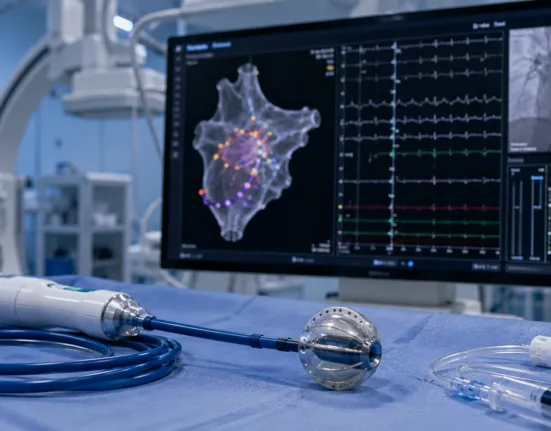
AptarGroup, Inc. (NYSE: ATR), the Illinois-based manufacturer of pharmaceutical drug delivery and dispensing technologies, announced on October 14, 2026, that its LuerVax intranasal delivery device and accompanying Spray Divider have received CE marking under the European Union Medical Device Regulation. The milestone establishes compliance with applicable European medical device requirements for the platform, which is designed to administer vaccines through the nose using compatible LuerLock syringes.
LuerVax is classified as a Class I non-sterile, single-use medical device intended for administration by healthcare professionals. Its optional Spray Divider is available in 200-microliter and 500-microliter configurations, allowing a prepared syringe volume to be delivered through two sequential sprays, one into each nostril. Aptar is positioning the system as a delivery solution that vaccine developers can evaluate during clinical development and potentially incorporate into commercial products.
The regulatory development follows an earlier clinical application of the technology. In January 2026, Aptar disclosed that CastleVax was using LuerVax and Spray Divider in a Phase 2 study of CVAX-01, an investigational intranasal COVID-19 vaccine. That programme provides an example of the device’s use in human clinical research, although it does not establish that LuerVax improves vaccine efficacy or that CVAX-01 has received marketing authorization.
For Aptar, CE marking strengthens the commercial proposition of an established device platform at a time when developers are investigating alternatives to injectable vaccines. However, the approval status of the delivery device must remain separate from the clinical and regulatory status of the vaccine formulation. Any finished vaccine product will still need to demonstrate the necessary quality, safety, efficacy and compatibility with its intended administration system.
What does CE marking under the European Medical Device Regulation establish for LuerVax?
The European Medical Device Regulation, known as MDR 2017/745, establishes requirements governing medical device safety, performance, technical documentation, risk management and post-market responsibilities. CE marking indicates that a manufacturer has completed the applicable conformity assessment process and declared that the device meets the relevant European requirements. The regulatory obligations depend partly on the device’s risk classification and intended use.
Aptar identifies LuerVax as a Class I, non-sterile, single-use device. For standard Class I devices without certain higher-risk characteristics, manufacturers generally use a self-declaration conformity procedure rather than requiring an independent notified-body assessment of every device. The company’s announcement confirms CE marking but does not identify an external notified-body certificate for LuerVax.
This distinction is important because CE marking should not automatically be described as an independent clinical approval or as confirmation that a particular vaccine-device combination is effective. It establishes a defined medical device compliance status for the intended use. Vaccine developers remain responsible for ensuring that the assembled delivery system is appropriate for their formulation and regulatory programme.
The stated intended use involves administration by a healthcare professional using a compatible LuerLock syringe. It does not establish authorization for unsupervised home administration or compatibility with every syringe and vaccine formulation. The manufacturer’s instructions for use determine the appropriate handling requirements, limitations and precautions.
The marking applies to both LuerVax and the accompanying Spray Divider, allowing developers to evaluate an integrated arrangement rather than two components without an established European conformity status. That may simplify some elements of device selection and documentation, although it does not eliminate product-specific testing.
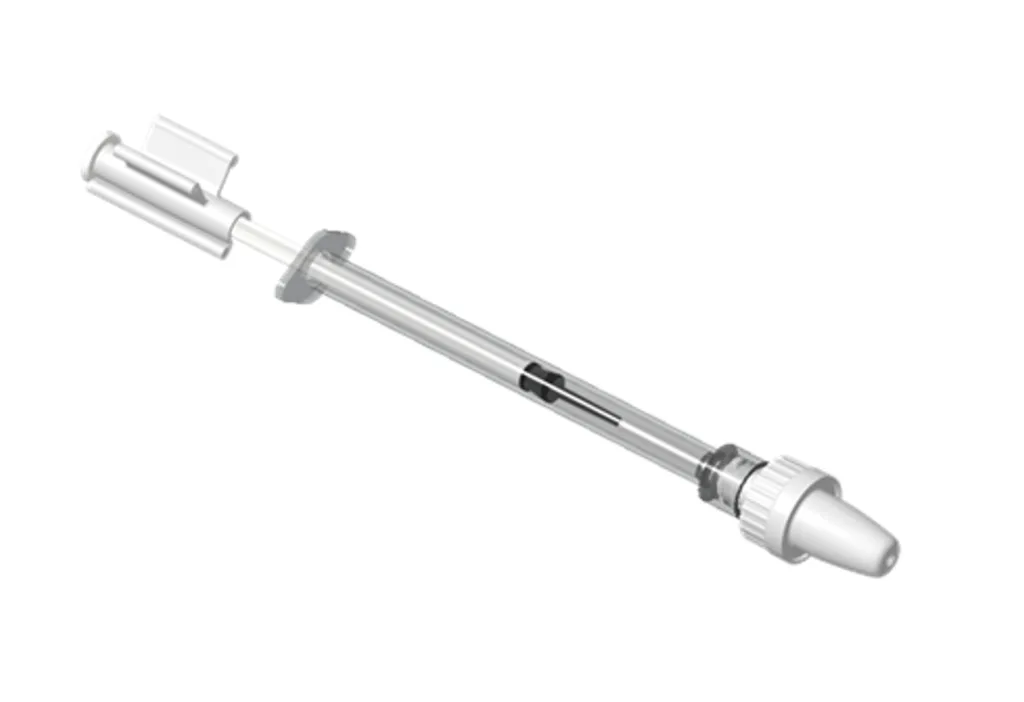
How does the LuerVax Spray Divider deliver a prepared vaccine dose into two nostrils?
LuerVax is designed to connect with a compatible LuerLock syringe, which provides the vaccine formulation for intranasal administration. The device delivers the prepared formulation as a nasal spray under the control of a healthcare professional. The optional Spray Divider allows the prepared volume to be administered through two sequential sprays.
Aptar offers the Spray Divider in 200 µL and 500 µL configurations for use with the corresponding syringe. These figures describe device configurations for the prepared administration volume, rather than establishing a universal dose for every vaccine candidate. The appropriate vaccine dose and distribution between nostrils must be determined by the product’s validated instructions and clinical development programme.
Delivering a formulation into both nostrils may be relevant when developers want a defined bilateral administration procedure. However, consistent spray generation depends on several factors, including formulation properties, device geometry, actuation conditions and the interaction between the device and syringe. The announcement does not provide numerical droplet-size distribution, spray plume or deposition results establishing performance across different formulations.
These details matter because vaccines can vary substantially in viscosity, concentration, stability and sensitivity to mechanical stress. A device suitable for one formulation may require further testing before it can be used with another. Developers must therefore evaluate the entire administration arrangement rather than relying exclusively on the regulatory status of its individual components.
The two-spray configuration may provide a practical option for clinical protocols, particularly where standardized administration is important. Nevertheless, Aptar has not disclosed comparative evidence demonstrating lower dose variability, superior mucosal deposition or improved patient outcomes relative to other nasal delivery devices.
Why are vaccine developers interested in intranasal administration?
Intranasal vaccination is being investigated as an alternative or complement to conventional injectable immunization. The nasal passages form part of the respiratory tract’s mucosal immune system, making them a potentially relevant site for vaccines intended to protect against pathogens entering through respiratory surfaces. Researchers are evaluating whether specific formulations can generate local immune responses alongside systemic protection.
A successful mucosal vaccine could potentially stimulate immune activity at the site where certain infections begin. This includes interest in secretory immunoglobulin A and local immune-cell responses, although the strength and durability of these effects depend on the particular vaccine. Delivering a vaccine through the nose does not, by itself, guarantee stronger mucosal immunity or reduced transmission.
The administration route may also offer advantages involving needle avoidance and patient acceptance. These characteristics could be relevant for children, people concerned about injections and vaccination campaigns requiring repeated administration. However, ease of administration must be assessed alongside accurate dose delivery, manufacturing stability and the ability to achieve adequate protection.
The nasal environment introduces its own formulation challenges. Mucus clearance, local enzymes, variation in nasal anatomy and inconsistent deposition can influence how a product reaches the intended tissues. As a result, intranasal vaccine development requires careful coordination between antigen formulation and delivery-device characteristics.
Aptar’s opportunity is to supply technology that helps developers manage the administration component of these programmes. It is not responsible for demonstrating the clinical efficacy of every vaccine subsequently delivered through the platform.
What does CastleVax’s Phase 2 COVID-19 vaccine study demonstrate about LuerVax?
In January 2026, Aptar announced that CastleVax had selected LuerVax and Spray Divider for its Phase 2 investigation of CVAX-01, an intranasal COVID-19 vaccine candidate. The study was designed to assess safety, tolerability and systemic and mucosal immune responses compared with an FDA-approved injectable messenger RNA vaccine. Approximately 200 adults were expected to participate, including individuals at elevated risk and adults aged over 65.
The programme provides evidence that the delivery platform has progressed beyond product development into use in a human vaccine trial. It may also give Aptar and its customer practical experience with device preparation, handling and administration within a controlled clinical setting. However, the October CE-marking announcement does not disclose completed Phase 2 results establishing the vaccine’s effectiveness.
The comparison with an injectable mRNA vaccine is intended to evaluate immunological responses and other clinical study outcomes. Any observed differences would need to be interpreted according to the vaccine formulations, treatment populations, endpoints and trial design. They could not automatically be attributed to LuerVax or Spray Divider.
The existing use of the system in CastleVax’s programme may nevertheless be commercially relevant when Aptar approaches other vaccine developers. Selecting a device with prior clinical development experience can provide practical information about training, preparation and administration procedures. That experience, however, does not replace validation for a new formulation.
The next meaningful evidence would include product-specific device performance findings and completed clinical results from programmes using the system. Neither has been established as a new clinical achievement in the October 14 regulatory announcement.
Why does device and formulation compatibility matter for vaccine commercialization?
Developing a vaccine-delivery combination requires coordination between the biological formulation and the physical system used for administration. The delivery device must perform reliably across relevant storage, handling and administration conditions. It must also maintain the integrity of the formulation and deliver an appropriate dose.
Testing can involve material compatibility, extractables and leachables, dose uniformity, spray characteristics and stability under intended operating conditions. The relevance of each assessment depends on the composition of the vaccine and the finished system. A biological formulation may be sensitive to temperature, shear forces or contact with specific materials.
Aptar offers technical services covering formulation compatibility, regulatory support, industrialization and manufacturing. These capabilities form an important part of its commercial proposition because a vaccine developer may need assistance at multiple stages rather than simply purchasing a finished nasal spray component. The company is seeking to support customers from initial development through potential commercial scale-up.
The practical advantage of an established device platform is that some design and technical documentation may already be available. This can help developers plan appropriate product-specific testing, although it does not eliminate the need for those studies. Manufacturing scale-up also requires the device to remain consistent across production batches.
Aptar has not disclosed a new commercial vaccine supply agreement associated with the CE-marking announcement. The financial value will depend on how many customers select the system, how their development programmes progress and whether the resulting products obtain market authorization.
How could LuerVax contribute to Aptar’s pharmaceutical delivery business?
Aptar Pharma operates within a broader group supplying pharmaceutical delivery technologies, dispensing systems and packaging solutions. Its business includes nasal and pulmonary delivery, injectable components, eye care technologies and other prescription medicine applications. This creates opportunities to support pharmaceutical companies throughout different stages of product development and commercialization.
During the second quarter of 2026, AptarGroup reported consolidated sales of approximately $1.03 billion, increasing 6% from the previous year. The Pharma segment generated approximately $458.2 million, representing reported growth of 4%. The company identified demand involving biologics, GLP-1 therapies, vaccines and other prescription applications among the factors supporting performance.
These figures establish the scale of the existing business, but the company has not disclosed a standalone revenue contribution from LuerVax. It has also not published a forecast for the number of nasal vaccine programmes expected to use the platform. Therefore, the CE marking cannot be assigned a specific near-term earnings impact.
The commercial value of a delivery system can increase as a customer progresses from clinical development to routine manufacturing. However, many experimental vaccines do not ultimately reach the market, and a device supplier may experience changes in demand as programmes advance or are discontinued. Aptar’s opportunity is therefore related to a portfolio of development customers rather than guaranteed sales from every clinical trial.
The company’s integrated technical and manufacturing capabilities may help distinguish it from suppliers offering individual device components. Whether that translates into meaningful incremental revenue will depend on adoption and the success of partner programmes.
What must happen before LuerVax becomes part of an approved nasal vaccine?
The immediate milestone is already established: LuerVax and Spray Divider have received CE marking for their defined medical device use in Europe. Vaccine developers can now evaluate the system within that regulatory framework, subject to compatibility and product-specific requirements. The marking does not determine whether any particular vaccine is safe, effective or eligible for commercial distribution.
For an investigational vaccine, subsequent development must establish the appropriate dose, immunological response, safety profile and clinical efficacy required by the relevant regulator. The finished vaccine and its administration system may need to be assessed together, particularly where the method of delivery is essential to achieving the intended treatment effect. Manufacturing and stability data will also form part of the overall evidence.
Any future commercial launch will depend on the vaccine developer’s regulatory submissions and approval decisions. Aptar has not announced that the latest device milestone automatically permits use with a new commercial vaccine in the European Union. Nor has it disclosed an equivalent new United States regulatory clearance associated with the October announcement.
The CE marking gives Aptar a clearer device compliance position when engaging European developers and may strengthen its involvement in global nasal vaccine programmes. Its use in CastleVax’s Phase 2 investigation also demonstrates an existing clinical development application.
The next test is whether LuerVax can support a growing number of vaccine programmes and maintain reliable performance through manufacturing scale-up and commercial use. For Aptar, that would turn a defined regulatory achievement into a sustained pharmaceutical delivery opportunity. Until partner vaccines demonstrate their own safety and effectiveness, the milestone should be recognized as progress in delivery technology rather than proof of a new vaccination benefit.