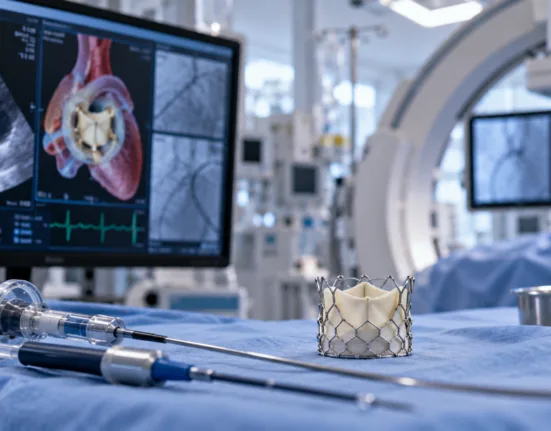
Powerful Medical, Inc. has secured a new Category III Current Procedural Terminology code for AI-assisted electrocardiogram analysis used to identify suspected acute heart attacks, marking another step towards wider US deployment of its Queen of Hearts technology. Announced on October 27, 2026, the American Medical Association code, 1139T, will take effect on January 1, 2027, following the system’s De Novo authorisation by the United States Food and Drug Administration in September.
The coding milestone provides a dedicated mechanism for reporting AI-assisted identification of ST-segment elevation myocardial infarction, STEMI-equivalent presentations and acute or subacute myocardial ischaemia. It is commercially relevant because hospitals and physicians require recognised service descriptions to document emerging technologies and support future payment discussions. However, the establishment of a Category III CPT code does not itself provide Medicare coverage, establish a reimbursement rate or guarantee payment from commercial insurers.
The development brings Powerful Medical closer to addressing two distinct barriers to clinical adoption: regulatory authorisation and the administrative infrastructure needed to support reimbursement. Queen of Hearts has already received FDA permission for its specified clinical use, but wider implementation will depend on whether hospital systems consider the technology clinically valuable, operationally practical and financially sustainable.
Why does the new Category III CPT code represent an important commercial milestone for Queen of Hearts?
The American Medical Association has established CPT code 1139T for the non-invasive identification of certain acute coronary events through assistive algorithmic analysis of an electrocardiogram. According to Powerful Medical, this describes the service performed by Queen of Hearts, its AI-based cardiovascular assessment system. The code becomes effective at the beginning of 2027, giving US healthcare providers a specific way to report the emerging service.
CPT codes provide a standardised language for medical procedures and services. Their use enables healthcare organisations, insurers and researchers to identify the activities being performed and collect information about utilisation. For newer medical technologies, a dedicated code can help separate an emerging service from existing procedures and create a basis for evaluating future coverage arrangements.
Category III codes are intended primarily for emerging technologies, services and procedures. They support data collection and clinical adoption tracking but do not carry the same established reimbursement characteristics as many Category I codes. The American Medical Association specifically distinguishes the creation of a reporting code from a determination of clinical effectiveness or payer coverage.
For Powerful Medical, the practical benefit is that Queen of Hearts analysis will have a recognised reporting pathway rather than relying solely on broader descriptions of electrocardiogram services. The company can use this development in discussions with hospitals and payers about deployment and payment arrangements. Whether those discussions produce meaningful reimbursement will depend on subsequent payer decisions and the evidence supporting clinical utility.
Felix Bauer, chief operating officer and co-founder of Powerful Medical, has described the code as an initial step towards establishing coverage and reimbursement. Management is working to develop the relevant payment pathways as the technology becomes available to more US healthcare institutions. The announcement does not identify an approved national payment rate or completed reimbursement agreement.
What did the FDA authorise for Queen of Hearts, and how does the technology support heart attack detection?
The FDA granted De Novo authorisation to Queen of Hearts, formally identified as the ACS AI ECG Model, on September 3, 2026. The decision is recorded under De Novo request DEN250044 and established a regulatory classification for acute cardiovascular event detection and notification software. The FDA also authorised a predetermined change control plan, providing a defined regulatory framework for specified future software modifications.
Queen of Hearts uses artificial intelligence to analyse electrocardiogram information and identify patterns suggestive of urgent acute coronary syndrome. Its intended role is to assist healthcare professionals in recognising patients who may require rapid cardiology assessment. It is particularly relevant to electrocardiographic presentations that do not display the conventional ST-segment elevation pattern associated with certain acute heart attacks.
The distinction is clinically important because not every patient with an acutely obstructed coronary artery meets traditional STEMI criteria. Some patients present with electrocardiographic changes that are less obvious or do not satisfy conventional elevation thresholds. Delayed recognition can affect the timing of specialist assessment and subsequent treatment.
Queen of Hearts seeks to provide an additional analytical signal during this initial evaluation. However, the authorised software is an assistive technology and should not be described as an autonomous diagnosis system that replaces clinical interpretation. Its findings must be considered alongside symptoms, repeat electrocardiograms, cardiac biomarkers and other relevant assessments.
The FDA’s decision permits marketing for the authorised intended use, but it does not establish superiority over every existing diagnostic pathway or guarantee improved patient outcomes in all clinical environments. Those questions require evaluation through the available clinical evidence and subsequent real-world implementation.
Why could identifying STEMI-equivalent heart attacks become an important application for AI ECG software?
Traditional heart attack assessment distinguishes between presentations with ST-segment elevation and those without this electrocardiographic finding. The classification helps guide the urgency of coronary intervention, but it does not perfectly correspond to whether a coronary artery is acutely obstructed. Some patients with serious coronary occlusion present without classic STEMI findings.
The concept of occlusion myocardial infarction has therefore attracted increasing attention among emergency medicine and cardiology researchers. It focuses on identifying patients whose coronary anatomy and clinical condition may justify urgent reperfusion assessment, even when traditional ECG thresholds are not met. The approach does not eliminate the need for clinical judgement or other diagnostic evidence.
Powerful Medical has positioned Queen of Hearts around this diagnostic challenge. The system is intended to recognise electrocardiographic patterns that may be overlooked when conventional criteria are applied in isolation. These include certain STEMI-equivalent presentations that can be difficult to identify during an initial emergency department assessment.
The commercial relevance arises from the time-sensitive nature of acute coronary care. Hospitals must rapidly distinguish patients requiring urgent intervention from those who can undergo additional observation and diagnostic testing. An AI tool that reliably improves this distinction could potentially influence workflow efficiency and treatment timing.
Nevertheless, detecting additional suspicious ECG patterns is not sufficient to establish improved clinical outcomes. False-positive alerts can trigger unnecessary consultations or investigations, while false-negative results may create misplaced reassurance if clinicians rely excessively on the software. The relevant evaluation must therefore consider diagnostic performance, operational consequences and the interaction between AI output and clinical decision-making.
What does existing clinical research reveal about the diagnostic performance of Queen of Hearts?
Powerful Medical has cited more than 20 peer-reviewed studies, including randomised research, involving over 40,000 patients across four continents. This provides a substantial research background for evaluating the technology, although individual studies address different patient populations, model versions and clinical questions. Their results should not be treated as interchangeable evidence of performance in every authorised setting.
An external validation analysis presented at the European Society of Cardiology Congress 2026 examined the Queen of Hearts model in 4,728 emergency department patients presenting with chest pain. Of these patients, 300 were classified as having occlusion myocardial infarction. Investigators reported an area under the receiver operating characteristic curve of 0.88, compared with 0.77 for a combination of conventional ischaemic ECG features.
The model’s prespecified rule-in threshold achieved specificity of 98.2% and a positive predictive value of 64.0% in the analysed population. These findings suggest that a positive result at the specified threshold could provide useful information when assessing suspected coronary occlusion. However, positive predictive value depends partly on disease prevalence and should not automatically be extrapolated to populations with different baseline risks.
The study also examined whether AI analysis added information beyond clinical variables and high-sensitivity cardiac troponin measurements. The reported discrimination improved from an area under the curve of 0.94 to 0.96 when the model was incorporated into the broader assessment. Although the numerical change was relatively modest, it provides a basis for investigating whether the technology contributes incremental diagnostic information.
Other published studies have also identified limitations. A 2026 investigation involving 224 high-risk patients with non-ST-segment elevation acute coronary syndrome reported 58% sensitivity for identifying occlusion myocardial infarction using an investigational Queen of Hearts model. The findings illustrate why performance must be considered in relation to the patient population, operating threshold and clinical environment.
These results support further implementation research but do not justify describing the software as capable of identifying every missed heart attack. Prospective evaluation of how clinicians respond to alerts will be particularly important in determining whether diagnostic accuracy translates into improved care.
How will CPT code 1139T work alongside existing electrocardiogram billing codes?
Powerful Medical has stated that CPT code 1139T will be reported in addition to established 12-lead electrocardiogram codes, including 93000, 93005 and 93010. These existing codes describe different components of conventional ECG services, such as recording, interpretation and reporting. The new code is intended to identify the additional AI-assisted analysis rather than replace the standard electrocardiogram procedure.
This distinction creates a potential administrative pathway for hospitals incorporating Queen of Hearts into existing cardiac assessment services. Healthcare organisations will be able to identify when the specific algorithmic analysis is performed and document the service separately. Such reporting can generate utilisation information that may be relevant to future payer evaluations.
However, the reporting mechanism does not mean that a hospital will necessarily receive a separate payment each time the algorithm is used. Reimbursement depends on payer-specific policies, medical necessity requirements and the applicable payment methodology. Category III codes generally lack nationally established relative value units comparable to those assigned to many conventional physician services.
For hospital finance teams, the absence of guaranteed payment can complicate technology procurement decisions. The organisation may need to consider the cost of software licensing and integration before knowing whether additional reimbursement will be available. Clinical departments and financial decision-makers may therefore evaluate Queen of Hearts through different but related criteria.
The creation of the code also provides an opportunity to accumulate claims data. If utilisation increases and subsequent studies demonstrate clinical value, those findings could contribute to future discussions about payment arrangements. However, neither widespread use nor conversion to a Category I code is assured.
Why will hospital integration and emergency department workflows influence adoption after FDA authorisation?
Powerful Medical has made Queen of Hearts available to US hospitals through its PMcardio for Organizations platform. The company says the platform is designed to integrate with existing hospital information technology infrastructure, allowing AI analysis to be incorporated into clinical workflows. This commercial availability represents a separate development from the CPT code, which does not become effective until January 2027.
Emergency departments operate under demanding time constraints, making software implementation more complex than installing a standalone diagnostic application. ECG acquisition, data transmission, clinical notification and documentation must function reliably under routine operating conditions. Delays or interruptions in these processes could undermine the intended benefit of faster recognition.
Alert management represents another practical consideration. A clinically useful system must deliver information to the appropriate healthcare professional without generating excessive interruptions or unnecessary escalation. The threshold used to produce alerts can influence the balance between recognising serious events and avoiding false-positive notifications.
Training will also matter because clinicians need to understand the system’s intended use and limitations. AI output should support assessment rather than replace clinical reasoning, particularly when results conflict with symptoms, biomarker findings or other information. Hospitals may need explicit protocols describing how alerts are reviewed and when cardiology consultation is appropriate.
Cybersecurity, interoperability and software maintenance are additional implementation requirements. Healthcare organisations will need to assess data handling, system availability and how authorised model updates affect clinical operations. The FDA-authorised change control plan provides a framework for certain software modifications, but local deployment still requires appropriate governance.
The clinical adoption opportunity therefore depends on whether the technology can be integrated into existing cardiac pathways without introducing unacceptable complexity. Regulatory authorisation and CPT coding remove important barriers, but operational performance will determine whether hospitals see sustained value.
Could AI-assisted ECG interpretation reduce delays and unnecessary cardiac catheterisation?
The potential clinical benefit of Queen of Hearts extends beyond identifying a particular ECG pattern. Its value could lie in helping clinicians distinguish patients who need urgent invasive assessment from those whose findings do not justify immediate intervention. That distinction has implications for patient care, catheterisation laboratory capacity and hospital resource allocation.
Research comparing AI-assisted and clinician interpretation has suggested that specialised algorithms can improve the recognition of some difficult occlusion myocardial infarction patterns. A 2025 study examining ECG interpretation decisions found higher accuracy with Queen of Hearts than with participating physicians across a selected collection of challenging tracings. However, the study’s controlled design and limited ECG selection mean its results cannot establish the same advantage across routine emergency department populations.
False-positive catheterisation laboratory activation carries operational costs and can expose patients to unnecessary procedures. Conversely, failure to recognise an acute coronary occlusion can delay assessment and treatment. A useful AI system must demonstrate that its additional information improves this balance rather than simply increasing the number of patients flagged as potentially urgent.
Real-world studies should therefore examine time to appropriate intervention, unnecessary escalation, missed occlusions and relevant patient outcomes. A reduction in diagnostic delay would be meaningful, but it must be measured rather than assumed from classification accuracy alone. The commercial case would become stronger if clinical benefits could also be linked to measurable improvements in resource utilisation.
What are the next reimbursement and commercial milestones for Powerful Medical in the United States?
The next confirmed milestone is January 1, 2027, when CPT code 1139T becomes effective. From that date, healthcare providers will have a dedicated code for reporting the specified AI-assisted ECG service. The change will create a more consistent administrative foundation for documenting use, although coverage and payment decisions will remain separate.
Powerful Medical is pursuing reimbursement pathways while promoting Queen of Hearts to US hospitals following the September FDA De Novo authorisation. The company has not disclosed a nationwide reimbursement rate, a guaranteed Medicare payment arrangement or a schedule for obtaining broader commercial insurance coverage. These factors will influence the financial attractiveness of deployment.
Future commercial traction will also depend on hospital purchasing decisions, integration costs and evidence supporting clinically meaningful outcomes. Strong diagnostic performance may encourage evaluation, but sustained adoption requires healthcare organisations to justify the technology within their operating budgets. The new coding mechanism could assist those discussions without resolving them independently.
For Powerful Medical, the October announcement represents progress from regulatory authorisation towards a more established US commercial framework. The company’s next challenge is to demonstrate that Queen of Hearts can deliver practical clinical value while securing payment arrangements that support repeatable deployment. Its longer-term commercial position will depend on the combination of diagnostic performance, hospital integration and reimbursement rather than the existence of a CPT code alone.