Nuventus AG, the Switzerland-based dental implant developer, has commercially launched the Nuventus NV.C Implant System in the United States following its earlier Food and Drug Administration clearance in 2024, unveiling the platform during the Academy of Osseointegration Annual Meeting in Washington, D.C. The implant system is positioned as a preservation-focused design intended to support buccal bone stability, primary implant stability, and long-term tissue outcomes while integrating with existing conical connection workflows used by clinicians.
The commercial introduction signals a strategic attempt by the Swiss dental technology developer to position itself within a mature but increasingly innovation-driven dental implant sector where clinicians are placing greater emphasis on biological preservation, minimally invasive techniques, and digital treatment planning. The launch also highlights the continuing shift in implant dentistry away from purely mechanical implant design toward systems that attempt to integrate biological considerations, prosthetic workflow efficiency, and digital integration.
Why preservation-focused implant design is becoming a central theme in modern implant dentistry
Over the past decade, implant dentistry has moved steadily toward techniques aimed at preserving the natural architecture of bone and soft tissue rather than simply replacing missing teeth with mechanically stable implants. Clinicians increasingly recognize that long-term aesthetic outcomes in implant therapy often depend less on the implant fixture itself and more on the preservation of surrounding bone structures, particularly the buccal bone plate that supports gingival contour.
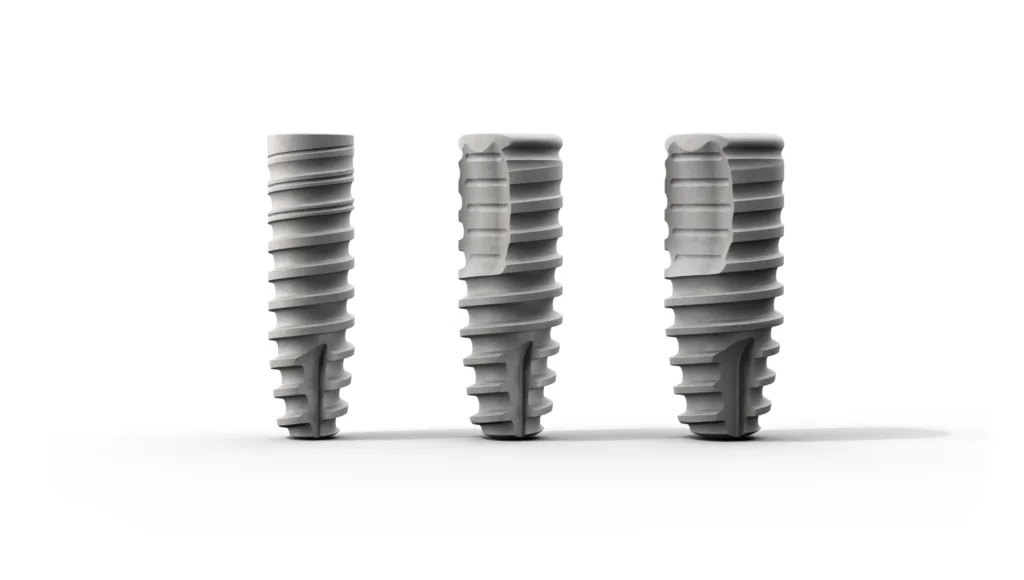
The Nuventus NV.C Implant System enters this evolving clinical environment with a design philosophy centered on supporting buccal bone volume. Maintaining this thin outer bone layer has become a focal point of modern implant protocols because its resorption can lead to aesthetic complications, soft tissue recession, and compromised implant positioning. Industry observers note that systems designed to support bone preservation could reduce the need for adjunctive procedures such as bone grafting or ridge augmentation, both of which increase cost and complexity for patients and clinicians.
This preservation-focused approach reflects a broader shift toward biologically informed implant design, where implant geometry, thread structure, and surface treatments are engineered to influence the biological response of bone tissue. Many implant manufacturers now emphasize designs that balance immediate stability with long-term osseointegration outcomes.
What the NV.C system reveals about competitive pressures in the dental implant market
The global dental implant market is already dominated by several established players including Straumann Group, Nobel Biocare, Dentsply Sirona, and Zimmer Biomet, all of which offer implant systems designed around conical connection architectures and digitally integrated workflows. For a newer entrant such as Nuventus AG, the challenge lies not simply in offering another implant system but in demonstrating a clear clinical or workflow advantage.
Industry analysts note that the NV.C system appears to target a specific gap between biologically focused implant design and procedural simplicity. Many advanced implant systems introduce complex surgical protocols or require specialized instrumentation, which can limit adoption among general practitioners who perform implant procedures only occasionally. By emphasizing compatibility with established conical workflows, the Swiss dental implant manufacturer may be attempting to lower adoption barriers.
Maintaining compatibility with familiar surgical and restorative procedures can be critical in implant dentistry, where clinicians often build entire treatment workflows around specific implant platforms. Changing implant systems typically requires retraining, new instrumentation, and modifications to laboratory workflows, all of which create friction in clinical practice.
What clinician-driven product development suggests about implant innovation trends
Nuventus AG has highlighted clinician involvement in the development of the NV.C Implant System, working with experienced implantologists during the design and testing phases. While collaboration between manufacturers and clinicians is common in implant development, its prominence in product messaging reflects a growing emphasis on practitioner-led innovation.
Implant dentistry has historically been influenced heavily by clinician-inventors who develop surgical techniques or implant geometries based on real-world procedural challenges. Industry observers note that systems emerging from this model often focus on simplifying clinical workflows rather than introducing entirely new surgical concepts.
Clinicians following implant innovation trends increasingly look for systems that combine predictable surgical placement with restorative flexibility. Implant systems must integrate not only with surgical workflows but also with digital planning software, intraoral scanners, and laboratory manufacturing technologies such as CAD-CAM milling or 3D printing.
How digital integration is becoming a strategic differentiator in implant platforms
Beyond implant design itself, Nuventus is positioning its platform around an integrated digital customer experience aimed at streamlining ordering, case management, and communication between clinicians and dental laboratories. Digital ecosystems are rapidly becoming a competitive battleground in the dental industry.
Digital dentistry is transforming how implants are planned, placed, and restored. Treatment planning increasingly involves 3D imaging, surgical guides, and digital impressions, allowing clinicians to visualize implant positioning before surgery and coordinate prosthetic restoration with laboratories in advance.
Manufacturers that offer integrated digital tools can potentially create stronger relationships with dental practices by embedding their platforms within everyday clinical workflows. Regulatory watchers and industry analysts note that this shift mirrors trends seen in other healthcare device sectors, where hardware platforms increasingly serve as gateways to broader digital ecosystems.
For smaller implant companies, digital services may provide an opportunity to compete with larger manufacturers that already possess extensive distribution networks and brand recognition.
What clinicians will likely evaluate before adopting a new implant platform
Despite the theoretical advantages of preservation-focused design, clinical adoption ultimately depends on evidence demonstrating that such systems deliver measurable improvements in patient outcomes. Implantologists often evaluate new systems through peer-reviewed clinical data, independent case studies, and long-term follow-up studies.
Clinical trial strength can be particularly important when evaluating claims related to bone preservation and soft tissue stability. Short-term implant stability may not necessarily translate into long-term biological outcomes, especially when implants are placed in esthetically demanding areas such as the anterior maxilla.
Clinicians tracking new implant technologies will likely watch for published studies assessing the NV.C system’s performance in areas such as marginal bone loss, implant survival rates, and soft tissue stability over multiple years. Without long-term data, adoption may initially occur among early adopters or clinicians already involved in development collaborations.
What regulatory clearance actually signals and what it does not guarantee
The U.S. Food and Drug Administration clearance obtained in 2024 allows the NV.C Implant System to be marketed for dental implant indications, but regulatory clearance alone does not necessarily establish clinical superiority. Dental implants are typically cleared through regulatory pathways that demonstrate substantial equivalence to existing devices rather than requiring large clinical trials.
Regulatory watchers note that this pathway facilitates innovation by allowing manufacturers to introduce design improvements without undergoing lengthy approval processes. However, it also means that differentiation often emerges through clinical performance data generated after commercial launch rather than through pre-market trials.
This dynamic places significant importance on post-market evidence and practitioner experience in determining whether new implant systems gain traction within the professional community.
What risks and uncertainties remain for Nuventus in the U.S. market
Entering the U.S. dental implant market presents several challenges beyond clinical performance. Distribution networks, continuing education programs, and laboratory partnerships all play major roles in establishing an implant system within clinical practice.
Many dental implant companies invest heavily in clinician training programs, hands-on workshops, and educational partnerships with dental schools and professional organizations. Without strong educational infrastructure, even technically advanced implant systems may struggle to achieve widespread adoption.
Pricing dynamics may also influence uptake. Implant dentistry is a competitive market where clinicians balance clinical performance with economic considerations such as implant cost, component pricing, and laboratory compatibility.
Industry observers suggest that Nuventus AG will need to demonstrate both clinical reliability and workflow efficiency to compete effectively against established implant brands that already possess large installed user bases.
Why the NV.C launch reflects broader shifts in implant dentistry strategy
The introduction of the NV.C Implant System highlights how implant manufacturers are increasingly focusing on preservation-oriented biology, digital integration, and clinician-friendly workflows rather than radical mechanical redesign. Implant systems have reached a level of technical maturity where incremental improvements often revolve around improving clinical predictability rather than reinventing implant architecture.
For clinicians, the key question will be whether preservation-focused design strategies translate into measurable improvements in patient outcomes, surgical efficiency, or aesthetic stability. For the dental industry, the launch reflects continuing efforts by emerging companies to differentiate themselves in a competitive and technologically evolving market.
As more implant systems emphasize biologically informed design principles, the next phase of competition may center less on implant hardware and more on integrated treatment ecosystems that combine surgical planning, restorative design, and digital workflow management.

Can preservation-focused implant systems reshape implant dentistry? Nuventus introduces NV.C in the United States added by Pallavi Madhiraju on
View all posts by Pallavi Madhiraju →