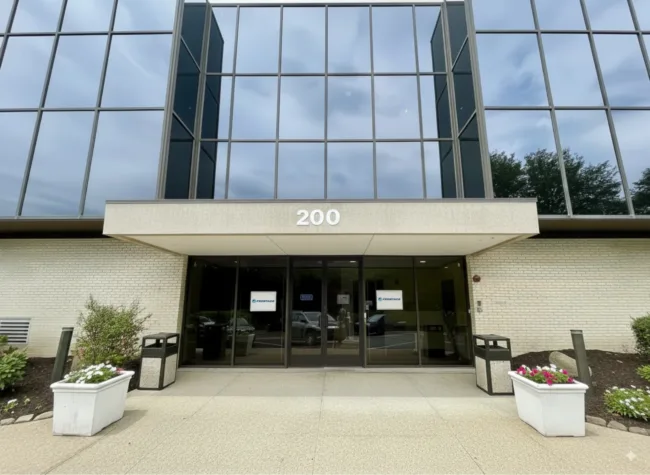
Wilmington PharmaTech, a U.S.-based contract research, development, and manufacturing organisation focused on complex small-molecule active pharmaceutical ingredient production, has announced a $50 million expansion of its Newark, Delaware campus to more than double reactor capacity. The project will add two 10,000-litre reactor suites for commercial-scale small-molecule API and peptide manufacturing, with the new capacity expected to come online in the third quarter of 2027.
Why Wilmington PharmaTech’s Delaware expansion matters for U.S. small-molecule API supply security
That headline figure matters because the announcement is not just about one site getting bigger. It reflects a broader shift in how drugmakers, investors, and supply chain planners are thinking about small-molecule manufacturing in the United States. For years, the industry has talked about resilience, reshoring, and reducing dependence on overseas supply, but the actual build-out of domestic current Good Manufacturing Practice infrastructure has moved more slowly than the rhetoric. Wilmington PharmaTech’s expansion stands out because it is aimed directly at commercial-scale API output rather than only early-stage development or laboratory services, which is where many smaller contract players remain concentrated.
What this $50 million investment reveals about commercial demand for domestic API manufacturing
What is genuinely new here is the scale and intended use of the capacity. Wilmington PharmaTech is not merely upgrading utilities or adding incremental process support. It is adding two large reactor suites that could meaningfully expand batch production for later-stage and commercial programmes. In small-molecule manufacturing, reactor volume still matters. Even as process intensification, continuous manufacturing, and efficiency gains get more attention, clients still need dependable large-scale assets for validated production campaigns, tech transfer, and late-stage supply. That is particularly true for complex chemistries and for molecules that require specialised handling, robust process development, or a more integrated development-to-commercial path.
Why added reactor capacity could strengthen Wilmington PharmaTech’s position in late-stage and commercial outsourcing
What this changes for Wilmington PharmaTech’s market position in U.S. small-molecule outsourcing is that the company becomes more credible as a partner for sponsors that want to avoid fragmenting their supply chain across multiple vendors. In contract development and manufacturing, scale alone is not enough. Sponsors also look for continuity from route scouting and process optimisation through clinical supply and commercial manufacture. The Delaware expansion strengthens Wilmington PharmaTech’s ability to present itself as a domestic end-to-end option for clients that may otherwise have split development work, analytical support, and commercial production among different service providers. That can reduce handoff risk, shorten transfer timelines, and improve accountability when programmes move from development into registration-enabling or commercial supply.
The strategic timing is also notable. Small-molecule APIs may not command the same headlines as cell therapy, messenger RNA, or antibody-drug conjugates, but they still represent the operational backbone of a large share of the pharmaceutical industry. Many approved medicines, including high-volume generics and branded therapies, continue to depend on reliable small-molecule supply. Industry observers note that this part of the manufacturing chain remains vulnerable to capacity concentration, geopolitical disruptions, regulatory events, and transport instability. Against that backdrop, a domestic site expansion in Delaware is less about patriotic optics and more about positioning for procurement decisions that increasingly weigh geographic diversity and supply continuity alongside cost.
What this expansion changes for biopharma companies seeking U.S.-based peptide and HPAPI manufacturing partners
What this reveals about demand trends in peptide and highly potent API manufacturing is equally important. Wilmington PharmaTech said the new suites will support both small-molecule APIs and peptides, and it framed the project as a second phase following recently added highly potent API suites. That combination suggests the company is trying to build a more differentiated portfolio rather than competing purely on commodity chemistry. Peptides continue to attract investment because of their role in metabolic disease, endocrinology, oncology, and other high-value therapeutic areas. Highly potent compounds also remain strategically attractive for oncology and specialist indications. By linking the new large-scale reactor suites to earlier high-potency investments, Wilmington PharmaTech appears to be building a layered manufacturing proposition that covers more of the complexity spectrum.
Still, the announcement leaves several questions unanswered, and those gaps matter. Reactor capacity is a useful headline metric, but it does not by itself define throughput, margin potential, or client attractiveness. Buyers will want more detail on the types of chemistries the new suites are designed to support, containment characteristics, automation levels, waste handling, quality systems, and whether the expansion includes parallel investment in analytical, warehouse, engineering, and quality assurance infrastructure. A reactor can be installed faster than an organisation can recruit, train, and retain the technical workforce needed to run it consistently at commercial standard. Wilmington PharmaTech said it expects to approximately double site headcount upon completion, which signals confidence, but labour availability and training depth will become execution variables.
Why execution risk, workforce scaling, and facility utilisation will decide the real value of this API build-out
That workforce issue is not trivial in the Delaware and broader mid-Atlantic manufacturing corridor. Expanding physical infrastructure is only half the battle. Scaling operations in a way that satisfies regulatory scrutiny requires experienced process chemists, engineers, validation specialists, quality professionals, and manufacturing operators who can support cGMP discipline under commercial deadlines. Clinicians may never see that constraint directly, but regulators and procurement teams certainly do. Delays in hiring or uneven technical depth can slow qualification, reduce scheduling flexibility, or limit how quickly new suites are turned into productive revenue-generating assets.
Regulatory clarity around the project itself is straightforward, but commercial clarity is less complete. This is a capacity announcement, not a product filing or an inspection milestone. The market will therefore judge it less by the promise of the investment and more by whether Wilmington PharmaTech can translate the expansion into booked programmes, long-term customer relationships, and successful client launches. In the contract manufacturing business, newly installed capacity is an asset only when it is reliably utilised. Empty steel looks impressive in press material but becomes financially meaningful only when clients commit molecules, processes transfer smoothly, and campaigns run without major quality or scheduling disruptions.
Another analytical layer here involves competition. Wilmington PharmaTech is entering a more active domestic outsourcing environment in which customers are increasingly selective. Larger contract development and manufacturing organisations already have scale advantages, broader global networks, and deeper balance sheets. At the same time, niche U.S. manufacturers are trying to win business by promising agility, scientific depth, and a closer working relationship. Wilmington PharmaTech’s best route may be to sit between those poles: large enough to offer commercial credibility, but specialised enough to handle technically demanding small-molecule and peptide programmes that need hands-on process development rather than standardised high-volume execution.
What industry observers are likely to watch next as Wilmington PharmaTech targets 2027 commercial readiness
The Delaware location also adds a strategic dimension. Being in a U.S. pharmaceutical corridor can help with client access, talent recruitment, logistics, and regulatory familiarity. For sponsors trying to de-risk North American supply, domestic geography can influence vendor selection, especially when paired with established cGMP history. Wilmington PharmaTech’s reference to more than 200 investigational new drug submissions and hundreds of drug substance programmes is clearly intended to reinforce that credibility. Even so, future customers will likely care less about cumulative experience as a marketing marker and more about recent evidence of successful scale-up, on-time delivery, inspection readiness, and retention of critical scientific personnel.
What industry observers are likely to watch next is whether Wilmington PharmaTech can convert this expansion story into a broader platform narrative. The company already operates clinical and commercial facilities in Delaware, alongside an accelerated development and analytical support facility in Suzhou, China. That split footprint could be commercially useful if managed well, allowing earlier technical work to feed into U.S. manufacturing execution. But it also means the domestic resilience message is not purely about a fully U.S.-contained operating model. Sponsors prioritising supply chain security will want clarity on how development, sourcing, analytics, and manufacturing responsibilities are divided across geographies and where critical dependencies remain.
From a sector perspective, the announcement is strongest as a signal of confidence in U.S.-based small-molecule demand rather than as proof that the reshoring debate has been solved. Domestic API expansion remains expensive, slow, and operationally demanding. Lead times stretch over years, not quarters. Equipment qualification, workforce ramp-up, and customer onboarding all take time. The third-quarter 2027 timeline reinforces that reality. This is a long-cycle strategic investment, not a quick reaction to short-term demand. That long horizon may actually strengthen the announcement’s credibility, because it suggests Wilmington PharmaTech is planning for sustained structural demand rather than chasing a temporary talking point.
For pharmaceutical sponsors, the practical takeaway is that the U.S. outsourcing landscape for small molecules may gradually become less constrained, but not immediately and not uniformly. More domestic capacity could improve optionality, especially for clients that want to keep commercial API production closer to end markets or reduce geopolitical exposure. Yet buyers will still need to evaluate chemistry fit, technical capabilities, pricing, scheduling reliability, and regulatory history on a programme-by-programme basis. New capacity creates opportunity, but it does not erase the complexity of matching a molecule to the right manufacturing partner.
In that sense, Wilmington PharmaTech’s expansion is best understood as a meaningful but still unfinished strategic move. It adds scale where the market does need more credible U.S. options. It builds logically on the company’s earlier investment in highly potent API suites. It aligns with a broader industry push toward domestic resilience and more integrated outsourcing models. But the true test will come later, when the company must demonstrate that these reactor suites can be filled, staffed, validated, and turned into reliable commercial output. Until then, the Delaware project is a strong signal of ambition and a useful marker of where U.S. small-molecule outsourcing is heading, even if the hardest part of the story remains ahead.