Frontage Laboratories, Inc. has expanded its early phase clinical research capabilities across the United States and China, reinforcing its positioning as a cross-border Contract Research, Development and Manufacturing Organization (CRDMO) at a time when patent cliffs and global trial timelines are reshaping sponsor expectations. The latest capacity additions include a 160-bed, 36,000-square-foot Phase I unit in Secaucus, New Jersey, a dedicated radiolabeled human absorption, metabolism, and excretion (hAME) unit, and growing oncology trial capabilities through regional hospital partnerships. Together, these moves reflect the company’s ambition to consolidate early-stage clinical operations under a single integrated delivery model.
While the infrastructure buildout may appear incremental in isolation, it signals a deeper competitive shift among mid-sized CRDMOs toward more vertically integrated and globalized offerings. Frontage Laboratories’ dual focus on U.S. FDA-aligned BE (Bioequivalence) study throughput and flexible multi-regional clinical trial (MRCT) execution via its China network positions it to capitalize on emerging sponsor demand for parallel early-phase trial pathways. The expansion also comes amid growing scrutiny on radiolabeled trial readiness and AME profile characterization—both of which are gaining regulatory emphasis in first-in-human oncology and high-potency programs.
What this expansion reveals about the new CRDMO value proposition for early clinical development
Frontage Laboratories is not alone in attempting to reframe early clinical development as a streamlined, cross-border offering. However, its decision to scale both U.S. and China-based infrastructure simultaneously suggests that the company sees dual-region Phase I flexibility not as a luxury but as a strategic necessity. The inclusion of a nuclear pharmacy and C14-human AME (hAME) functionality aligns directly with 2024 U.S. Food and Drug Administration guidance on radiolabeled trials, which has pushed many smaller firms to outsource this capability to specialized vendors. Frontage is betting that sponsors would prefer to consolidate these needs under one roof.
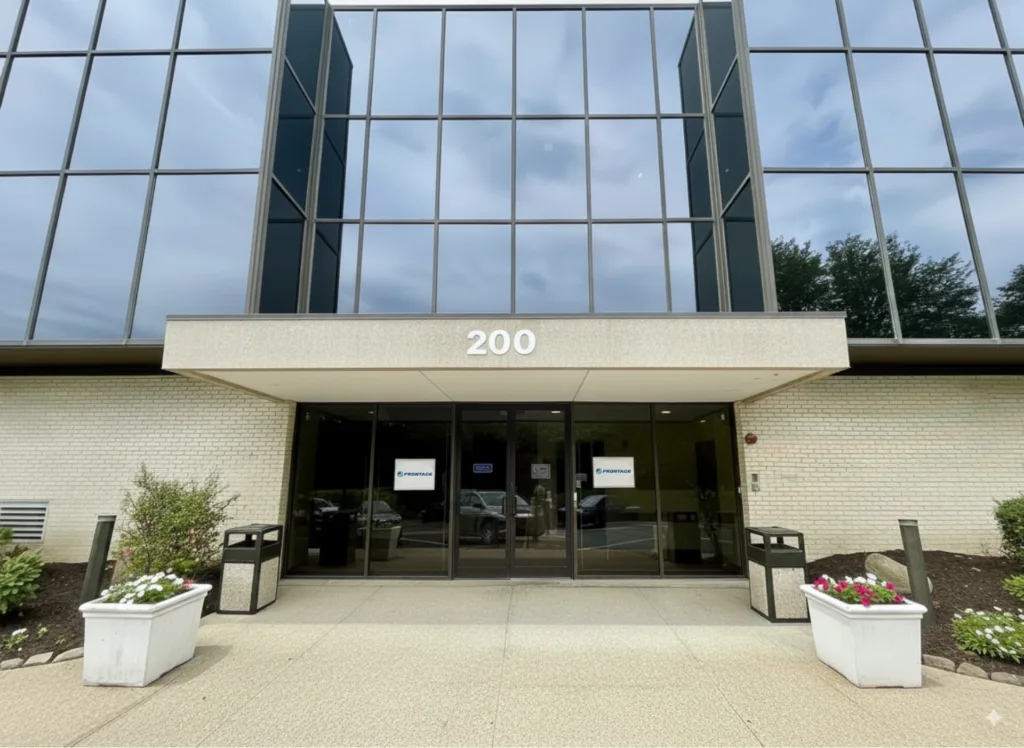
This “One-Stop Shop” positioning—integrating bioanalytical labs, drug metabolism and pharmacokinetics (DMPK), and Chemistry, Manufacturing, and Controls (CMC) services into early-phase trial conduct—echoes broader CRDMO moves toward end-to-end convenience. It is particularly appealing for small and mid-sized biotechnology sponsors looking to avoid fragmented vendor management across geographies. Clinical pharmacologists and operations heads watching this segment are likely to see the Secaucus site as a proof-of-concept for combining radiolabel expertise, healthy volunteer BE studies, and patient-based Phase I oncology trials in a single operational framework.
From a market differentiation standpoint, the hAME and Absolute Bioavailability (ABA) capabilities deserve special mention. These studies are not merely regulatory checkboxes; they are increasingly tied to pivotal early investment decisions and dose optimization modeling. A dedicated unit with FDA-aligned workflows offers sponsors a faster path to critical go/no-go inflection points in pipeline development.
Why oncology Phase I trial integration raises both opportunity and execution risk
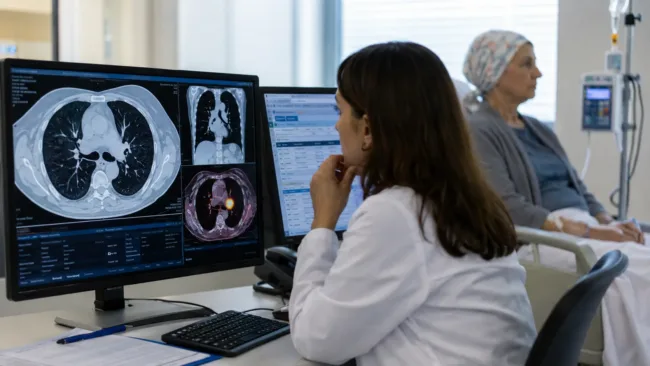
Frontage’s expansion into oncology Phase I trials through partnerships with regional hospitals opens the door to a high-growth, high-barrier segment of the early development market. Oncology first-in-human trials—often adaptive, high-stakes, and time-sensitive—require not only pharmacokinetic rigor but also specialist clinical settings, access to biomarker-rich patient populations, and near real-time data management. Unlike bioequivalence studies, where throughput and cost-efficiency dominate, oncology trials hinge on investigator networks, protocol flexibility, and risk-adjusted patient enrollment forecasting.
By partnering with hospitals rather than acquiring dedicated oncology units, Frontage appears to be adopting an asset-light model to gain foothold in this space. This strategy could accelerate market entry but may raise questions around standardization, operational oversight, and patient data integration—especially for trials that require biomarker-driven adaptive design or real-time dose escalation decisions.
Clinical development observers will watch closely to see whether the oncology capabilities can match the process maturity seen in Frontage’s BE and radiolabel offerings. Success in this segment would allow Frontage to compete with niche oncology-focused CROs as well as full-service CRDMOs with deeper Phase I–IV infrastructure. But the margin for error in oncology trial execution remains thin.
What this signals about sponsor behavior ahead of the 2026–2028 patent cliff wave
A less discussed but significant backdrop to this expansion is the approaching wave of blockbuster patent expirations between 2026 and 2028. As generic and biosimilar developers prepare to file abbreviated applications and sponsors race to develop next-generation or lifecycle management assets, demand for fast, scalable BE studies and PK/PD data packages is expected to surge. Frontage’s investment in large-capacity U.S. facilities, particularly those designed for healthy volunteer BE programs, appears calibrated to capture this demand spike.
Moreover, cross-border flexibility is gaining salience as sponsors look to hedge against geographic bottlenecks, cost variability, and shifting regulatory timelines. Frontage’s dual presence in the United States and China—backed by regulatory experience in North America, Europe, and Asia—positions it well for sponsors pursuing multi-region filings or seeking to repurpose early PK data across jurisdictions. This is especially relevant for global biotech startups facing pressure to compress early development timelines without sacrificing compliance.
Investors tracking the CRDMO sector will note that while many competitors have touted full-service platforms, few have showcased operational readiness across such a precise intersection of radiolabel studies, BE capacity, and oncology Phase I scale-up. If Frontage’s integration strategy holds, it may serve as a model for other mid-tier CRDMOs navigating the same patent cliff–driven opportunity space.
What risks remain around scalability, client diversification, and integration depth
Despite its ambitious footprint, Frontage faces several execution challenges common to fast-scaling CRDMOs. First, the ability to maintain harmonized quality and turnaround times across sites—especially between U.S. and China operations—will be closely watched by regulators and global quality assurance teams. Discrepancies in standard operating procedures, data formats, or clinical reporting across geographies could undermine the “One-Stop Shop” value proposition.
Second, while the company has emphasized infrastructure and capabilities, less is known about its current sponsor mix and client concentration. Overreliance on a few large contracts—especially in volatile biotech funding cycles—can expose mid-tier CRDMOs to revenue instability. Similarly, integrating diverse offerings such as DMPK, central lab, and CMC under a single operational umbrella is technically sound but managerially complex, especially as staffing, training, and regulatory updates must be consistently synchronized across sites.
Finally, the success of the oncology trial expansion depends not only on hospital partnerships but also on patient recruitment and retention strategies, IRB alignment, and early biomarker readout capabilities. These are not easily built overnight and require trusted relationships with investigators and site managers.
The strategic expansion by Frontage Laboratories reflects more than operational scale—it marks a calculated response to the shifting pressures in early clinical development. As radiolabeled trial requirements become more central to regulatory expectations, as the industry braces for a wave of blockbuster patent expirations, and as sponsors increasingly demand global Phase I execution without sacrificing timelines or compliance, CRDMOs must adapt or risk obsolescence.
Frontage’s infrastructure investments in the United States and China, combined with its move into oncology trials and integrated CMC and lab services, demonstrate a deliberate effort to redefine what early-phase outsourcing can look like. Rather than offering isolated capabilities, the company is attempting to deliver a unified platform where speed, specialization, and regulatory alignment are no longer trade-offs but standard features.
The success of this model will depend not only on capacity utilization or operational readiness but on whether Frontage can deliver on the promise of seamless cross-border coordination, high-stakes oncology trial execution, and sponsor confidence in early decision-making data. If it does, it may set a new benchmark for how CRDMOs serve the next generation of global drug developers.