TytoCare has received FDA De Novo classification for the first model of Tyto Insights for ENT Suite, an AI-powered tool that analyzes otoscopy video recordings of the eardrum to help detect eardrum bulging in patients aged six months and older. The decision creates a new regulatory category for an ear, nose and throat image analyzer and positions TytoCare’s connected otoscope and home examination platform more firmly within the clinical decision support layer of virtual primary care.
The regulatory significance is bigger than a single ear exam feature. Telehealth has spent years solving access, convenience and workflow problems, but it has remained weaker where clinicians need exam-grade physiological or anatomical data. Ears are a good example. A video consultation can capture symptoms, history and parental concern, but it cannot reliably show whether the tympanic membrane is bulging, inflamed or otherwise clinically meaningful unless a compatible examination device is involved. TytoCare’s De Novo classification therefore lands at the intersection of remote care, artificial intelligence, pediatric access, antibiotic stewardship and regulatory confidence in AI-enabled diagnostic support.
Why TytoCare’s FDA De Novo classification matters for AI-powered ENT diagnostics
The De Novo pathway matters because it is generally used where a device is novel and there is no legally marketed predicate that fits neatly into an existing classification. By securing classification for an AI-powered ENT image analyzer, TytoCare has not merely added another software feature to a remote care device. It has helped define how regulators may view a class of AI tools that interpret structured clinical images captured outside traditional care settings.
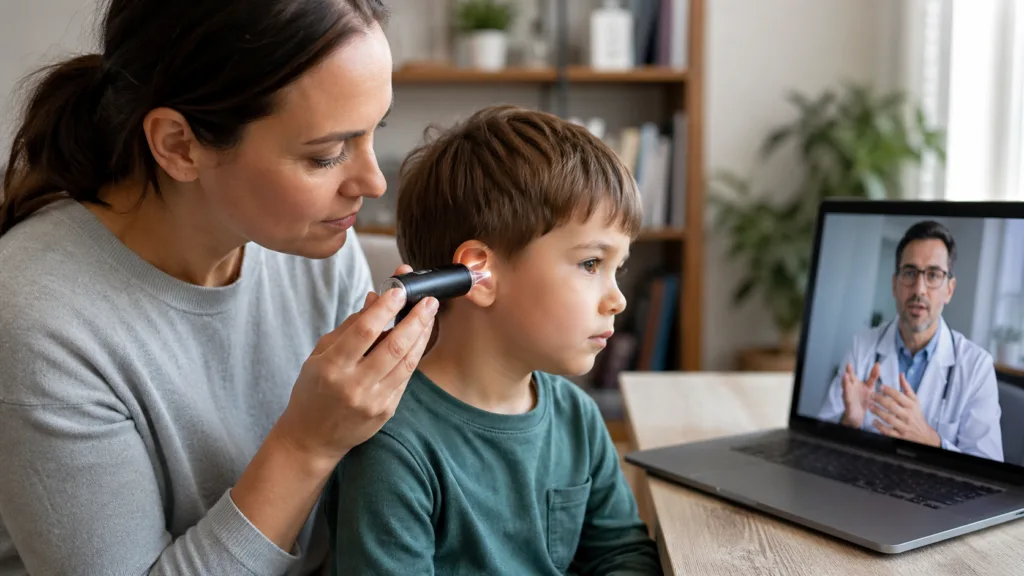
That creates a useful precedent for the diagnostics industry, especially in categories where home-based exams are becoming technically possible but clinically uneven. Ear exams are common, high-volume and often pediatric. They also carry real consequences when assessment is delayed, inaccurate or incomplete. Acute Otitis Media can lead to unnecessary antibiotic use when clinicians over-treat uncertainty, or delayed care when the clinical picture is underestimated. An AI tool that supports detection of eardrum bulging could help narrow that gap, provided it is used as clinical support rather than as a stand-alone replacement for professional judgment.
The unresolved question is how consistently the technology performs across real-world users, home lighting conditions, patient movement, caregiver technique and pediatric cooperation. A regulatory classification establishes a pathway and validates the risk-benefit framing, but adoption will depend on whether providers trust the outputs when images are captured by non-clinicians in non-clinical environments. That is the hard part of home diagnostics, and the part that often separates impressive technology from scalable care delivery.
How AI-powered otoscopy could address a major weakness in standard telehealth visits
The commercial logic behind TytoCare’s ENT Suite is easy to understand. Traditional telehealth works well for history-taking, follow-up care, medication reviews and low-acuity triage. It is much less powerful when the diagnosis depends on a physical examination. Otitis media sits squarely in that gap because symptoms such as fever, crying, ear pain or irritability are not enough to confirm what is happening behind the eardrum.
TytoCare’s model attempts to convert remote care from a conversation-led experience into an exam-enabled workflow. The connected otoscope captures otoscopic videos, while the AI layer evaluates whether eardrum bulging is present. That is clinically relevant because eardrum bulging is an important sign in Acute Otitis Media and related conditions. For clinicians, the value is not only the image but the consistency of interpretation. For patients and caregivers, the value is faster insight and potentially fewer unnecessary in-person visits.
However, the device category still faces a behavior-change challenge. Families need to own or access the device, use it correctly, capture usable video and connect with a provider who is comfortable incorporating the output into care decisions. Health systems and payers will also need to decide where the device fits in their care pathways. If it becomes a reimbursed, integrated front door for pediatric primary care, the opportunity expands meaningfully. If it remains an add-on for select digital health programs, the impact could be narrower.
Why the pediatric ear infection market gives TytoCare a clear use case but not an automatic adoption path
Ear-related conditions are among the most common reasons children are taken to a physician, and that makes the pediatric use case attractive. High frequency creates a strong access argument. Parents often seek rapid reassurance, clinicians face pressure to triage efficiently, and health systems want to reduce avoidable urgent care and emergency department visits. In theory, a home-enabled otoscopy tool can serve all three interests.
The antibiotic stewardship angle is also important. When clinicians cannot confidently assess the eardrum, uncertainty can contribute to unnecessary antibiotic prescribing or delayed treatment. AI-supported eardrum analysis could help standardize one important component of the exam and reduce some of that uncertainty. That is not the same as making treatment decisions automatically, but it could improve the quality of remote triage.
The limitation is that pediatric adoption is rarely driven by technology performance alone. Trust, reimbursement, caregiver usability, clinician workflow and integration with electronic health records all matter. Pediatricians may welcome better remote exam data, but they will still ask whether the images are adequate, whether the algorithm’s sensitivity and specificity are appropriate, and whether liability shifts if the tool misses or overcalls a finding. Parents may like the convenience, but only if the experience is simple during the real-world chaos of a sick child at home. Tiny humans, as the sector keeps rediscovering, are not always cooperative clinical endpoints.
How TytoCare’s data advantage could support AI development while raising expectations for validation
TytoCare’s large proprietary database of ear images and recordings is central to the product story. AI-enabled medical devices require relevant, well-labeled and sufficiently diverse datasets, especially when they are expected to support clinical decisions across age groups, geographies and care settings. A database at this scale can improve model development and help refine performance across varied presentations.
That data foundation could also become a competitive moat. Connected device companies that capture longitudinal, multimodal exam data may have an advantage over software-only telehealth platforms because they own both the acquisition layer and the interpretation layer. TytoCare’s broader platform already spans heart, lung, throat, ear and skin exams, which gives it a pathway toward a more comprehensive home smart clinic model rather than a single-feature diagnostic accessory.
The risk is that data scale alone does not guarantee clinical generalizability. Industry observers tracking AI diagnostics increasingly focus on whether models perform consistently across demographics, disease severity, device operators and care environments. For TytoCare, the next phase will require continued evidence that the ENT Suite works not only in validation datasets but also in messy, routine clinical deployment. Regulators may have cleared the pathway, but clinicians will still want proof that the tool improves care decisions without creating new noise.
Why this could strengthen TytoCare’s position against conventional telehealth platforms
TytoCare’s positioning is different from standard video-first telehealth providers because it is trying to own the physical exam layer of virtual care. That matters as virtual care matures. The first wave of telehealth competed on convenience and access. The next wave is likely to compete on clinical completeness, triage accuracy and integration with hybrid care networks.
AI-powered ENT analysis gives TytoCare a stronger argument with health plans, employers, health systems and pediatric networks. Rather than saying remote visits are convenient, TytoCare can argue that remote visits can include exam-grade data and AI-supported interpretation. That distinction could become more important as payers become more selective about reimbursing virtual care that does not clearly reduce downstream cost or improve care quality.
Still, the economics remain crucial. For health plans, the value proposition must show that device deployment, engagement programs and provider workflows reduce total cost of care. TytoCare has positioned its Home Smart Clinic around higher utilization, cost reduction and emergency department diversion, but buyers will want proof that the ENT AI layer adds incremental value beyond the existing device platform. In other words, the question is not only whether the technology works. It is whether it changes utilization patterns enough to justify broader deployment.
How Smart Checkup capabilities could shift patient engagement in home diagnostics
The Smart Checkup expansion suggests TytoCare is also trying to make AI outputs more visible and useful to patients, not only clinicians. That is a meaningful shift because home diagnostics can fail when patients do not understand what they are doing, why it matters or when to escalate care. A tool that provides deeper insight into lung and ear exams could improve engagement and make remote examination feel less like a gadget and more like a guided care experience.
For clinicians, patient-facing insights can be helpful if they improve adherence and care navigation. For patients, they can reduce anxiety by making the remote exam feel more structured. For health systems, they may increase utilization of virtual care assets that otherwise sit underused after initial deployment.
The caution is that patient-facing AI must be carefully framed. If patients misinterpret outputs as diagnoses, or delay care because a result seems reassuring, the model could introduce safety concerns. The strongest implementation will likely keep Tyto Insights positioned as a support tool that informs care conversations rather than replacing them. That distinction will matter for regulatory confidence, clinician trust and patient safety.
What clinicians, payers and regulators are likely to watch after TytoCare’s ENT milestone
The next watchpoint is evidence. Clinicians will look for real-world performance data, workflow impact and clarity on how the AI result should be used alongside symptoms, physical findings and clinical judgment. Payers will look for reductions in unnecessary visits, avoidable emergency department utilization and inappropriate antibiotic prescribing. Regulators will watch whether the new category remains tightly bounded or becomes a platform for broader AI image analysis across ENT and primary care.
The competitive watchpoint is whether other device makers and digital health platforms respond with similar AI-enabled exam tools. The De Novo classification gives TytoCare an early regulatory advantage, but it may also signal to the market that AI-powered home diagnostics are becoming more viable. That could attract more investment into connected otoscopes, digital stethoscopes, remote throat imaging, respiratory assessment and other exam categories where telehealth still lacks clinical depth.
TytoCare’s breakthrough does not mean home diagnostics have solved their hardest problems. It does mean the sector has moved a step closer to a more clinically capable model of virtual care. The most important implication is not that AI can analyze an eardrum. It is that regulators, providers and patients may now be entering a phase where the home exam becomes a more serious part of primary care infrastructure.

TytoCare just opened a new FDA category. Can AI make home ear exams clinically useful? added by Pallavi Madhiraju on
View all posts by Pallavi Madhiraju →