Tempest Therapeutics, Inc. will present updated clinical data for its dual-targeting CD19 and BCMA CAR-T therapy candidate TPST-2003 at the International Society for Cell and Gene Therapy 2026 Annual Meeting, including results from the ongoing REDEEM-1 Phase 1/2a trial in relapsed or refractory multiple myeloma. The update builds on earlier interim findings that reported complete responses in a small cohort alongside a favorable safety profile, positioning the program within the next generation of cellular therapies targeting treatment-resistant disease.
The strategic relevance of this update lies in its focus on a central limitation of current CAR-T therapies in multiple myeloma, namely the durability gap that emerges after initial response. While BCMA-directed CAR-T therapies have achieved high response rates, relapse remains common, often driven by antigen escape or tumor heterogeneity. The dual-targeting approach embodied in TPST-2003 reflects a deliberate attempt to expand beyond single-antigen dependency and to engineer persistence into the therapeutic response.
What differentiates TPST-2003 is its parallel CAR architecture, which is designed to target CD19 and BCMA independently within the same engineered T cell. This contrasts with tandem or sequential designs that rely on coordinated binding mechanisms. Industry observers note that parallel targeting may provide a more robust response in heterogeneous tumors, where antigen expression can vary across subclones. In relapsed or refractory multiple myeloma, where disease biology is shaped by repeated lines of therapy, this heterogeneity becomes more pronounced, increasing the likelihood of resistance to single-target approaches.
How dual-targeting CAR-T design could redefine resistance management and response durability in multiple myeloma
The clinical logic behind dual-targeting CAR-T therapy is anchored in the need to overcome antigen escape, a well-documented mechanism of relapse in hematologic malignancies. BCMA remains a validated and widely expressed target in multiple myeloma, but its expression can diminish over time, particularly under therapeutic pressure. The addition of CD19 targeting introduces a second axis of attack, potentially capturing tumor subpopulations that may not rely on BCMA expression.
Clinicians tracking the field suggest that CD19 may be expressed in progenitor or stem-like cells that contribute to disease persistence and relapse. By incorporating both targets, TPST-2003 aims to disrupt both the dominant tumor population and these more resistant compartments. If validated, this approach could shift the therapeutic goal from achieving high initial response rates to sustaining those responses over longer periods.
However, the degree to which CD19 contributes meaningfully to disease control in multiple myeloma remains an open question. Unlike in B-cell malignancies such as acute lymphoblastic leukemia, CD19 expression in myeloma is less consistent. This raises uncertainty about how much incremental benefit dual targeting can deliver beyond BCMA-directed therapy alone. The answer will depend on whether the dual-targeting strategy translates into measurable improvements in progression-free survival and overall survival in larger clinical studies.
How early REDEEM-1 signals of complete response and safety momentum are tempered by sample size, durability uncertainty, and trial design constraints
The interim data from the REDEEM-1 trial has drawn attention due to the reported complete response rate in all six efficacy-evaluable patients. While this outcome is notable, it must be interpreted within the context of early-phase development. Phase 1/2a trials are designed primarily to assess safety and dosing, with efficacy signals considered exploratory.
Regulatory watchers emphasize that such small cohorts are highly susceptible to selection bias and may not reflect broader patient populations. The inclusion of patients with extramedullary disease adds clinical significance, as this subgroup is associated with poor prognosis and limited treatment options. Early indications of activity in this population could represent a meaningful differentiator if sustained in larger datasets.
Safety remains another critical dimension. CAR-T therapies are associated with immune-mediated toxicities, including cytokine release syndrome and neurotoxicity. The favorable safety profile reported so far for TPST-2003 is encouraging, but longer follow-up and expanded enrollment will be necessary to confirm whether dual-targeting introduces additional risks or maintains a comparable safety profile to existing therapies.
The structure of the trial also limits direct comparison with other CAR-T products. Without randomized data, it is difficult to determine whether observed outcomes represent a true advancement or fall within the variability expected in early-stage studies. Industry observers note that the next phase of development will need to address this gap through more rigorous trial design.
How TPST-2003’s dual-targeting strategy must prove clear clinical and durability advantage to stand out in an increasingly crowded and fast-iterating CAR-T and immunotherapy market
The development of TPST-2003 occurs within a crowded and fast-moving therapeutic landscape. Several BCMA-targeted CAR-T therapies have already secured regulatory approval, establishing a high benchmark for efficacy. At the same time, alternative modalities such as bispecific antibodies and antibody-drug conjugates are gaining traction, offering different balances of efficacy, safety, and convenience.
Within this context, dual-targeting CAR-T therapies represent one of several strategies aimed at improving outcomes. The competitive challenge for Tempest Therapeutics, Inc. is not only to demonstrate clinical benefit but also to establish clear differentiation. This could come in the form of improved durability, activity in difficult-to-treat populations such as extramedullary disease, or a more manageable safety profile.
The involvement of Novatim Immune Therapeutics in developing TPST-2003 in certain regions introduces additional strategic considerations. Cross-regional development can accelerate data generation but also requires alignment on regulatory strategy and manufacturing standards. For Tempest Therapeutics, Inc., securing consistent data across geographies will be important for building a cohesive global development narrative.
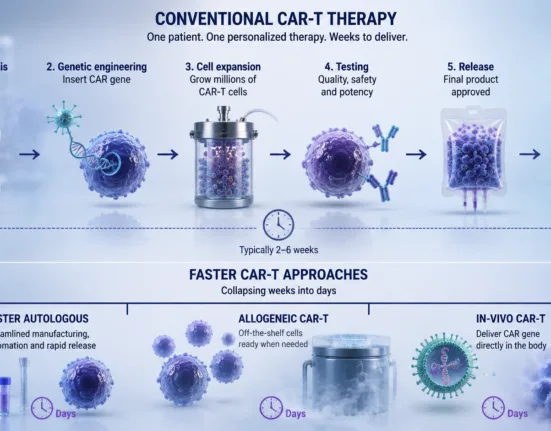
Manufacturing and scalability remain persistent challenges in CAR-T therapy. Autologous approaches require individualized production, which can limit throughput and increase cost. Dual-targeting constructs may introduce additional complexity, potentially affecting manufacturing efficiency. Industry observers suggest that any clinical advantage will need to be weighed against these operational realities when considering commercial viability.
How regulatory scrutiny, payer pressure on CAR-T value, and real-world delivery constraints will ultimately determine whether TPST-2003 can transition from promising data to scalable clinical adoption
The transition from early promise to regulatory approval will hinge on whether TPST-2003 can generate consistent, reproducible outcomes in later-stage trials. Endpoints such as duration of response and progression-free survival will be critical, particularly against a backdrop of already high response rates from existing BCMA-targeted therapies. Regulatory expectations are rising, with scrutiny extending beyond efficacy to include safety, manufacturing consistency, and durability of benefit.
Reimbursement will be equally decisive. Given the high cost of CAR-T therapies, payers are increasingly focused on long-term value, making durable responses and reduced downstream treatment burden essential to justify pricing. At the same time, clinician adoption will depend not only on outcomes but also on operational feasibility, including manufacturing timelines and patient management complexity.
The upcoming International Society for Cell and Gene Therapy presentation will provide an early indication of whether TPST-2003 can sustain its initial signals across a broader dataset. Industry observers will be focused on durability, consistency, and activity in high-risk populations. Ultimately, the program’s trajectory will depend on whether its dual-targeting design translates into clinically meaningful gains that outweigh added complexity and position Tempest Therapeutics, Inc. within the next phase of CAR-T innovation.