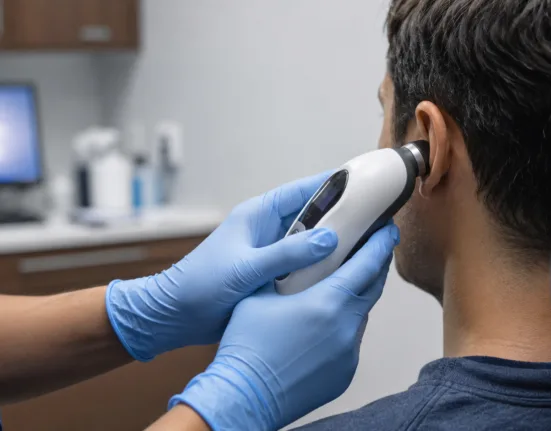
Earflo has launched its FDA-cleared Earflo device in the United States for the treatment of negative middle ear pressure in children as young as two, creating a new at-home option in pediatric ear care. The non-invasive device enters the market at a clinically important point between watchful waiting and ear tube surgery for children with pressure-related middle ear fluid buildup.
The significance of the clearance is not simply that another pediatric medical device has reached commercialization. The more interesting development is that Earflo is trying to move part of the otitis media with effusion care pathway out of the clinic and into the home, without positioning itself as a replacement for physician oversight or surgical intervention when surgery is needed. That distinction matters because pediatric ear care is crowded with frustrated parents, cautious clinicians, and a long-standing clinical reality: many cases resolve naturally, but persistent fluid and pressure problems can still affect hearing, speech development, school readiness, sleep, and family quality of life.
Why Earflo’s FDA-cleared pediatric device matters in the gap between observation and ear tube surgery
Earflo’s commercial timing is important because the device targets a very specific weakness in the current care model. In many children with otitis media with effusion, clinicians often observe the condition for a defined period before escalating to intervention, especially when the child is not at higher developmental risk. That approach is medically rational because spontaneous resolution is common, but it can feel passive to parents whose children are dealing with muffled hearing, discomfort, communication issues, or repeat visits.

This is the opening Earflo is trying to occupy. The device delivers a controlled puff of air through the nose while the child swallows, helping open the eustachian tube and equalize middle ear pressure. The product is designed as a child-friendly cup and supported by a companion app that guides sessions and tracks use. In commercial terms, that combines three trends already reshaping medtech: non-invasive intervention, home-based disease management, and digital adherence support.
The unresolved question is whether this model can move from appealing concept to durable clinical workflow. Pediatric devices often succeed or fail not only on efficacy, but on whether children actually use them consistently, whether parents understand the treatment routine, and whether clinicians trust the data enough to recommend the product during the observation window. Earflo’s challenge is therefore not merely regulatory. It must prove that it can become a practical tool inside real family routines.
How Earflo changes the clinical conversation around otitis media with effusion
Otitis media with effusion is common, but its management remains surprisingly difficult because the condition sits in a grey zone between benign natural history and meaningful developmental risk. Many children improve without surgery, yet persistent middle ear fluid can interfere with hearing at exactly the stage when speech, social interaction, and classroom readiness matter most. That makes the watchful waiting period clinically sensible but emotionally unsatisfying.
Earflo’s device changes the conversation by giving clinicians and families something active to consider during that period. Instead of waiting alone, parents may have a structured, device-based intervention that aims to address negative middle ear pressure earlier. For clinicians, the appeal is potentially stronger if usage data from the app can help document adherence and response over time.
However, the device will still have to fit within cautious pediatric practice. Ear tube surgery remains an established procedure for appropriate candidates, and Earflo will need to avoid being interpreted as a universal substitute for specialist evaluation. Children with persistent symptoms, suspected hearing loss, developmental risk factors, recurrent infections, or anatomical concerns still require medical assessment. That means the strongest market positioning for Earflo is likely not “surgery replacement,” but “earlier non-invasive intervention before escalation.”
Why the app-based design could be as important as the pressure therapy itself
The most commercially interesting part of Earflo may be its product design. Pediatric adherence is one of the least glamorous but most decisive barriers in child-focused medtech. A device can be clinically elegant and still fail if a toddler refuses to use it, if parents abandon the routine after a few days, or if physicians cannot verify whether therapy was performed correctly.
By designing Earflo as a familiar cup and pairing it with a gamified app, Earflo is trying to solve the behavioral side of pediatric treatment. That could matter as much as the pressure mechanism because at-home devices depend on repetition, habit formation, and caregiver confidence. The app also creates a potential feedback loop for clinicians, especially if future iterations support clearer tracking of usage patterns and outcomes.
The risk is that digital engagement can be overestimated. Gamification may help initiate therapy, but sustained adherence depends on whether parents see meaningful improvement, whether the routine is simple, and whether clinicians reinforce its use. In pediatric markets, novelty wears off quickly. Long-term adoption will require Earflo to demonstrate that the device remains useful beyond the initial “clever product” moment.
What Earflo still needs to prove as it moves from clearance to adoption
FDA clearance gives Earflo a regulatory foundation, but commercial adoption in pediatric ENT and primary care will depend on a different evidence bar. Clinicians will want to understand which children benefit most, how quickly improvement occurs, how outcomes compare with standard observation, and whether the device reduces progression to surgery in a meaningful real-world population.
The company has pointed to clinical research showing improvement in middle ear pressure and hearing outcomes, as well as a high proportion of children avoiding surgery after four weeks. Those findings are encouraging, but the next stage will likely require broader real-world evidence. Pediatric clinicians tend to be pragmatic. They will ask whether the device works across age groups, whether younger children tolerate it, whether outcomes are durable, and whether families can use it correctly without frequent office support.
Reimbursement may also become a defining issue. If Earflo is paid for primarily out of pocket, adoption may skew toward higher-income families and limit its broader public health impact. If the device can build payer interest by showing reduced downstream procedures, fewer specialist visits, or improved functional outcomes, the commercial story becomes more scalable. The difference between an interesting consumer-medical product and a widely adopted pediatric care tool may come down to that economics layer.
How Earflo fits into the wider shift toward home-based pediatric medical devices
Earflo is part of a broader movement in medtech toward shifting low-risk, repeatable interventions into home settings. Remote monitoring, connected inhalers, digital therapeutics, wearable sensors, and app-guided rehabilitation tools have all pushed healthcare beyond the clinic. Pediatric care has moved more slowly because children are harder to design for, harder to keep adherent, and more heavily dependent on caregiver execution.
That makes Earflo’s category interesting. It is not merely selling a device. It is testing whether pediatric ENT care can support a hybrid model where physicians diagnose and monitor, while families perform structured therapy at home. If successful, that could influence how medtech companies design for other common pediatric conditions where clinic visits are burdensome but daily intervention could be useful.
The limitation is that pediatric home care requires trust. Parents need clear instructions, clinicians need confidence in safety and efficacy, and regulators will continue to scrutinize claims closely. Earflo’s child-friendly format may lower friction, but the device will still need strong education around appropriate use, expected timelines, and warning signs that require medical attention.
What clinicians, payers, and industry observers are likely to watch next
The next stage for Earflo will be measured less by launch headlines and more by clinical uptake. Pediatricians and ear, nose, and throat specialists will likely watch whether the device becomes part of routine discussions during the observation period for negative middle ear pressure and otitis media with effusion. If Earflo can integrate into existing workflows without creating confusion about when surgery is still needed, it could occupy a valuable niche.
Payers may watch whether the device can reduce avoidable procedures or delayed care costs. Families may judge it more simply: whether it helps children hear, sleep, learn, and function better before symptoms become severe enough for surgical referral. That practical family-level outcome is where the product’s commercial fate may ultimately be decided.
Earflo’s FDA clearance is meaningful because it targets a real clinical bottleneck rather than a marginal convenience problem. The device does not eliminate the need for physician-led pediatric ear care, and it should not be read as a blanket alternative to ear tube surgery. However, it gives the market a credible new question: can an at-home, non-invasive, child-friendly device turn the passive waiting period in pediatric ear pressure management into a more active therapeutic window?
For a young medtech company, that is a sharp opening. The tougher test now is whether Earflo can convert regulatory clearance, design awards, and promising clinical data into routine clinical confidence. If it can, pediatric ear care may gain something it has long lacked: a practical middle step between reassurance and the operating room.