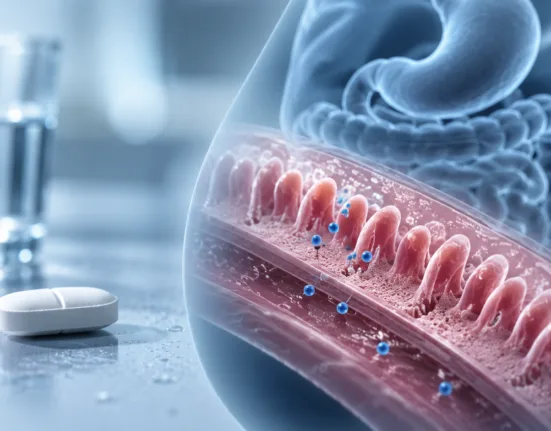
Biora Therapeutics has reported new preclinical progress for its BioJet swallowable autoinjector platform, disclosing mean oral bioavailability above 25% in swine and non-human primates, with antibody delivery reaching as high as 50% relative to intravenous administration. For a field that has spent years trying to solve the delivery challenge for peptides and antibodies beyond injectable routes, the update materially strengthens the scientific and commercial case for a viable needle-free oral biologics platform while pushing the story closer to translational and partnership relevance.
Why the latest BioJet data may be forcing a broader industry reassessment of oral biologic delivery economics and platform viability
The strategic importance of this update lies not merely in the headline percentage but in what it implies for the future economics of biologic delivery. Oral administration of peptides and antibodies has historically remained one of the most difficult problems in drug development because large biomolecules face rapid degradation in the gastrointestinal tract and poor epithelial permeability. These constraints have preserved the dominance of intravenous and subcutaneous administration across chronic therapeutic categories such as endocrinology, immunology, inflammatory disease, and metabolic medicine.
Against that backdrop, the BioJet platform begins to stand out in a more commercially meaningful way. Existing oral peptide technologies built around permeation enhancers have generally operated in the low single-digit bioavailability range relative to intravenous administration, often limiting their usefulness to specific molecules and dosing profiles. By comparison, Biora Therapeutics’ reported mean oral bioavailability above 25%, with antibody exposure levels reaching as high as 50% in certain large-animal studies, begins to shift the conversation beyond proof of concept and toward potential platform competitiveness.
This matters because route-of-administration innovation can materially reshape the value of biologic franchises. For pharmaceutical companies managing mature brands or advancing pipeline assets that face adherence challenges, the ability to offer a swallowable, needle-free route may improve patient persistence, reduce discontinuation associated with injection aversion, and create a meaningful lifecycle extension lever. The update therefore changes the story from a narrow device innovation narrative into a broader strategic discussion about how biologics may be differentiated in increasingly crowded markets.
How BioJet’s device-first architecture could create a stronger commercial proposition than formulation-dependent oral delivery technologies
A major reason the BioJet platform appears strategically differentiated is that its thesis is not centered primarily on reformulating the molecule itself. Many oral biologic technologies rely heavily on absorption enhancers, protective coatings, or complex formulation chemistry to preserve molecular integrity during gastric transit. While scientifically credible, those approaches often introduce manufacturing complexity, regulatory burden, and limitations in how broadly the platform can be applied across different molecule classes.
BioJet changes that dynamic through a device-enabled approach. The platform is designed as an ingestible capsule that autonomously deploys in the small intestine and delivers liquid drug directly into intestinal tissue, bypassing some of the key barriers that have historically constrained oral exposure. This mechanism could allow pharmaceutical partners to evaluate existing peptides and antibodies without requiring a full reformulation strategy, materially strengthening the commercial logic for partnership discussions and lifecycle management programs.
This may prove particularly important for assets that previously failed to achieve commercially viable exposure through conventional oral technologies. At the same time, established biologic therapies facing biosimilar pressure could potentially be repositioned in a more patient-convenient format, strengthening both brand stickiness and competitive differentiation.
Why the antibody bioavailability data may be the most commercially consequential element in the entire update
The most strategically important component of the release may be the antibody data rather than the peptide performance. Peptides have long been a focal point for oral delivery innovation, but antibodies remain substantially more difficult to deliver because of their larger molecular structure, higher dose requirements, and viscosity-related constraints.
That is why the reported exposure levels deserve closer scrutiny. If antibody delivery through BioJet can approach relative bioavailability ranges that begin to resemble subcutaneous administration, the implications extend well beyond convenience. Such a development could materially affect how pharmaceutical companies approach franchise lifecycle strategy, particularly in chronic-use categories where patient adherence and administration burden directly influence long-term commercial performance.
For antibody-based therapies in immunology and inflammatory disease, route-of-administration convenience often shapes both provider preference and patient persistence. A swallowable route that offers clinically meaningful systemic exposure may therefore become a commercially significant differentiator and could also create an important avenue for biosimilar strategy, where convenience helps distinguish otherwise comparable molecular offerings.
Why the next decisive milestone is no longer additional animal data but translational execution and regulatory pathway clarity
The more important question now is not whether the preclinical data are encouraging, but whether the platform can withstand the far more demanding scrutiny of translational execution. Human physiological variability remains the most important unresolved risk.
Large-animal models such as swine and non-human primates provide valuable pharmacokinetic insight, but they cannot fully replicate the complexity of human gastrointestinal physiology. Variability in gastric emptying, intestinal motility, food effects, mucosal health, and disease-state physiology can all materially affect device activation timing and absorption consistency. For biologics with narrow therapeutic windows, even moderate inter-patient variability could create meaningful clinical and regulatory challenges.
The regulatory pathway introduces a second major layer of risk because BioJet functions as a combination product. Approval will likely require not only therapeutic pharmacokinetic and safety evidence but also robust device validation, deployment reliability studies, manufacturing controls, and human factors assessment. These requirements can materially extend timelines and increase execution risk even if early human exposure data remain promising.
Why collaboration conversion may become the clearest signal of whether BioJet is evolving into a commercially credible platform
Another strategically important aspect of the company’s update is the disclosure that multiple collaborations are progressing toward potential partnerships. This may ultimately become the strongest validation signal because external pharmaceutical partners typically apply a much more rigorous filter than public-market enthusiasm.
Potential collaborators will assess scalability, manufacturability, intellectual property durability, exposure consistency across molecule classes, and economic fit within existing therapeutic portfolios. If these collaborations begin converting into structured co-development agreements or licensing arrangements, the narrative around BioJet could shift materially. At that stage, the platform may begin to be viewed as a commercially relevant infrastructure layer for biologics lifecycle strategy and pipeline rescue.
What clinicians, regulators, and industry observers are likely to monitor next as the BioJet story advances toward human translation
The next major inflection point will be movement into clearly defined human studies supported by an investigational new drug-ready pathway. Human pharmacokinetic consistency, repeat-dose tolerability, and device reliability will likely become the three most important variables shaping sentiment around the platform.
Clinicians tracking biologic delivery innovation are likely to focus on whether BioJet can sustain predictable systemic exposure across repeated dosing cycles. Regulatory observers will closely watch combination-product design controls, device deployment reliability, and long-term safety validation, while industry participants are likely to place particular emphasis on whether collaboration momentum converts into formal pharmaceutical partnerships tied to peptides, antibodies, or biosimilar lifecycle strategies.
What makes this development genuinely important is that the story is no longer simply about whether swallowable autoinjector technology is scientifically interesting. The central issue is whether Biora Therapeutics may be building a scalable platform capable of materially reshaping how peptides and antibodies are delivered, differentiated, and commercialized over the next phase of biologic innovation.