ZETA SURGICAL has received U.S. Food and Drug Administration 510(k) clearance for the Zeta Navigation System, together with the Zeta Stylet and Zeta Bolt navigated instruments, expanding the regulatory scope of its image-guided neurosurgical platform. The clearance covers a Class II stereotaxic instrument used for real-time navigation in cranial procedures including catheter and shunt placement, brain biopsies and trigeminal rhizotomies, placing the Boston medical device manufacturer deeper into the market for AI-assisted point-of-care neurosurgery.
Why ZETA SURGICAL’s latest FDA clearance matters for point-of-care neurosurgical access
The strategic relevance of this clearance is not simply that another navigation system has crossed the FDA 510(k) pathway. The more important development is that ZETA SURGICAL is trying to move precision image guidance into clinical settings where traditional neuronavigation has often been difficult to deploy consistently. Neurosurgical navigation has historically been associated with sophisticated operating rooms, capital-intensive infrastructure, dedicated workflows and highly specialised tertiary centres. That model works well for complex elective procedures, but it can leave gaps in urgent, bedside or lower-resource environments where speed and accuracy still matter.
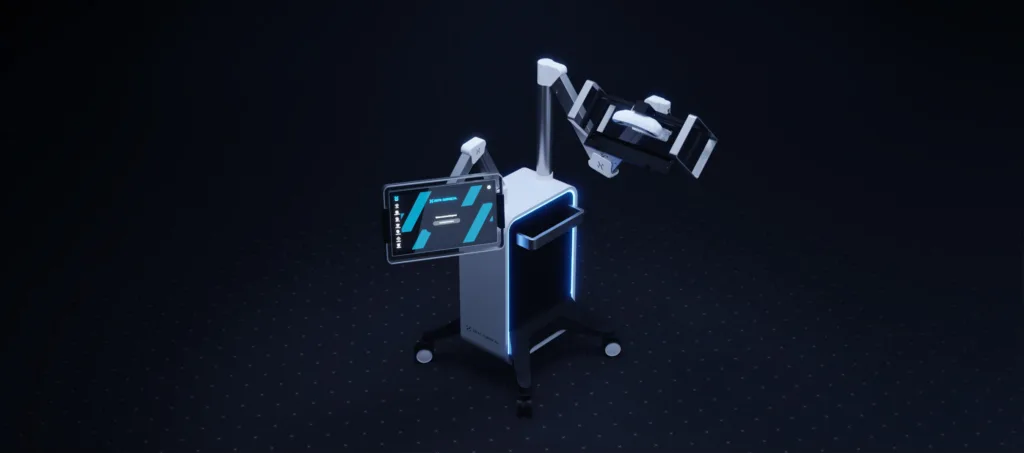
The Zeta Navigation System is positioned around computer-assisted, real-time image guidance that aligns preoperative computed tomography or magnetic resonance imaging scans with patient anatomy. By using computer vision and artificial intelligence for registration, the system is designed to guide the spatial positioning and orientation of instruments without depending entirely on conventional operating room infrastructure. That matters because procedures such as external ventricular drain placement, shunt placement and brain biopsy can be clinically time-sensitive, technically demanding and highly dependent on accurate trajectory planning.
The unresolved question is whether the system can translate its access thesis into routine clinical behaviour. FDA clearance establishes that the device met the substantial equivalence standard for its intended use, but it does not by itself prove that hospitals will change procurement priorities, that clinicians will alter ingrained workflows, or that community sites will adopt a new navigation platform at scale. The point-of-care promise is compelling. The adoption test is still ahead.
How the Zeta Navigation System changes the competitive logic of neuronavigation
ZETA SURGICAL is not entering a blank market. Neurosurgical navigation is already an established category, with hospitals using image-guided platforms to support cranial and spinal procedures. The difference is that ZETA SURGICAL is emphasizing portability, rapid setup and deployment across a wider range of treatment locations. That makes the competitive question less about whether navigation is useful, and more about whether navigation can become easier to access in procedures that are common, urgent or performed outside the most advanced surgical suites.
The newly cleared Zeta Stylet and Zeta Bolt are important because instruments often determine whether a navigation platform becomes a practical procedural tool or remains a planning system with narrower workflow relevance. If navigated instruments can support catheter placement, biopsy trajectories and rhizotomy workflows, the platform starts to move closer to procedure-level integration. For clinicians, that could mean fewer trade-offs between speed and guidance. For hospitals, it could mean a different way to think about where navigated cranial procedures can safely occur.
However, competition in medical devices is rarely won on regulatory scope alone. Hospitals evaluate training burden, capital cost, service support, integration with imaging systems, surgeon preference, liability risk and evidence quality. A device that looks elegant in a controlled clinical setup still needs to withstand the messy reality of emergency departments, intensive care units, interventional suites and community hospitals. ZETA SURGICAL’s opportunity is access. Its risk is operational friction.
Why hydrocephalus, brain tumor biopsy and trigeminal neuralgia create different adoption pressures
The cleared procedural areas carry different clinical and commercial implications. Hydrocephalus-related catheter and shunt procedures are volume-relevant and often time-sensitive, making them a natural fit for faster navigation workflows. External ventricular drain placement, in particular, is a procedure where trajectory accuracy can influence outcomes, repeat attempts and clinician confidence. A system that can support rapid setup and reliable placement could appeal to hospitals looking to improve consistency in acute neurosurgical care.
Brain biopsy creates a different adoption question. Biopsy procedures depend heavily on target accuracy, avoidance of critical structures and confidence in trajectory planning. The value proposition is therefore precision and reproducibility rather than speed alone. If ZETA SURGICAL can support efficient navigated biopsy workflows outside highly specialised navigation rooms, the platform could become relevant to centres that want to broaden access to diagnostic neurosurgical procedures without expanding expensive infrastructure.
Trigeminal rhizotomy adds another layer. Trigeminal neuralgia treatment requires careful targeting, and navigation may help clinicians manage procedural precision. Yet this is also a more specialised use case, which means adoption may depend on whether the platform can show value across multiple neurosurgical workflows rather than relying on one indication. The strongest commercial story for ZETA SURGICAL is not one procedure. It is a multi-use cranial navigation platform that can justify procurement by serving several clinical needs.
What the first-in-human ventriculostomy data suggests and what it still cannot prove
The 15-patient first-in-human trial cited by ZETA SURGICAL is an encouraging early signal because it evaluated ventriculostomy performance and reported single-pass, ideal placements across all cases with a median setup time under three minutes. For a point-of-care neurosurgical navigation platform, those are the kinds of workflow metrics that matter. A system that takes too long to set up, requires too much specialist support or interrupts urgent care pathways would struggle no matter how advanced its technology appears.
The clinical context is important. Ventriculostomy is a demanding and commonly performed neurosurgical procedure, and first-pass accuracy is a meaningful practical marker. If a navigation system can improve consistency while reducing setup complexity, it could support clinicians in scenarios where time pressure and anatomical variability collide. That is precisely where portable navigation could have its strongest argument.
Still, a 15-patient first-in-human study is not enough to settle the evidence question. The sample size is small, the procedure set is narrow, and early studies often involve motivated teams, controlled workflows and selected patients. Broader validation will need to show whether performance holds across operators, hospitals, imaging conditions, patient anatomy and urgent real-world settings. The planned commercial pilot with the Big 10 Neurosurgical Consortium may therefore be more important than the clearance itself for shaping industry confidence.
Why FDA 510(k) clearance gives ZETA SURGICAL regulatory momentum but not market certainty
The FDA 510(k) pathway is a clearance route based on substantial equivalence to legally marketed predicate devices, not a full premarket approval standard. For ZETA SURGICAL, clearance provides a necessary regulatory foundation for U.S. commercial expansion, but it should not be mistaken for definitive clinical superiority evidence. That distinction matters in medtech markets where hospitals increasingly ask whether a new device changes outcomes, reduces complications, saves time or supports reimbursement-aligned care pathways.
The regulatory classification as a Class II stereotaxic instrument places the system within an established device category, which may help clinicians and procurement teams understand the general regulatory framework. At the same time, the use of artificial intelligence and computer vision introduces a modern adoption question. Hospitals will want clarity on reliability, registration accuracy, failure modes, imaging compatibility, cybersecurity, software updates and user training. In AI-enabled devices, trust is built not just through clearance, but through predictable performance over time.
Regulatory watchers are likely to focus on whether ZETA SURGICAL continues to expand its cleared instrument ecosystem and procedural scope. A platform strategy depends on repeat clearances, clinical evidence generation and workflow validation. If the U.S.-based medical device developer can show that the same navigation architecture supports multiple high-need cranial procedures, its commercial story becomes stronger. If adoption remains limited to select centres, the access argument becomes harder to defend.
What hospitals and clinicians may watch as ZETA SURGICAL moves toward commercial pilots
For clinicians, the first question will be whether the system improves confidence without adding burden. Neurosurgeons and proceduralists already operate under high stakes, and any navigation platform must fit into clinical reality rather than demand that clinical reality reorganise around it. Ease of setup, accuracy, instrument compatibility and reliability during patient movement will likely be central to adoption.
For hospital administrators, the questions will be different. They will want to know whether the system can reduce repeat passes, support safer bedside procedures, expand neurosurgical capability in less acute settings or make specialist workflows more efficient. The value case may be strongest if ZETA SURGICAL can demonstrate that portable navigation reduces dependence on scarce operating room resources or improves access in hospitals that lack full-scale neuronavigation capacity.
For industry observers, the Big 10 Neurosurgical Consortium pilot could become the next major credibility marker. A large-scale pilot can test whether the technology works beyond early academic environments and whether it can support broader clinical standardisation. The risk is that results may vary by site, operator experience or procedure type. The opportunity is that positive multi-site experience could move ZETA SURGICAL from promising AI-navigation entrant to a more serious contender in the neurosurgical device market.
Why the bigger story is neurosurgery decentralisation, not just another AI device clearance
ZETA SURGICAL’s clearance lands at a moment when medtech companies are increasingly trying to decentralise specialist procedures through imaging, robotics, AI-assisted guidance and workflow automation. The logic is familiar across healthcare: move capability closer to the patient, reduce dependence on elite infrastructure and make high-quality care less geographically concentrated. In neurosurgery, that ambition is especially difficult because procedural risk is high and anatomical tolerance for error is low.
That is why the Zeta Navigation System is strategically interesting. It is not merely adding software to a surgical workflow. It is testing whether AI-enabled image guidance can make certain cranial procedures more accessible across care settings. If successful, the platform could help redefine where some neurosurgical interventions can be performed and how hospitals allocate specialist resources.
The caution is equally important. Neurosurgery is not a market that rewards convenience unless safety, precision and clinician trust are firmly established. The next phase for ZETA SURGICAL will depend on evidence depth, usability, training, commercial execution and the ability to prove that portability does not dilute procedural quality. The FDA clearance opens the door. The harder question is whether ZETA SURGICAL can make point-of-care neurosurgical navigation feel not only possible, but dependable.