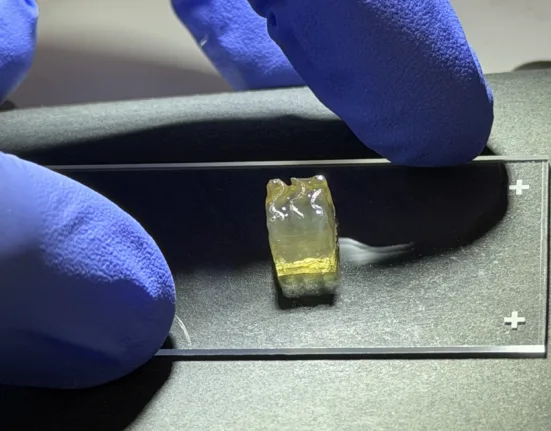
LifeNet Health has announced the acquisition of Tissue Testing Technologies LLC (T3), a South Carolina–based biotechnology company specializing in advanced biopreservation. The deal expands LifeNet Health’s capabilities in organ and tissue preservation by integrating proprietary vitrification and warming technologies developed by Tissue Testing Technologies. The transaction is positioned to enhance clinical transplantation success rates, support regenerative medicine supply chains, and accelerate global R&D collaborations that depend on high-integrity biological samples.
The transaction arrives at a pivotal moment for the field of regenerative medicine, where biological viability is increasingly recognized as a supply chain problem rather than just a scientific one. Tissue Testing Technologies brings preservation science closer to real-world transplant logistics and potentially bridges the gap between research-grade biological storage and clinically scaled solutions.
Why scalable preservation is becoming the new foundation for regenerative medicine logistics
For decades, the field of regenerative medicine has been constrained by the short shelf life of donor tissues and organs. Most organs intended for transplant must be implanted within hours of harvest, and even under optimal transport conditions, functional decline begins almost immediately. This biological time pressure often results in missed transplants, suboptimal graft performance, or outright rejection due to ischemic damage. Traditional cold-chain transport methods simply do not address the cellular and molecular fragility of living tissues during transit.
LifeNet Health’s decision to acquire a company that specializes in vitrification, which refers to ultra-rapid freezing without ice crystal formation, and controlled rewarming indicates a fundamental strategic shift. Rather than treating preservation as a passive part of the supply chain, the company is moving to treat it as a core clinical enabler. By combining Tissue Testing Technologies’ platform with its own regenerative therapy and tissue banking infrastructure, LifeNet Health is effectively repositioning preservation as a medical technology in its own right.
This transition could also help resolve one of regenerative medicine’s persistent scaling challenges. In advanced therapies, especially autologous or rare cell-based interventions, the ability to pause biological time without compromising integrity determines how many patients a solution can serve. That same logic applies to allografts and xenografts, where donor-recipient matching is logistically complex. If LifeNet Health succeeds in implementing Tissue Testing Technologies’ approach across a broader range of tissues such as heart valves, cartilage, meniscus, and potentially engineered constructs, it would enable a new level of predictability and availability in transplant and tissue repair workflows.
How this acquisition alters the landscape of transplant logistics and clinical reach
The clinical use case for scalable vitrification is as urgent as it is difficult. Organ preservation failures are often silent killers. Delays, thermal fluctuations, and unanticipated degradation can turn a viable liver into medical waste in less than a day. That loss is not just clinical but systemic, wasting surgical coordination, donor altruism, and significant healthcare capital. Industry experts believe that enhanced preservation capabilities will increasingly act as force multipliers for transplant centers, especially those dealing with long-distance procurement or complex organ types.
LifeNet Health’s global footprint and preexisting transplant delivery network offer a natural distribution channel for the technology. If Tissue Testing Technologies’ preservation systems can be standardized and packaged for modular use at collection and recipient sites, hospitals could expand their surgical planning windows. That change alone could reduce burnout in transplant teams, decrease the number of missed opportunities, and improve patient preparation timelines.
However, implementing such a system at scale is not trivial. The logistics of deploying vitrification and controlled warming involve not only the storage media but the machinery, technician training, and regulatory validation needed to make them routine. LifeNet Health’s track record in managing compliance-heavy tissue supply chains could give it an edge, but execution risk remains high. Stakeholders in the transplant ecosystem will want to see real-world data on preservation duration, post-thaw viability, and surgical outcome deltas before shifting procurement strategies.
What this means for cell therapy developers and biologics manufacturers
Beyond transplantation, Tissue Testing Technologies has built a niche in preserving cells and tissues for R&D use. The company’s chemical preservation formulations, which avoid animal serum or protein-based stabilizers, are particularly relevant in cell and gene therapy pipelines where consistency and sterility are mission-critical. Many biologics developers struggle with the logistical constraints of transporting temperature-sensitive materials across research sites or clinical trial locations. A solution that can reliably extend viability without compromising function is potentially transformative for early-stage developers.
The timing of this deal is notable given the increasing decentralization of clinical trials and biomanufacturing. With the growth of personalized and point-of-care therapies, companies are under pressure to manage biological materials across multiple geographies while maintaining GMP compliance. By integrating Tissue Testing Technologies’ capabilities, LifeNet Health could offer a white-labeled platform for biologics firms that need consistent, regulatory-grade preservation but lack internal infrastructure. This could also open new service-based revenue streams as biologic preservation-as-a-service gains traction alongside contract development and manufacturing organizations.
However, market uptake will depend heavily on validation. Pharmaceutical quality assurance teams will scrutinize not only the preservation chemistry but also the material compatibility, scalability of the equipment, and repeatability of performance across tissue types. Any contamination, batch variation, or post-thaw inconsistency would erode trust in the platform and limit its use to academic or exploratory phases rather than commercial production.
What the regulatory and reimbursement challenges could look like next
Although the science behind vitrification and warming has matured considerably in recent years, its regulatory classification remains somewhat fluid depending on the context. For tissues and organs, the U.S. Food and Drug Administration typically regulates preservation media and equipment under either human tissue establishment standards or device frameworks, depending on risk level and use case. Tissue Testing Technologies’ work with the National Institutes of Health and the U.S. Department of Defense likely gives it a compliance-oriented foundation, but translating those protocols into civilian hospital systems involves additional scrutiny.
One challenge is that preservation is rarely treated as a billable procedure. Most transplant-related costs are bundled under surgical and hospital reimbursement codes. Unless the use of advanced preservation methods demonstrably improves patient outcomes or reduces downstream complications, payers may hesitate to recognize them as discrete cost centers. For hospital systems already strained by costs, adoption may stall unless reimbursement frameworks evolve to reflect preservation as a critical clinical determinant.
Another consideration is international scalability. Countries with strong organ sharing networks, such as those in the European Union, may welcome preservation enhancements but will demand harmonized standards across jurisdictions. In low-resource settings, the capital cost of vitrification equipment and cold-chain upgrades may limit access, requiring LifeNet Health to consider tiered pricing or public-private partnerships to support broader deployment.
What clinicians, researchers, and competitors are likely to watch next
In the short term, transplant clinicians will be the most immediate and vocal audience for any post-acquisition validation data. Whether Tissue Testing Technologies’ systems materially reduce cold ischemia time or improve graft acceptance rates will determine the speed of clinical adoption. Academic transplant centers and major procurement organizations are likely to serve as pilot sites or early validators, especially for high-value organs like kidneys and lungs where losses are most painful.
In parallel, regenerative medicine researchers will monitor whether the preservation improvements translate into more reliable cell viability for engineered tissues, scaffold-based grafts, or combination products. LifeNet Health could potentially position itself as a supply chain integrator, managing not just donor material but preservation, storage, and delivery for end-to-end therapy pipelines.
Competitors in the tissue banking and transplant logistics space will likely feel pressure to demonstrate comparable capabilities. Whether through internal R&D, licensing, or additional acquisitions, the field is poised for a wave of infrastructure modernization where preservation science becomes a point of differentiation rather than a technical afterthought.
Regulatory agencies may also take notice, especially if the combination of LifeNet Health and Tissue Testing Technologies pushes the boundaries of what is currently considered standard-of-care in preservation. That could spark new guidance, data requirements, or even risk-based frameworks for advanced biological transport technologies.