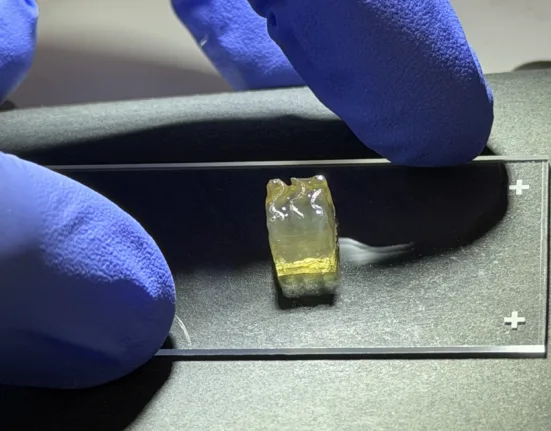
Alphatec Holdings has signed a strategic partnership with Theradaptive for exclusive U.S. rights to OsteoAdapt, a protein-engineered osteoinductive bone graft currently under FDA review. The agreement grants Alphatec Holdings access to a biologic product that has received three FDA Breakthrough Device Designations, positioning the regenerative therapy at the center of its broader procedural spine strategy. In parallel, Theradaptive has launched a Series B funding round to accelerate clinical trial execution and scale-up of its proprietary AMP2 platform.
Why the ATEC–Theradaptive alliance marks a turning point for biologic adoption in spinal fusion
Spinal fusion remains one of the most contested domains in orthopedics when it comes to biologics adoption. While synthetic substitutes and allografts have long dominated the surgical toolkit, outcomes vary widely, and surgeon confidence in traditional biologic enhancers has often been limited by inconsistent integration and resorption profiles. What makes OsteoAdapt potentially game-changing is its use of Theradaptive’s AMP2 protein technology, designed for site-specific targeting, persistent bioactivity, and customizable payloads.
For Alphatec Holdings, the deal is not just about a new product—it is about moving closer to the long-elusive goal of procedural dominance that integrates imaging, navigation, instrumentation, and now, biologic therapeutics. The company has built its commercial identity around the Organic Innovation Machine, and OsteoAdapt gives it a regenerative lever that fits natively into that vision. For the spinal surgery ecosystem, the transaction could set a precedent for how biotech-grade delivery platforms cross over into device-dominated procedural markets.
How AMP2 protein engineering aims to address the biological inconsistency in current bone grafts
Theradaptive’s core claim to differentiation rests on its AMP2 platform, which re-engineers proteins to bind selectively to target tissues and remain active over clinically relevant durations. Unlike demineralized bone matrices or traditional recombinant growth factors, the AMP2 scaffold is designed to resist rapid clearance and minimize ectopic growth, two of the primary complications that have historically constrained the use of osteoinductive agents.
Clinicians tracking the regenerative medicine field believe that AMP2’s ability to spatially confine bone formation while maintaining efficacy could resolve one of the biggest pain points in biologics for spinal fusion—unpredictable or misdirected osteogenesis. Moreover, OsteoAdapt’s classification as an FDA Breakthrough Device signals that regulators acknowledge its potential to treat conditions with limited alternatives, lending some institutional momentum as the company proceeds through its PMA process.
What Theradaptive’s Series B financing means for trial execution, scale-up, and FDA readiness
The timing of Theradaptive’s Series B announcement alongside the ATEC partnership is not incidental. With the OASIS Pivotal trial advancing and scale-up plans in motion, access to growth capital becomes critical to maintain timelines and ensure GMP-aligned manufacturing. Industry observers suggest that the company will likely use the raise not just for R&D, but to strengthen its regulatory and CMC infrastructure in preparation for commercial launch in collaboration with ATEC.
The spine segment remains notoriously complex in terms of FDA pathways. For OsteoAdapt, success hinges not only on demonstrating superior fusion rates but also on showing favorable safety and cost-effectiveness profiles compared to both legacy grafts and emerging biomaterials. Accelerating enrollment in the OASIS trial, expanding the clinical dataset to include dental and orthopedic indications, and navigating the PMA submission process are all likely to be near-term priorities under the Series B roadmap.
What this signals about the commercial rebalancing of biologics and devices in orthopedics
The ATEC–Theradaptive partnership is emblematic of a broader recalibration underway in musculoskeletal health: the traditional divide between medical devices and biologics is collapsing. By bundling targeted protein therapeutics into procedural workflows, companies are betting that biologics can finally deliver consistent value when supported by robust informatics, instrumentation, and surgical guidance.
This convergence also changes the sales calculus. ATEC’s established spine salesforce offers Theradaptive a ready-made channel to deploy OsteoAdapt once approved, with ongoing royalties creating alignment between biologic innovation and commercial distribution. The logic echoes past biologics–device tie-ups in orthopedics, but few have featured this level of protein engineering precision or Breakthrough Device validation.
However, scalability and physician education remain key risks. Industry analysts note that while engineered proteins offer advantages in control and specificity, they often require tighter cold chain logistics, clear procedural training, and post-market monitoring. Surgeons familiar with static bone void fillers may need both educational and experiential support to transition into AMP2-based systems.
What could go wrong: clinical, regulatory, and commercial uncertainties ahead
Despite the promise of OsteoAdapt, multiple friction points lie ahead. First, the PMA pathway for spinal fusion adjuncts is data-intensive, requiring long-term fusion outcomes, reproducibility across surgical techniques, and favorable complication profiles. Given the complex anatomy and patient variability in spine procedures, demonstrating statistical and real-world superiority over legacy options may take time.
Second, although Breakthrough Device status accelerates interactions with the U.S. Food and Drug Administration, it does not guarantee approval. Regulatory watchers suggest that safety signals around ectopic bone growth, immunogenicity, and resorption kinetics will remain under close scrutiny through the review cycle.
Finally, reimbursement frameworks for biologics in spinal procedures remain inconsistent. While private payers may be responsive to innovation claims, broad Medicare coverage will likely hinge on demonstrable improvements in patient-reported outcomes, surgical efficiency, and long-term cost offsets. Without robust pharmacoeconomic data, commercial uptake could be constrained, especially in value-based care settings.
What this means for the spine biologics market and future innovation cycles
The U.S. spine surgery market—estimated at over $10 billion—has long been viewed as ripe for biologic disruption, yet few entrants have delivered clinically and commercially. If OsteoAdapt succeeds, it could not only validate AMP2’s modality but also reignite investment in protein-engineered solutions for orthopedics. This could impact how device makers evaluate their innovation pipelines, shifting emphasis from static implants to dynamic biologic platforms with procedural synergy.
From a competitive standpoint, the ATEC–Theradaptive alignment puts pressure on both traditional graft suppliers and biotech firms with nascent orthopedic ambitions. It also opens the door to further cross-sector deals where protein engineering, synthetic biology, and device platforms converge.
What happens next will depend on trial durability, FDA alignment, and ATEC’s ability to integrate biologics without fragmenting its procedural narrative. For now, the signal is clear: biologics are no longer optional extras in spine surgery—they are becoming integral to next-generation procedural value.