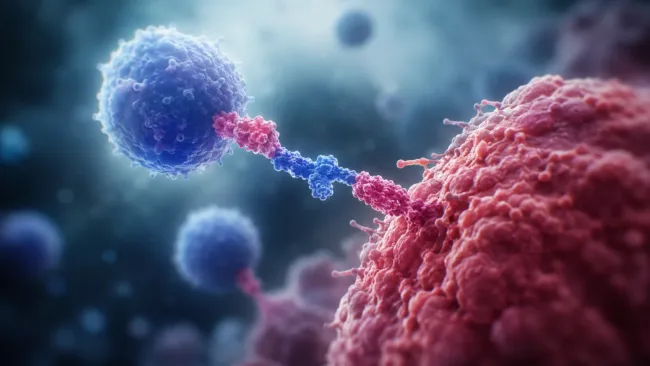
For decades, pharmaceutical pipelines have danced around one of biology’s most powerful but untouchable entities: transcription factors. These master regulators control gene expression and orchestrate cellular behavior, yet their structure and function have kept them out of reach for small molecule therapeutics. Unlike enzymes or receptors, transcription factors operate deep within the cell nucleus, often as part of complex and shapeshifting protein assemblies. Their surfaces are flat, their interactions transient, and their biology frustratingly contextual. The industry has long called them “undruggable,” and in many ways, they were. But that label is beginning to erode.
Today, a new generation of platform biotechs is betting that transcription factors can be systematically targeted with the right combination of chemistry, biology, and machine learning. At the forefront of this shift is a collaboration between PRISM BioLab Co. Ltd. and Talus Bioscience Inc., two companies that are bringing complementary capabilities to the problem. One specializes in protein–protein interaction mimetics, the other in real-time cellular transcriptional mapping. Together, they believe they can break through one of modern drug development’s most stubborn walls.
Why drugging transcription factors has been pharma’s unsolved puzzle
To understand why transcription factors have resisted conventional drug discovery, it helps to look at what most drugs actually do. Traditional small molecules are designed to inhibit enzymes by binding into well-defined active sites or to modulate receptors through ligand engagement. These mechanisms depend on discrete, pocket-shaped targets. Transcription factors, by contrast, typically lack such druggable topographies. They function through broad surface interactions, often engaging DNA or other proteins via diffuse domains. Their activity depends not only on structure but also on timing, chromatin context, and post-translational modifications.
This complexity creates two fundamental problems. First, the binding interfaces are not easily modeled or targeted using traditional structure-based design. Second, the functional consequences of inhibiting or activating a transcription factor are hard to measure in isolation, since these proteins often regulate dozens or even hundreds of genes in concert. The result has been a long-standing industry aversion to allocating resources toward these targets, despite overwhelming evidence of their role in diseases such as cancer, fibrosis, and inflammatory conditions.
What makes the PRISM–Talus approach strategically different
The partnership between PRISM BioLab and Talus Bioscience aims to dismantle both of those obstacles simultaneously. PRISM brings to the table a proprietary chemical technology known as PepMetics. These are small molecules that mimic the structural motifs typically found at protein–protein interfaces, particularly alpha-helices and beta-turns. Designed to be orally bioavailable, PepMetics are engineered for intracellular targets, precisely the kind of molecular real estate where transcription factors reside.
Talus Bioscience, a Seattle-based startup, has developed a platform that maps the activity of the human regulome—the full network of transcription factors and DNA-associated regulators—in native cellular environments. Rather than relying on in vitro assays, Talus uses proteomic and transcriptomic profiling tools to observe how drug candidates impact transcriptional dynamics in real time. These functional profiles are then fed into AI models that help optimize leads and predict downstream effects.
By combining these platforms, the companies are proposing a new workflow. Instead of discovering a molecule that binds to a transcription factor in a test tube, then hoping it works in cells, they begin with compounds designed to engage protein surfaces and rapidly validate them inside living human cells. This feedback loop not only accelerates discovery timelines but also grounds the entire process in physiologically relevant data.
How this convergence compares to other AI or chemistry-first strategies
What distinguishes this collaboration from other efforts is its dual-platform architecture. Many AI-driven drug discovery companies focus primarily on virtual screening or generative chemistry, producing novel scaffolds based on computational inference. Others specialize in chemical biology, building toolkits like PROTACs or molecular glues that alter protein stability or localization. Few, however, have successfully closed the loop between small molecule design and real-time cellular validation.
In contrast, PRISM and Talus are operating at the interface of precision chemistry and systems biology. PepMetics are not random hits pulled from a library but carefully structured mimics of interaction motifs found in human proteins. They are pre-configured to engage the shallow, featureless surfaces where transcription factors interact with partners. Talus then provides the ability to test these interactions across hundreds of transcription factors simultaneously, monitoring how each compound reshapes the transcriptional landscape.
This approach stands in contrast to traditional drug discovery pipelines, where progress is often linear, slow, and centered on a single target hypothesis. By enabling parallel profiling and AI-accelerated iteration, the PRISM–Talus model is built to scale.
Why transcription factor inhibition is now within clinical striking distance
Recent advances in structural chemistry, high-throughput biology, and data analytics have lowered the barriers to entry for transcription factor targeting. Historically, the success of small molecules in this space has been limited to a handful of exceptions, such as nuclear hormone receptors, which are atypical transcription factors with natural ligand-binding domains. The rest of the class has remained elusive.
Now, structure-guided design methods have improved to the point where mimetic molecules like those from PRISM can replicate key features of protein–protein interfaces. At the same time, tools like chromatin immunoprecipitation sequencing, single-cell transcriptomics, and live-cell proteomics have made it possible to observe the consequences of transcriptional modulation with unprecedented fidelity.
This progress is not merely academic. PRISM BioLab has already entered clinical partnerships around its PepMetics programs, including licensed compounds targeting the CBP/β-catenin interaction with Eisai Co., Ltd. for oncology and with Ohara Pharmaceuticals Co., Ltd. for liver disease. These deals demonstrate that regulators and investors alike are beginning to recognize transcription factor modulation as a clinically and commercially viable pathway.
What could still go wrong in transcription factor drug development
Despite this optimism, the field remains fraught with execution risk. The most immediate concern is translational relevance. Modifying transcriptional activity in vitro does not guarantee a therapeutic effect in patients. Many transcription factors are context-dependent, with roles that vary by cell type, disease state, or even developmental stage. A compound that suppresses a cancer driver in one tissue might inadvertently repress beneficial pathways in another.
There are also challenges related to compound optimization. PepMetics must balance molecular complexity with drug-like properties such as solubility, stability, and permeability. While promising in theory, the scale-up of these compounds for preclinical and clinical use will require careful formulation work and rigorous toxicology.
On the regulatory front, the novelty of targeting gene expression regulators may demand new biomarkers, endpoint strategies, and adaptive trial designs. Regulatory agencies are still developing frameworks for evaluating therapies that act on the transcriptional axis rather than the traditional protein inhibition model. Early interactions with health authorities will likely set precedents for future programs in this space.
Why the industry is watching this space closely in 2026
The broader pharmaceutical and biotech community is paying close attention to whether transcription factor modulation can move from preclinical promise to clinical proof. Several recent financings and acquisitions underscore this interest. Companies such as Arpeggio Bio, Omega Therapeutics, and VantAI are also positioning themselves around regulome biology and intracellular targeting.
For platform biotech investors, the PRISM–Talus collaboration offers a test case for a new type of drug discovery engine. It does not rely on brute-force screening or biomarker serendipity but instead assembles a purpose-built stack of chemistry, cellular assays, and AI refinement. If successful, this model could shift how early-stage discovery is conducted, especially in areas where current modalities fall short.
Regulators and payers will also be monitoring the first generation of transcription factor-targeting candidates to see how well they integrate into existing care pathways. The potential to combine these molecules with immunotherapies, checkpoint inhibitors, or even gene therapies adds another layer of relevance, particularly in diseases that remain refractory to standard treatments.
Why this moment marks a turning point in intracellular drug discovery
The convergence of structural chemistry and AI-guided biology is creating new possibilities for targeting historically inaccessible cellular machinery. Transcription factors represent the pinnacle of that challenge. They are not just switches but control boards, orchestrating entire networks of gene expression and phenotypic behavior.
The collaboration between PRISM BioLab and Talus Bioscience does not merely advance a single program. It sets a precedent for how companies might tackle the next generation of complex intracellular targets. By leveraging platform synergy rather than siloed innovation, this approach could help rewrite the boundaries of druggability itself.
As platform capabilities mature and the first clinical milestones arrive, transcription factor drug discovery may no longer be a moonshot. It may simply be next.