Mabwell doses first patient in landmark trial targeting fibrotic scarring
Mabwell (688062.SH), the Shanghai-based biopharmaceutical company, has dosed the first patient in a Phase II trial of its anti-IL-11 monoclonal antibody, 9MW3811, for pathological scarring, including hypertrophic scars and keloids. This marks the first global clinical trial of an IL-11 targeted therapy for fibrotic skin conditions. The trial is being conducted at Shanghai Ninth People’s Hospital and follows Phase I data from both China and Australia demonstrating a favorable safety profile and a half-life exceeding one month
What this reveals about IL-11 as a novel fibrosis target
Mabwell’s move to bring an anti-IL-11 monoclonal antibody into Phase II development for scarring breaks new ground in a space long defined by inadequate treatments. Interleukin-11 has historically attracted far less clinical attention than its more famous cytokine cousins like IL-6 or TGF-β. However, emerging research has highlighted IL-11’s role as a downstream effector in fibrosis pathways across multiple organs, including the liver, lungs, heart, and skin.
The novelty here is less about the idea of cytokine inhibition and more about shifting the point of intervention. Industry analysts note that IL-11 acts downstream of canonical TGF-β signaling, positioning it as a more selective node for fibrosis modulation. This may offer a strategic advantage: by avoiding broader immunosuppressive effects while still targeting fibrotic pathways, IL-11 inhibitors could sidestep some of the toxicity baggage associated with upstream inhibitors.
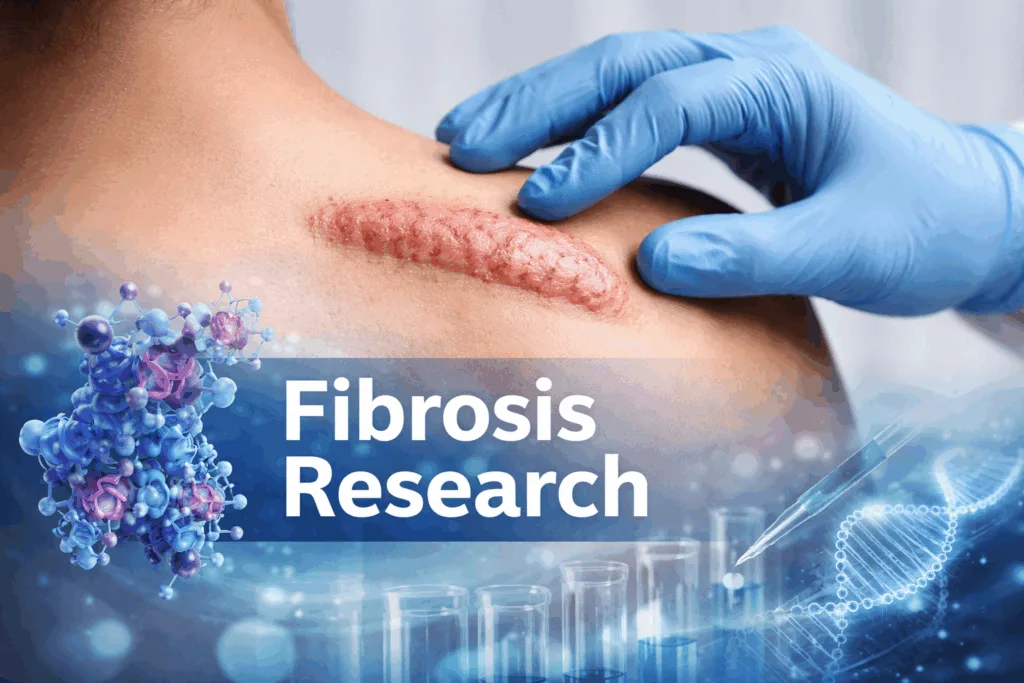
The company’s focus on pathological scarring as an initial indication aligns with this hypothesis, as skin fibrosis provides a visible and measurable setting for efficacy evaluation while enabling longer dosing intervals due to the compound’s extended half-life. It also offers a faster path to clinical readouts in a condition where patients experience considerable physical and psychological burden yet have few effective treatment options.
What this changes in the landscape of anti-fibrotic therapies
If 9MW3811 shows clinical efficacy, it would mark one of the first biologics to demonstrate targeted reversal of established keloids and hypertrophic scars. The use of human-derived keloid animal models in Mabwell’s preclinical validation adds translational weight to the program, distinguishing it from many fibrosis candidates that falter between murine and human systems.
The therapeutic field for fibrosis-related skin disorders remains largely underserved. Existing approaches including corticosteroids, silicone sheets, cryotherapy, and laser therapy tend to focus on symptom control or mechanical ablation rather than modifying the underlying pathophysiology. Moreover, they frequently result in recurrence or insufficient resolution, leaving both patients and physicians frustrated.
By directly inhibiting IL-11 signaling, Mabwell’s asset may do more than just reduce fibroblast proliferation. Early data suggest potential effects on collagen cross-linking and matrix remodeling, which could enable durable changes in scar architecture. While these mechanisms have yet to be confirmed in humans, industry observers tracking cytokine inhibition strategies in fibrosis are watching closely.
Why China’s clinical positioning matters in this case
The decision to anchor the Phase II study in China at a leading medical institution affiliated with Shanghai Jiao Tong University reflects a strategic dual objective. First, it ensures trial execution in a region with high patient accessibility and regulatory pathways that support early innovation. Second, it highlights China’s growing ambition to establish first-in-class assets not only for local but global markets.
While many novel anti-fibrotic biologics have struggled to gain traction beyond preclinical or early-stage development, Mabwell’s candidate benefits from a more integrated approach. The company has end-to-end capabilities spanning discovery, manufacturing, and clinical operations, which may allow for more efficient regulatory alignment and scalability should 9MW3811 advance further.
There is also a market reality underpinning the indication choice. Scarring disorders especially hypertrophic scars and keloids are more prevalent among Asian and African populations, offering a strong local commercial rationale that could be parlayed into global positioning if efficacy is shown across demographics.
What the fibrosis pipeline context reveals about Mabwell’s broader strategy
Mabwell has described 9MW3811 as having potential across multiple fibrotic indications, including pulmonary fibrosis and abnormal endometrial bleeding. This signals a pipeline-within-a-product strategy akin to what larger biopharmaceutical firms pursue for platform antibodies.
The company’s willingness to begin with a skin-scarring indication, rather than the more competitive idiopathic pulmonary fibrosis (IPF) space, may reflect both strategic restraint and clinical foresight. By demonstrating early efficacy in a visibly quantifiable condition with fewer approved therapies, Mabwell could generate the proof-of-concept needed to secure partnerships or funding for expansion into systemic fibrotic diseases.
The competitive context here matters. Despite renewed pharma interest in fibrosis targets over the past five years, few candidates have reached late-stage trials, and even fewer have shown convincing benefit-risk profiles. Interleukin modulation remains a relatively underexploited strategy, with most industry attention concentrated on integrin inhibitors, galectin blockers, or TGF-β modulation.
What could go wrong and what clinicians will be watching
Despite its promising positioning, the road ahead for 9MW3811 is far from guaranteed. The Phase I safety profile is reassuring, but clinicians and regulatory observers will be looking closely at whether those pharmacokinetics translate into real-world dosing flexibility without immune suppression.
Another critical concern is endpoint selection. Unlike systemic fibrotic diseases, scarring disorders lack universally accepted biomarker-driven endpoints. The subjective and often aesthetic nature of scarring outcomes poses a trial design challenge. This means Mabwell must convincingly demonstrate quantifiable reductions in scar volume, thickness, or pliability that satisfy both regulators and patients.
Furthermore, anti-cytokine therapies can face delayed or unpredictable efficacy curves, particularly in chronic fibrotic conditions where collagen turnover is slow. The reliance on animal models for early validation, while necessary, introduces translational uncertainty. There is also a question of whether localized or systemic administration will be more suitable, and whether IL-11 inhibition could have unforeseen effects on wound healing in broader patient populations.
What industry and investors should track next
If Mabwell can show clear clinical activity in this trial particularly with durable improvement and favorable safety 9MW3811 may move from niche interest to broader fibrosis pipeline radar. Industry analysts suggest that investor interest in fibrosis has been rekindled by setbacks in IPF and NASH, which have left space for fresh mechanisms.
The next wave of disclosures including interim results, biomarker analysis, and any indication of expansion into non-dermatologic fibrosis will shape both regulatory interest and strategic valuation. Mabwell’s long-term pipeline positioning may depend on whether IL-11 can serve as a modular target across multiple fibrosis types or remains limited to surface-level interventions.
Either way, this trial sets the stage for one of the more novel cytokine-targeting programs currently in mid-stage development and could reshape how the industry thinks about IL-11’s role in fibrotic disease.