Low Institute for Therapeutics and NorthStar Medical Radioisotopes have formed a strategic collaboration to advance Lu-177-LT17, a Lutetium-177 based radioligand therapy candidate for cancer-associated bone disease. The partnership will support radiolabeling, analytical development, cGMP manufacturing and clinical translation work intended to move the program toward an Investigational New Drug application and planned first in-human Phase 1 trials.
The significance is not simply that another radiopharmaceutical candidate is entering development. The sharper industry question is whether targeted radioligand therapy can extend more convincingly into cancer-induced bone lesions, a clinically difficult area where disease burden, pain, skeletal complications and systemic cancer progression often intersect. For a field already reshaped by radiopharmaceutical momentum in prostate cancer and neuroendocrine tumors, Lu-177-LT17 represents a smaller but strategically important test of whether academic-origin targeted delivery platforms can be converted into regulated, manufacturable and clinically usable oncology assets.
Why cancer-associated bone disease remains a difficult target for precision oncology developers
Cancer-associated bone disease sits at an uncomfortable intersection between oncology, skeletal biology and supportive care. Bone lesions can arise from metastatic solid tumors as well as hematologic malignancies, and their clinical impact often extends beyond tumor burden alone. Patients may face pain, fractures, mobility loss, marrow involvement and reduced tolerance for systemic therapy, which means that a successful intervention must offer more than a theoretically elegant targeting mechanism.
That is why the Lu-177-LT17 programme is worth watching, even before human efficacy data are available. A radioligand therapy designed to selectively deliver a therapeutic isotope to cancer-induced bone lesions could address a site of disease that remains hard to manage with conventional systemic treatment alone. However, the challenge is equally clear. Bone-targeted radiopharmaceuticals must prove that selectivity translates into meaningful clinical benefit, not merely tracer uptake or compelling preclinical biodistribution.

The unresolved question is whether Lu-177-LT17 can show a therapeutic window strong enough to justify development in patients who may already have advanced disease, prior therapy exposure or fragile skeletal health. In early oncology development, mechanism can attract attention, but dose selection, lesion targeting, marrow safety and patient selection usually decide whether a programme can move beyond proof of concept. For radioligand therapy in bone-associated disease, that bar may be especially demanding because the target tissue is anatomically complex and clinically vulnerable.
What Lu-177-LT17 could add to the evolving radioligand therapy pipeline
Radioligand therapy has gained momentum because it offers a clear conceptual promise, namely combining molecular targeting with localized radiation delivery. The strategy has already moved from a specialist nuclear medicine niche into mainstream oncology discussion, especially as approved therapies and late-stage pipelines have shown that targeted radioactive payloads can be commercially and clinically relevant. Lu-177-LT17 is entering that landscape as a candidate focused on cancer-associated bone lesions rather than a broad tumor-cell target.
That distinction matters because many radioligand therapy programmes are built around tumor-associated receptors or antigens. Lu-177-LT17 appears to be positioned around targeting the bone lesion environment associated with cancer, which could make it relevant across multiple tumor types if the biology supports consistent uptake. A cross-tumor opportunity would be attractive, particularly if the same molecular approach could serve patients with metastatic solid tumors and hematologic malignancies.
However, cross-tumor potential also complicates development. The more heterogeneous the target population, the harder it becomes to design a clean early clinical study with interpretable endpoints. A Phase 1 trial may establish safety, pharmacokinetics and early signals of activity, but later development would likely require careful segmentation by tumor type, lesion burden, prior therapy and skeletal complication risk. Industry observers will therefore watch whether LIFT prioritises a narrow initial indication or uses early data to define where Lu-177-LT17 has the strongest biological and clinical rationale.
Why NorthStar’s manufacturing role is central to the radiopharmaceutical development story
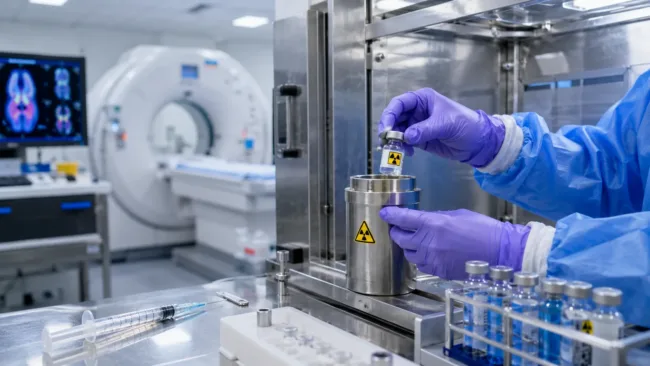
The NorthStar collaboration is strategically important because radiopharmaceutical development is not only a biology problem. It is also a manufacturing, isotope supply, quality control and logistics problem. Radiolabeling, analytical development and cGMP manufacturing are not back-office functions in this sector. They are central to whether a candidate can move from academic research into regulated clinical testing.
For Lu-177-LT17, NorthStar’s role provides the infrastructure needed to support translational and regulatory milestones. That includes preparing the technical package required for an Investigational New Drug pathway and, if the programme advances, manufacturing clinical supply for first in-human studies. In radiopharmaceuticals, these capabilities can determine whether an early-stage programme keeps momentum or stalls before reaching the clinic.
The limitation is that CDMO support reduces execution risk but does not remove development risk. Manufacturing readiness can help a programme enter clinical testing, but it cannot substitute for human safety, dosimetry, clinical benefit or regulatory clarity. NorthStar’s involvement strengthens the operational foundation of Lu-177-LT17, but the decisive questions will emerge once the therapy is tested in patients and investigators begin to understand dose behaviour, lesion targeting, marrow exposure and early tolerability.
How the LIFT model reflects a wider shift in academic radiopharmaceutical translation
Low Institute for Therapeutics is positioned around translating academic discoveries into clinical programmes, with roots in the research ecosystem around Purdue University. That model is increasingly relevant in radiopharmaceuticals because many promising targeting concepts originate in academic laboratories, but their transition into clinical-grade products requires capabilities that universities and nonprofit research groups do not always possess internally.
The partnership with NorthStar therefore reflects a broader structural trend. Radiopharmaceutical innovation often needs a bridge between scientific discovery and industrial execution. Academic groups can generate novel ligands, targeting strategies and disease hypotheses, while specialised manufacturers can help convert those concepts into compliant, scalable and trial-ready products. For smaller research organisations, this kind of partnership may be the difference between a promising paper and a viable clinical asset.
The risk is that translation models can look smoother in announcement language than they are in practice. Academic-origin programmes may face gaps in toxicology packages, chemistry manufacturing and controls, regulatory documentation, reproducibility or commercial indication strategy. A strong CDMO partnership can address some of those gaps, but early radiopharmaceutical development still requires disciplined decision-making around study design, patient selection and go/no-go criteria.
What clinicians and regulators are likely to watch as Lu-177-LT17 moves toward human testing
For clinicians, the key question will be whether Lu-177-LT17 can deliver practical value in patients with cancer-associated bone disease rather than simply adding another experimental radiopharmaceutical to an increasingly crowded field. Early safety will matter, but so will signs that the therapy can reach relevant lesions, spare surrounding healthy tissue and avoid unacceptable toxicity in patients whose marrow reserve may already be compromised.
For regulators, the Investigational New Drug package will need to support the rationale for first in-human dosing, manufacturing consistency, radiochemical purity, dosimetry expectations and patient monitoring. Radiopharmaceutical trials carry specialised requirements because the therapeutic product combines a biological targeting component with a radioactive payload. That dual character makes chemistry, controls, imaging, radiation safety and clinical protocol design unusually interconnected.
The unresolved issue is endpoint strategy. In cancer-associated bone disease, clinical benefit can be measured in multiple ways, including lesion response, pain outcomes, skeletal event reduction, functional measures or progression-related endpoints. Early trials may not be powered to prove those outcomes, but they need to generate enough biological and clinical evidence to guide later studies. If Lu-177-LT17 shows target engagement but unclear patient benefit, the programme could face the familiar precision oncology problem of scientific plausibility without a clear registrational path.
Why the programme could benefit from radiopharmaceutical sector momentum but still face adoption barriers
The radiopharmaceutical sector has become more attractive to industry because it combines precision medicine, nuclear medicine infrastructure and potentially differentiated oncology mechanisms. Larger pharmaceutical groups have shown increasing interest in radioligand therapy platforms, isotope supply chains and radiopharmaceutical manufacturing networks. That backdrop gives programmes such as Lu-177-LT17 a more receptive environment than they might have had a decade ago.
However, market momentum does not guarantee adoption. Radioligand therapies require specialised clinical workflows, radiation handling procedures, trained personnel and reliable isotope logistics. Even if a therapy proves effective, adoption can be limited by treatment centre capacity, reimbursement complexity and operational burden. For bone-associated disease, these constraints may be even more relevant if the eligible population is broad or clinically fragile.
NorthStar’s infrastructure could help address some supply and manufacturing concerns, but downstream clinical delivery remains a separate challenge. A therapy can be well manufactured and still face bottlenecks if hospitals lack nuclear medicine capacity or if payers demand strong evidence of incremental benefit over existing oncology and supportive care options. That is why the commercial future of Lu-177-LT17, if it advances, will depend on both clinical data and practical delivery economics.
What will determine whether Lu-177-LT17 becomes more than an early-stage radioligand asset
The next major inflection point will be whether LIFT and NorthStar can move Lu-177-LT17 through the translational package needed for regulatory submission and into first in-human testing. That step would validate the partnership operationally, but it would only begin the clinical value debate. The programme will then need to show whether its targeting concept produces acceptable safety and meaningful signals in patients with cancer-associated bone disease.
The most important watchpoints are likely to include dose selection, lesion uptake, marrow safety, adverse event profile, early efficacy indicators and the choice of patient population for expansion. A narrow initial strategy could improve interpretability, while a broader development approach could support a larger long-term opportunity but increase complexity. The right answer may depend on where the earliest human data show the strongest signal.
For now, the LIFT and NorthStar collaboration is best understood as a translation and manufacturing milestone rather than a clinical validation event. It strengthens the path for Lu-177-LT17 to reach patients in a trial setting, but it does not yet answer whether the therapy can alter outcomes in cancer-associated bone disease. That is exactly why the programme matters. It sits at the point where radiopharmaceutical ambition must become clinical evidence, and where the next phase of precision oncology will be judged less by novelty and more by execution.