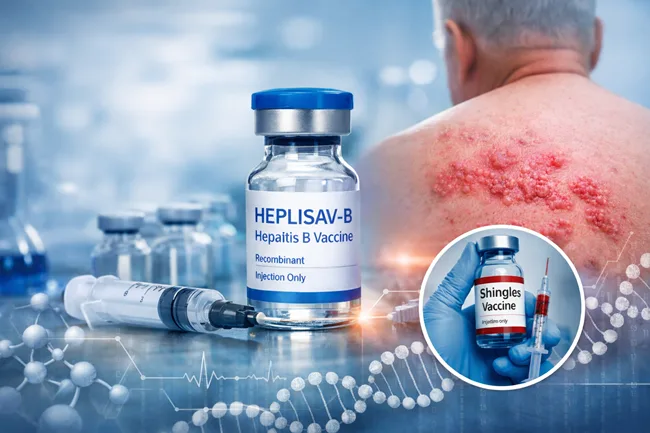
Sanofi has announced its intent to acquire Dynavax Technologies Corporation in a $2.2 billion cash deal, adding the approved hepatitis B vaccine HEPLISAV-B and a Phase 1/2 shingles candidate to its adult immunization pipeline. The acquisition, expected to close in the first quarter of 2026, signals Sanofi’s deeper push into adult vaccine markets, an area where it has historically played a secondary role compared to rivals such as GlaxoSmithKline and Pfizer.
HEPLISAV-B has been approved in the United States since 2017 and offers a two-dose regimen over one month, contrasting with traditional three-dose hepatitis B vaccines given over six months. By pairing this differentiated product with its global commercial infrastructure, Sanofi is betting on a second life for a product that has underperformed despite strong clinical data. The Phase 1/2 shingles vaccine candidate, meanwhile, gives Sanofi a potential challenger to GlaxoSmithKline’s Shingrix, though that path is more uncertain.
Why HEPLISAV-B’s commercial underperformance may not be due to clinical flaws
HEPLISAV-B was once viewed as a potential blockbuster, promising improved immunogenicity and simplified scheduling over existing hepatitis B vaccines like Engerix-B and Recombivax HB. Its use of Dynavax’s proprietary CpG 1018 adjuvant, a toll-like receptor 9 (TLR9) agonist, enhances the immune response, particularly in patients with chronic conditions or diminished immunity.
Yet uptake has lagged. Despite a strong clinical profile and a clear compliance advantage, Dynavax struggled to gain traction with public health programs, hospitals, and institutional buyers. Several analysts attribute this to entrenched procurement pipelines, clinical conservatism in adult immunization, and price sensitivity in public health markets. Without the muscle of a large multinational to lobby for inclusion in vaccine formularies, HEPLISAV-B remained niche.
Sanofi’s entry may change that. As a multinational biopharmaceutical company with strong government relations, contracting experience, and access to distribution channels in Europe, Asia, and Latin America, Sanofi can target new markets where Dynavax lacked capacity. In parallel, real-world data showing superior series completion rates with HEPLISAV-B could finally resonate with public health decision-makers seeking to address the 100 million U.S. adults still unvaccinated for hepatitis B.
What this reveals about Sanofi’s repositioning in adult vaccines
Sanofi’s existing vaccine portfolio has skewed heavily pediatric and seasonal, with strong sales in influenza, polio, and diphtheria–tetanus–pertussis segments. But adult catch-up immunization is a growing frontier, especially as aging populations and increased disease awareness expand the eligible pool. This deal gives Sanofi a U.S.-approved adult vaccine with distinct advantages and a new mechanism of action to anchor further development.
Moreover, the shingles vaccine candidate Z-1018—currently in Phase 1/2—could become a strategic asset in the coming decade. The shingles market is currently dominated by Shingrix, which generates multi-billion-dollar revenues globally. However, the high reactogenicity of Shingrix and its two-dose requirement limit adoption in some patient segments and geographies. Sanofi may be positioning Z-1018 as a next-generation alternative targeting countries or populations underserved by Shingrix.
While Z-1018 is years away from commercialization, its TLR9-based adjuvant system represents a platform bet. If it proves effective and less reactogenic in elderly populations, it could give Sanofi a much-needed entry into a high-value market it has yet to penetrate.
What execution challenges Sanofi must overcome to justify the $2.2 billion price tag
The acquisition hinges on execution, not innovation. HEPLISAV-B is already FDA-approved and has been available in the United States for several years, but it remains commercially underleveraged. For Sanofi to realize meaningful returns, it must persuade providers, payers, and public health institutions to prioritize a newer, more expensive hepatitis B vaccine in populations that often struggle with healthcare access and follow-up.
This may require aggressive bundling with other adult vaccines, increased physician education, and strategic pricing flexibility in non-U.S. markets. Sanofi will also need to streamline Dynavax’s existing manufacturing footprint for global scale-up while preserving the quality of its adjuvant system. Any manufacturing bottlenecks or quality control failures could delay market expansion or regulatory approvals abroad.
Additionally, the long-term value of the shingles program remains speculative. There are no publicly available efficacy data from the Z-1018 trial, and head-to-head comparison with Shingrix is years away. If the candidate demonstrates high efficacy with fewer side effects or a simpler dosing schedule, Sanofi could carve out a meaningful share of a growing market. But if it underperforms or faces safety concerns, the narrative will revert to a single-asset deal focused on HEPLISAV-B alone.
What regulatory watchers and clinicians are likely to focus on next
Clinicians and health authorities will likely scrutinize new real-world data from HEPLISAV-B as Sanofi expands its promotional efforts. The critical question is whether the product can improve adult hepatitis B vaccination rates in hard-to-reach or medically underserved populations. Faster seroprotection may be clinically meaningful, especially in patients with diabetes, HIV, or chronic kidney disease, but price and institutional inertia remain strong counterforces.
On the regulatory front, observers will watch whether Sanofi seeks approvals for HEPLISAV-B in additional countries beyond the United States, European Union, and United Kingdom. Regulatory filings in Asia-Pacific or Latin America could signal a broader push, especially if Sanofi packages the product with influenza or COVID-19 immunization campaigns.
For the shingles candidate, attention will turn to Phase 2 trial initiation and early immunogenicity readouts. Should Z-1018 demonstrate robust immune responses in adults over 50 and fewer systemic side effects than Shingrix, it could prompt interest from public sector buyers and investors alike. However, regulatory agencies will expect comprehensive safety and efficacy data before allowing any market entry.
Why Sanofi’s adult vaccine bet may hinge more on execution than scientific novelty
Sanofi’s decision to acquire Dynavax marks a calculated effort to expand its adult vaccine portfolio with differentiated, immunologically potent assets. HEPLISAV-B offers real-world benefits in dosing compliance and rapid protection but requires a commercial and institutional push that Dynavax alone could not execute. Z-1018, though early stage, could offer a strategic option in the shingles market if its adjuvant profile delivers as hoped.
The acquisition will not dramatically alter Sanofi’s near-term financial outlook, but it could reorient the company’s vaccine business toward higher-margin adult segments if execution aligns with clinical promise. The company will need to overcome entrenched procurement practices, secure regulatory access in new markets, and demonstrate clinical superiority where pricing is tight.
Ultimately, the deal reflects a shift in vaccine strategy—from breadth to precision, from seasonal to sustained, and from volume to differentiation. Sanofi is no longer content to follow in the adult vaccine space. Whether it can lead depends on what it does next with these underexploited assets.