Apnimed, Inc. has filed for an initial public offering in the United States as it prepares for a potentially decisive regulatory year for AD109, its once-nightly oral treatment for obstructive sleep apnea. The Cambridge, Massachusetts-based pharmaceutical company plans to list on the Nasdaq Global Market under the ticker APMD, although the number of shares, proposed price range and expected proceeds have not yet been disclosed.
The July 10 filing gives public-market investors an opportunity to finance a company attempting something the pharmaceutical industry has pursued unsuccessfully for decades: an approved medicine that directly treats the repeated upper-airway collapse responsible for obstructive sleep apnea. Apnimed has submitted a New Drug Application for AD109 and expects a possible United States Food and Drug Administration action date during the first quarter of 2027, subject to the regulator first accepting the application for review.
The timing makes the IPO unusually catalyst-heavy. Apnimed is not entering the market with an early research platform and several years of clinical uncertainty ahead. Its lead programme has completed two Phase 3 trials involving more than 1,300 participants, while the company has already begun assembling financing for commercial preparation. Investors are being asked to value a near-launch pharmaceutical company before knowing whether the FDA will approve its only clinical product candidate.
Why is Apnimed choosing an IPO when it has already secured substantial private financing?
Apnimed has strengthened its balance sheet through two transactions completed or announced shortly before the IPO filing. In March, the company agreed to sell its 50% interest in Shionogi-Apnimed Sleep Science to Shionogi & Co., Ltd. for $100 million upfront, another potential $50 million tied to a development milestone and royalties on products emerging from the joint venture.
That transaction allowed Apnimed to monetise a non-core sleep-disorder portfolio while retaining full ownership of AD109. It also concentrated the company’s resources around the programme with the shortest route to commercial revenue.
Apnimed subsequently secured a senior secured credit facility of up to $150 million from funds managed by HealthCare Royalty Partners. The company received $50 million at closing, with a second $50 million becoming available if AD109 receives FDA approval and a third tranche linked to a predetermined sales milestone.
The debt carries an interest-only period of four years, potentially extending to five years if a sales target is reached. Apnimed also agreed to pay a synthetic royalty equal to a low single-digit percentage of AD109 net sales and certain other revenue.
These transactions suggest the IPO is not simply an emergency cash raise. Apnimed appears to be building several layers of capital for regulatory work, manufacturing, medical affairs, market access and a possible United States launch.
The structure still creates obligations. Debt must eventually be repaid, and the synthetic royalty will reduce the economics retained from future sales. Public equity provides capital without adding another repayment schedule, but it will dilute existing shareholders and expose the company to quarterly market scrutiny.
The offering may also give Apnimed an acquisition currency and a broader institutional shareholder base. BofA Securities, Evercore ISI, Cantor and LifeSci Capital have been named as underwriters, indicating that the company is targeting specialist healthcare investors as well as wider growth funds.
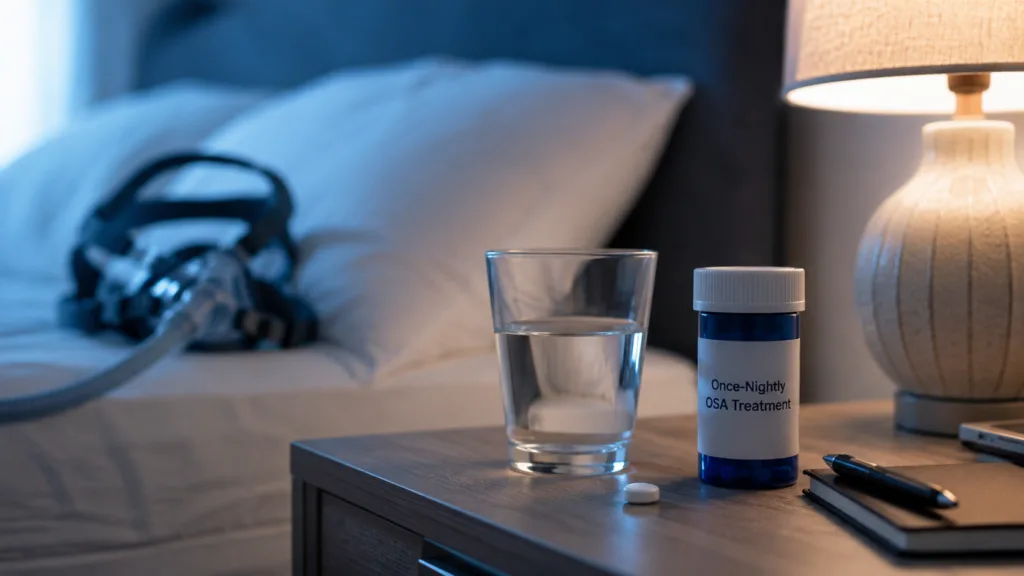
What makes AD109 different from the devices currently used to treat obstructive sleep apnea?
Obstructive sleep apnea occurs when the upper airway repeatedly narrows or closes during sleep, interrupting airflow and lowering blood oxygen levels. Existing treatment is dominated by devices and physical interventions rather than medicines.
Positive airway pressure therapy, commonly delivered through a continuous positive airway pressure machine, uses a mask and pressurised airflow to keep the airway open. Other patients may use oral appliances, undergo surgery or receive an implanted nerve-stimulation system.
These approaches can be effective, but not every patient tolerates them or uses them consistently. The two pivotal AD109 studies specifically enrolled adults who were unable or unwilling to use positive airway pressure treatment.
AD109 combines 2.5 milligrams of aroxybutynin, an investigational antimuscarinic, with 75 milligrams of atomoxetine, a norepinephrine reuptake inhibitor. The treatment is taken at bedtime and is designed to improve upper-airway muscle activity while a person sleeps.
The concept is not to expand the airway mechanically. Apnimed is attempting to address the neuromuscular dysfunction that allows throat muscles to relax and the airway to collapse during sleep.
An oral therapy could substantially lower the visible burden of treatment. A patient would not need to wear a mask, maintain equipment or undergo implantation. That convenience could expand treatment among people who currently remain untreated after receiving a diagnosis.
The medicine should not be viewed as an automatic replacement for continuous positive airway pressure. Device treatment can provide immediate and powerful airway support when used correctly. AD109 will need to demonstrate that its average clinical benefit is sufficient for different severities of disease and that patients continue taking it consistently over many years.
Did the two Phase 3 studies produce a strong enough efficacy profile for FDA approval?
Apnimed’s regulatory application is supported by two randomised, double-blind and placebo-controlled Phase 3 studies, SynAIRgy and LunAIRo. Together, they represent one of the largest clinical programmes conducted for a pharmaceutical treatment of obstructive sleep apnea.
SynAIRgy enrolled 646 adults at centres in the United States and Canada and evaluated treatment for 26 weeks. AD109 produced a 55.6% reduction from baseline in apnea-hypopnea index, a measure of how frequently breathing is reduced or stops during sleep, and achieved a statistically significant benefit over placebo.
The trial also reported a 60.5% reduction in geometric mean hypoxic burden, which measures the depth and duration of oxygen reductions associated with respiratory events. Approximately 39.6% of treated participants achieved at least a 50% reduction in apnea-hypopnea index, while 22.3% reached disease control, defined as fewer than five events per hour.
LunAIRo enrolled another 660 adults and followed participants for one year, with the primary efficacy assessment conducted at week 26. AD109 produced a 46.8% mean reduction in apnea-hypopnea index, compared with 6.8% for placebo.
The study also showed a 58.2% reduction in hypoxic burden. About 38.3% of participants receiving AD109 achieved at least a 50% reduction in apnea-hypopnea index, and 22.9% achieved disease control.
The repeatability across two independent pivotal studies strengthens the regulatory package. The benefit was observed across mild, moderate and severe disease and among participants with and without obesity.
The results also show that AD109 is not a complete solution for every patient. Fewer than one-quarter of treated participants reached the disease-control threshold, meaning many patients continued to experience clinically relevant breathing events despite improvement.
That pattern may lead to a segmented market. Some patients could achieve sufficient control with AD109 alone, while others may require a device, weight-loss treatment, surgery or combination therapy.
Could the FDA focus as heavily on long-term tolerability as it does on sleep-apnea efficacy?
AD109 was generally well tolerated in the Phase 3 programme, with dry mouth, insomnia and nausea among the most commonly reported adverse events. Apnimed said no treatment-related serious adverse events were reported in the SynAIRgy or LunAIRo trials.
The FDA will still need to consider how those adverse effects influence chronic adherence. Obstructive sleep apnea is not treated for several weeks and then forgotten. Patients may need therapy for years, particularly when anatomical or neuromuscular risk factors remain present.
Even events classified as mild can affect commercial use when they occur nightly. Dry mouth may be manageable for some patients but sufficiently bothersome for others to stop treatment. Insomnia is particularly relevant for a medicine prescribed to people already experiencing disrupted sleep.
The regulator will also examine the separate and combined pharmacology of aroxybutynin and atomoxetine, dose consistency, drug interactions and the long-term results from the one-year LunAIRo study and continuation programme.
A favourable benefit-risk decision may depend partly on the proposed population. An application targeted at adults who cannot tolerate or refuse positive airway pressure could face a different evaluation from a broad claim across all diagnosed patients.
The final prescribing information will influence commercial potential almost as much as approval itself. Monitoring requirements, contraindications and warnings could affect whether AD109 is prescribed mainly by sleep specialists or more broadly by pulmonologists and primary-care physicians.
Would an approved sleep apnea pill disrupt Resmed, Philips and implantable-device companies?
AD109 could expand the sleep-apnea market without immediately taking large numbers of patients away from established device manufacturers. Apnimed estimates that tens of millions of people in the United States have obstructive sleep apnea, while a substantial proportion remain undiagnosed or untreated.
A pill may persuade more people to undergo diagnostic testing because the treatment pathway appears less burdensome. Patients who previously rejected a mask or surgical procedure could become active participants in the market rather than switching from one existing product to another.
Resmed, Koninklijke Philips and other positive-airway-pressure suppliers may face greater competitive pressure among newly diagnosed patients with mild or moderate disease. Inspire Medical Systems could encounter overlap among patients considering implanted hypoglossal nerve stimulation after failing device-based treatment.
The competitive effect will depend on real-world efficacy. Physicians may continue recommending positive airway pressure for patients requiring the greatest and most immediate reduction in breathing events, while offering AD109 to people seeking a less intrusive alternative.
Combination treatment could become another important pathway. Some patients may use a medicine alongside weight reduction, positional therapy, an oral appliance or lower-intensity positive airway pressure.
Apnimed has already analysed AD109 use among participants receiving glucagon-like peptide-1 receptor agonists. That work reflects a broader reality in sleep medicine: weight loss can reduce anatomical pressure on the airway, while AD109 is intended to address neuromuscular collapse. The two mechanisms may prove complementary rather than competitive.
What risks are public investors being asked to accept before Apnimed begins trading?
The greatest risk is regulatory concentration. Apnimed describes AD109 as its sole clinical product candidate, leaving the company highly dependent on one FDA application.
A refusal to accept the application, a request for additional studies or a Complete Response Letter could delay revenue and increase financing needs. Even an approval with a narrow label or restrictive safety language could reduce the market opportunity assumed during IPO pricing.
Commercial execution presents a second layer of risk. Apnimed must educate sleep specialists, pulmonologists, primary-care physicians and payers about a new treatment category. It will need to demonstrate that improvements in apnea-hypopnea index and oxygenation translate into meaningful benefits for patients and healthcare systems.
Reimbursement cannot be taken for granted. Payers may require evidence that patients tried positive airway pressure first or may impose prior-authorisation criteria. Pricing must reflect the value of a convenient pharmaceutical treatment without making long-term use unaffordable.
Manufacturing is another critical issue. AD109 combines two active ingredients in a fixed-dose tablet, and commercial supply must meet regulatory standards for stability, consistency and scale.
The company’s debt financing also introduces financial leverage before product revenue begins. Only the first $50 million tranche was available at closing, while later tranches depend on regulatory and commercial milestones. The synthetic royalty means part of future revenue has already been exchanged for near-term capital.
Investors will not know the offering valuation until Apnimed discloses a price range. A compelling medicine can still become a disappointing stock when an IPO is priced on assumptions that leave little room for regulatory or commercial setbacks.
Why could Apnimed’s IPO become a wider test for the recovering biotechnology market?
Biotechnology IPO activity fell to its lowest level in more than a decade during 2025 as investors avoided pre-revenue companies, uncertain clinical programmes and businesses likely to require repeated financing. Market conditions have improved in 2026, helped by successful drug-development catalysts and renewed pharmaceutical dealmaking.
Apnimed offers a relatively advanced proposition for that recovering market. It has two positive Phase 3 trials, a submitted New Drug Application, private financing commitments and a potential regulatory decision within months of listing.
That maturity may help the company attract investors who remain unwilling to finance early discovery risk. It also compresses the timeline during which the market can reconsider its assumptions. A major FDA development could arrive soon after the offering rather than several years later.
The IPO will reveal how investors value a drug that could create a pharmaceutical category while competing with established medical-device companies. Demand for the offering may also indicate whether public markets are ready to fund commercial-stage infrastructure before regulatory approval.
Apnimed’s pitch is easy to understand but difficult to price. Obstructive sleep apnea is common, existing treatments can be burdensome and AD109 has produced repeatable Phase 3 improvements in airway obstruction and oxygenation.
The uncertainties are equally clear. FDA approval is not assured, the final label is unknown and the clinical data suggest that response will vary widely between patients.
That tension makes the IPO more than another biotechnology listing. Apnimed is asking Wall Street to decide whether the convenience of a bedtime pill, supported by late-stage evidence, can create a major pharmaceutical market inside a disease that has historically belonged to masks, machines and surgical devices.