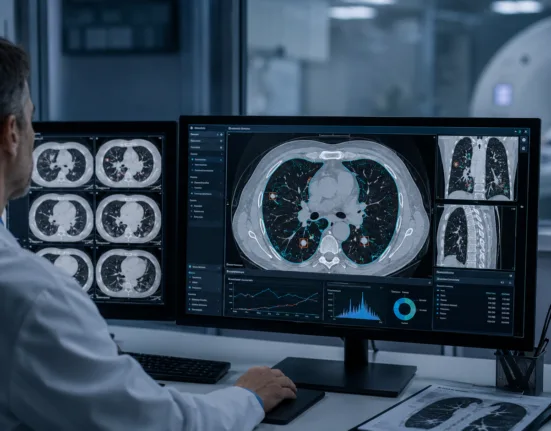
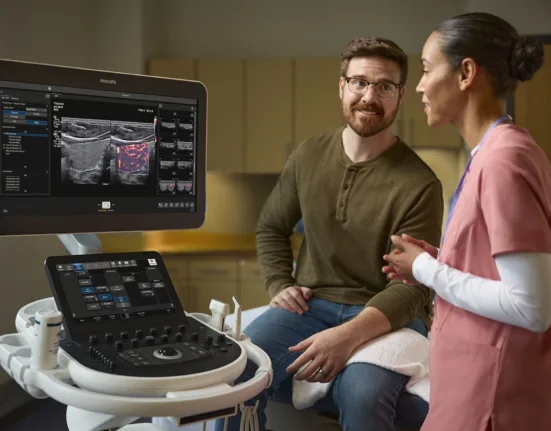
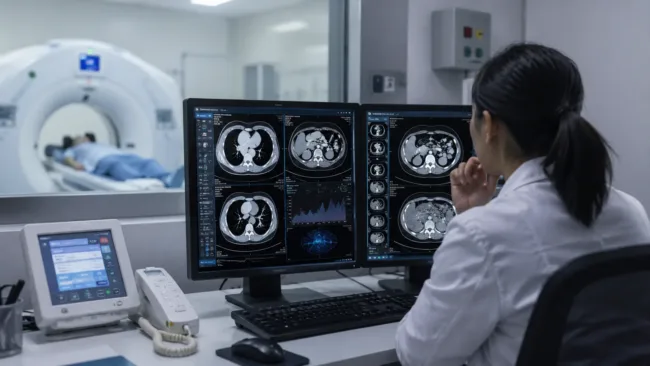
Royal Philips used the RSNA 2025 conference to unveil major upgrades to its informatics and diagnostic imaging portfolio, including the launch of Advanced Visualization Workspace 16 and the integration of new AI-powered capabilities through its cloud-native HealthSuite platform, now supported by Amazon Web Services. The company also announced key partnerships with 4DMedical and Quibim to enhance disease-specific workflows in cardiology, oncology, and pulmonary imaging, positioning itself as a system-level orchestrator rather than an isolated AI developer.
What Philips’ platform-focused rollout signals about its long-term AI play
Philips’ radiology strategy, as revealed at RSNA 2025, departs sharply from the hardware-centric launches seen in previous years. By spotlighting Advanced Visualization Workspace 16 as a vendor-neutral, multi-modality software platform, Philips is signaling a broader pivot toward software standardization across varied imaging environments. This move appears to be rooted in the recognition that most healthcare systems do not operate in closed, monolithic imaging stacks. Instead, radiologists increasingly work across mixed fleets of equipment sourced from multiple vendors, spanning different generations of technology and PACS ecosystems.
By delivering a platform that consolidates data across CT, MR, and vascular modalities, Philips is offering a solution to the fragmentation that continues to hamper workflow efficiency. The inclusion of a dedicated Cardiovascular Suite within AVW 16 responds directly to the rise in demand for advanced cardiac imaging, particularly in outpatient and preventive cardiology contexts. The platform’s ability to support customizable reporting and image-guided planning for cardiovascular cases may increase its relevance among hospital systems aiming to unify their diagnostic stack without ripping and replacing existing infrastructure.
The company’s claim that AVW 16 can reduce reading times by up to 44 percent in certain applications such as longitudinal brain imaging will be closely evaluated by clinicians and CIOs alike. Although initial performance data appear promising, analysts suggest the platform’s impact will depend heavily on how well it integrates with legacy PACS systems, and whether it can handle high imaging volumes without lag or system instability.
Why the shift to AWS-backed HealthSuite could reshape enterprise imaging strategies
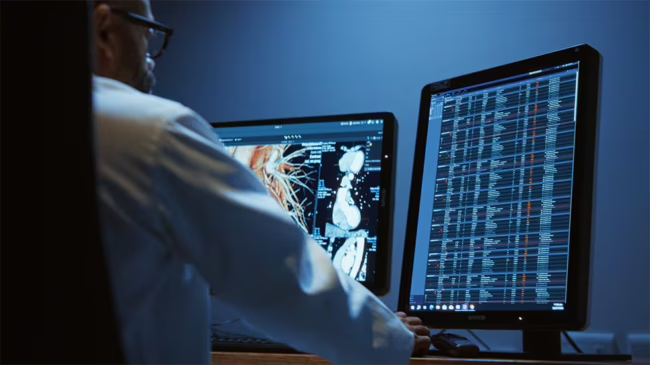
The extension of Advanced Visualization Workspace to the cloud via Philips HealthSuite represents a strategic decision to anchor its software delivery model in a scalable, cloud-native framework. While Philips has spoken of cloud integration in previous iterations of HealthSuite, the RSNA 2025 announcement marks a more mature deployment path, where radiologists and clinicians can access advanced imaging tools via a SaaS model without being tethered to on-premise workstations.
This flexibility is not merely a technical convenience. For healthcare organizations managing multi-site networks, including telemedicine units and regional teleradiology hubs, the ability to access imaging studies from any location with consistent diagnostic fidelity is increasingly seen as a clinical imperative. The COVID-19 pandemic accelerated the demand for distributed diagnostic infrastructure, but many institutions continue to struggle with siloed access, licensing complexity, and compliance risks. Philips’ HealthSuite SaaS model offers a possible solution to those pain points, although adoption may still face hurdles related to data localization and cybersecurity policy across different jurisdictions.
According to imaging service leads working with Philips in the United Kingdom’s National Health Service, early implementation of cloud-based AVW tools has already led to faster case review cycles and streamlined reporting. The shift away from dedicated workstation dependencies has reportedly improved the agility of cardiac MR study reviews, making it easier to manage workloads during high-volume periods.
From a business standpoint, the AWS partnership also enables Philips to offload infrastructure management to a hyperscale cloud provider while focusing on front-end clinical application development. This reduces maintenance burdens for hospitals while giving Philips a framework to push regular software updates, new AI module deployments, and user experience improvements on a global scale.
How Philips is reframing AI in radiology as embedded ecosystem functionality
Rather than positioning artificial intelligence as a standalone add-on or purchasing decision, Philips is embedding AI into its core imaging software in a modular, disease-specific fashion. The company’s partnerships with 4DMedical and Quibim exemplify this approach. In both cases, the AI tools are not positioned as separate applications but as embedded features within broader platforms like AVW 16 and DynaCAD.
The proposed integration of Quibim’s QP-Prostate AI tool into the Philips DynaCAD Prostate platform speaks directly to clinical workflow needs in prostate cancer diagnosis. Radiologists and urologists continue to cite variability in prostate MRI interpretation as a major barrier to accurate diagnosis and effective biopsy targeting. By embedding AI-based segmentation and detection tools directly into the diagnostic platform, Philips aims to improve consistency and reduce inter-reader subjectivity without adding workflow steps.
Similarly, the collaboration with 4DMedical focuses on enhancing functional lung imaging through advanced modeling of pulmonary airflow and perfusion. As interest in post-COVID lung assessments, chronic obstructive pulmonary disease screening, and non-invasive respiratory diagnostics grows, such tools could find broad utility. However, successful deployment will depend on whether these tools are validated for clinical use across different patient populations and imaging protocols, especially in settings outside tertiary care.
By emphasizing AI as an enabler within existing workflows, Philips appears to be countering the fatigue that has built up around AI in radiology over the past five years. Early enthusiasm gave way to skepticism as hospitals struggled to integrate multiple AI tools from niche vendors, many of which lacked interoperability or demonstrated limited clinical utility. Philips is attempting to reset the narrative by making AI capabilities ambient, invisible, and fully integrated into existing decision-making flows.
Why this approach could help Philips differentiate against Siemens and GE HealthCare
While Siemens Healthineers has heavily invested in proprietary AI solutions through its AI-Rad Companion suite, and GE HealthCare continues to push its Edison ecosystem with in-house analytics and command-center software, Philips is playing a different game. Rather than emphasizing vertical control, the company is embracing horizontal integration, positioning itself as an orchestrator of AI modules that can be swapped in and out based on clinical use case, geography, or institutional preference.
This model is likely to appeal to institutions that are wary of vendor lock-in or are already working with a fragmented imaging stack. Philips’ approach aligns with broader enterprise trends in healthcare IT toward open architecture, interoperability, and modular deployment. That said, this model also increases Philips’ dependency on external partners for clinical innovation, which introduces questions about quality control, regulatory compliance, and long-term support.
Competitive differentiation will also hinge on Philips’ ability to ensure seamless updates and lifecycle management of third-party AI modules. With hospitals facing staffing shortages and budgetary constraints, radiology departments will be unlikely to invest time and resources in retraining unless new capabilities offer clear productivity or accuracy gains.
What the market will be watching next in Philips’ AI roadmap
For clinical stakeholders, the central question is whether AVW 16 can deliver consistent performance across varied hardware environments, imaging volumes, and clinical scenarios. Radiologists will be particularly focused on usability, case load speed, and accuracy metrics when interpreting complex or borderline studies.
Health system CIOs and procurement teams will be monitoring the total cost of ownership under the SaaS model, especially when balancing license fees against reduced IT overhead. There will also be interest in how Philips handles multi-site deployments in regions where hybrid cloud is preferred over full cloud due to regulatory or infrastructure limitations.
Regulatory watchers, particularly in Europe and Asia, will be looking for evidence that Philips’ AI partnerships meet CE and other regional certification requirements. In some jurisdictions, imaging tools that influence clinical decision-making may fall under different levels of regulatory scrutiny, depending on how the AI outputs are used.
Ultimately, Philips’ success will depend on how convincingly it can demonstrate that its platform simplifies radiology rather than adding another layer of complexity. The promise of faster, more accurate diagnostics is real, but execution risk remains high. If Philips can deliver operational gains without compromising clinical quality or cybersecurity, it may indeed move from hardware innovator to platform orchestrator — and reshape the future of diagnostic imaging workflows in the process.