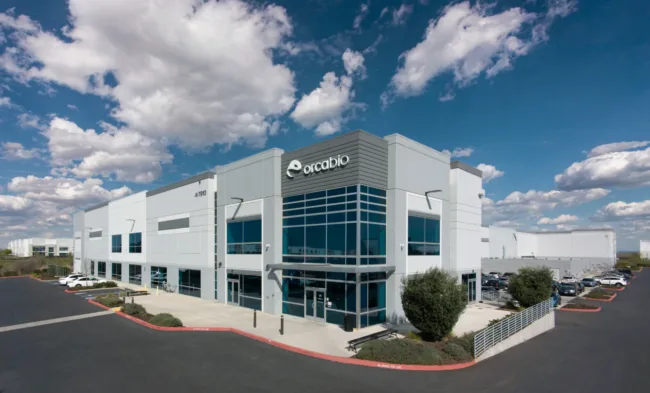
FUJIFILM Cellular Dynamics Inc. has opened a new headquarters and induced pluripotent stem cell development and manufacturing facility in Madison, Wisconsin, as part of FUJIFILM Corporation’s $200 million U.S. investment in research products and cell therapy manufacturing. The 175,000-square-foot site is expected to quadruple FUJIFILM Cellular Dynamics’ manufacturing footprint for iPSC-based research products and services, while expanding capabilities in cell culture manufacturing, process development and gene editing.
Why FUJIFILM’s iPSC manufacturing expansion matters beyond one new facility
FUJIFILM Cellular Dynamics’ Madison expansion matters because iPSC manufacturing is moving from a specialist research function into a strategic infrastructure requirement for drug discovery, toxicology, disease modelling and cell therapy development. The facility is not merely a real estate upgrade. It is a capacity bet on the idea that human stem cell-derived models and iPSC-enabled therapeutic platforms will require industrial-scale reliability, not boutique laboratory production.
The confirmed development is clear. FUJIFILM Cellular Dynamics has added a major site that expands iPSC development and manufacturing capability in the United States. The broader context is that pharmaceutical companies, academic groups and biotechnology developers are increasingly using induced pluripotent stem cells to model disease, screen compounds, assess toxicity and explore regenerative medicine applications. The unresolved question is whether demand can grow fast enough, and predictably enough, to justify the scale of manufacturing infrastructure now being built.
That question matters because stem cell manufacturing is a demanding field. Producing cells at small research scale is one thing. Producing consistent, high-quality, reproducible human cell products across programmes, customers and regulatory expectations is much harder. FUJIFILM Cellular Dynamics is effectively positioning itself as a scaled supplier for a field that still faces biological variability, quality control challenges and uncertain commercial timing. The investment is strategically logical, but the execution bar is high.
How the Madison site strengthens FUJIFILM Cellular Dynamics’ role in new approach methods
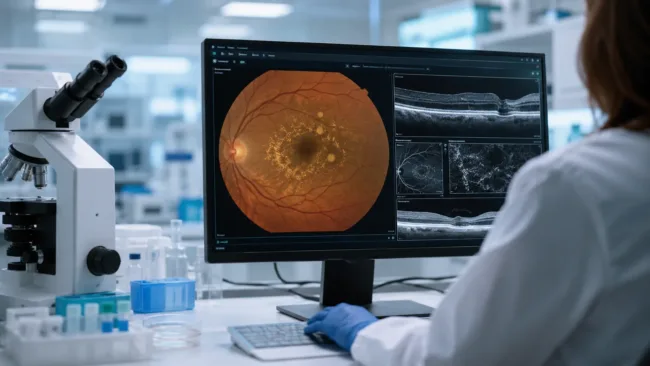
One of the most important drivers behind the expansion is the rising use of new approach methods, or NAMs, in drug discovery and safety testing. FUJIFILM Cellular Dynamics’ iPSC-derived iCell product lines are used in human cell-based models, and demand for such models is increasing as regulators and drug developers look for alternatives or complements to animal-based testing.
The confirmed significance lies in the facility’s ability to expand manufacturing of iPSC-derived research products that can support toxicology, pharmacology and disease modelling. The clinical and regulatory context is that human cell-based models can provide more biologically relevant data in some settings, particularly when animal models do not adequately reproduce human tissue responses. The risk is that NAM adoption remains uneven. Regulatory encouragement does not automatically translate into universal replacement of animal studies, and many drug developers will still need to validate how predictive specific iPSC-derived models are for particular diseases, tissues or safety endpoints.
For FUJIFILM Cellular Dynamics, this creates both opportunity and complexity. If NAM adoption accelerates, demand for standardised, high-quality iPSC-derived cells could rise materially. However, customers will expect reproducibility across batches, strong documentation, validated differentiation protocols and data that can withstand regulatory scrutiny. A larger facility helps address supply constraints, but it does not remove the scientific burden of proving that these models improve decision-making in real drug development workflows.
Why iPSC manufacturing quality is becoming a competitive issue for drug developers
Induced pluripotent stem cells are valuable because they can be expanded and differentiated into many human cell types. That flexibility makes them useful for disease modelling, screening and potential cell therapy applications. However, the same flexibility also creates manufacturing and quality control challenges, because small differences in cell line quality, differentiation protocols, culture conditions or gene editing workflows can affect performance.
The Madison facility’s integrated capabilities, including cell culture manufacturing laboratories, process development laboratories and a gene editing centre of excellence, are important because iPSC customers increasingly need more than cell supply. They need development support, process consistency and scalable workflows. In early research, variability can be annoying. In therapeutic development, variability can become a programme risk.
The unresolved question is how far iPSC manufacturing can be standardised across applications. Research-grade products, disease models and clinical-grade cell therapy materials may have different specifications, documentation needs and regulatory burdens. FUJIFILM Cellular Dynamics is building infrastructure that can support a broad range of demand, but the market will still fragment by use case. The quality system required for a screening product is not identical to the system required for a cell therapy candidate moving toward commercial production.
How this expansion fits the future of cell therapy manufacturing
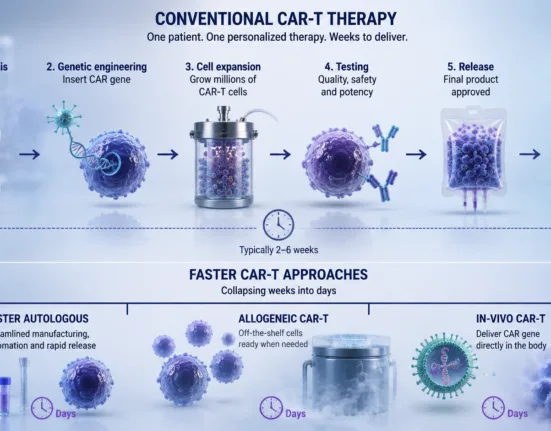
FUJIFILM Cellular Dynamics’ site is also designed with future contract manufacturing demand for cell therapy products in mind. That matters because cell therapy manufacturing remains one of the biggest constraints in the broader regenerative medicine sector. Autologous cell therapies have already shown how difficult personalised manufacturing can be, while allogeneic and iPSC-derived approaches are being pursued partly because they could support more scalable production models.
The confirmed development is that the facility is scalable and includes infrastructure that can support future cell therapy manufacturing needs. The strategic context is that iPSC-derived cell therapies could, in theory, allow developers to create more standardised starting materials and potentially manufacture off-the-shelf therapeutic products. The limitation is that iPSC-derived therapeutics remain scientifically and clinically demanding. Differentiation consistency, genetic stability, tumourigenicity risk, immune compatibility, potency assays and long-term safety will all shape whether these products can scale commercially.
For FUJIFILM Cellular Dynamics, the opportunity is to occupy a manufacturing and development role before the iPSC therapeutic market fully matures. That can be powerful if the sector grows as expected. However, it also means investing ahead of certainty. Cell therapy demand is real, but not every platform will reach commercial viability. The Madison site gives FUJIFILM Cellular Dynamics capacity and credibility, but the market will determine how much of that capacity is absorbed by clinical and commercial programmes.
Why gene editing capabilities matter inside an iPSC manufacturing facility
The inclusion of a gene editing centre of excellence is strategically important because iPSC platforms increasingly intersect with engineered cell models and therapeutic development. Gene editing can be used to create disease models, introduce or correct mutations, engineer immune compatibility, or build cell lines with specific functional characteristics. That makes it a natural extension of iPSC manufacturing, rather than an unrelated add-on.
The confirmed capability adds depth to the Madison site because customers may need edited iPSC lines for research, screening or development work. The broader context is that drug discovery is moving toward more disease-relevant models, including genetically defined cellular systems that mimic patient biology more closely than conventional immortalised cell lines. The unresolved issue is that gene editing introduces additional quality and safety questions. Off-target effects, clonal variation, genomic stability and documentation requirements become central, especially when edited cells are used in regulated development or therapeutic contexts.
This is where FUJIFILM Cellular Dynamics’ positioning becomes more interesting. The value is not simply in producing cells. It is in combining iPSC generation, differentiation, editing, process development and manufacturing under a more integrated infrastructure. For customers, that could reduce handoff risk between research vendors and manufacturing partners. The risk is that integrated capability must be matched by transparent quality systems and strong technical validation, because customers will not accept speed if it creates uncertainty.
What the Madison expansion reveals about the U.S. biohealth manufacturing race
The Madison facility also reinforces the growing importance of regional biohealth clusters in the United States. Wisconsin has been working to strengthen its biohealth and biotechnology ecosystem, and FUJIFILM Cellular Dynamics’ expansion gives Madison a higher-profile role in stem cell manufacturing and regenerative medicine infrastructure. The location matters because advanced biomanufacturing is increasingly shaped by talent density, academic networks, state-level support and proximity to specialised suppliers.
The confirmed development is a major life sciences facility opening in Madison, a city already associated with stem cell science and biotechnology. The commercial context is that companies building complex platforms need access to trained scientists, process engineers, quality professionals and regulatory expertise. A facility can be built anywhere on paper. In practice, advanced cell manufacturing depends on a workforce ecosystem.
The limitation is that regional biotech clusters must compete for talent and investment. Madison’s strengths in stem cell biology are real, but the broader U.S. market includes major hubs in Boston, San Diego, the Bay Area, North Carolina, Philadelphia and other regions. FUJIFILM Cellular Dynamics’ expansion helps Madison’s positioning, but sustaining that advantage will require continued talent development, partnerships and commercial traction.
Why pharma companies may increasingly outsource iPSC development and production
Pharmaceutical companies may use iPSC-derived cells for drug discovery, safety testing and translational research, but many do not want to build full in-house iPSC manufacturing infrastructure. That creates a role for specialist providers that can supply validated products, custom cell lines, process support and eventually clinical manufacturing services. FUJIFILM Cellular Dynamics appears to be strengthening its position for that outsourced demand.
The confirmed market opportunity is broader than one product line. The Madison site expands capacity across research products and services, while preparing for future contract manufacturing of cell therapy products. The industry context is that drug developers increasingly want flexible access to specialised platforms without carrying the fixed cost of building every capability internally. Outsourcing makes sense when the technology is complex, demand is variable and specialist quality systems matter.
The risk is that outsourced iPSC manufacturing must remain closely aligned with customer science. A research group may need highly customised cells, disease-specific models or programme-specific assay compatibility. Standard products can serve many needs, but higher-value work often depends on customisation. FUJIFILM Cellular Dynamics will need to balance standardised scale with technical flexibility. Too much standardisation can limit usefulness. Too much customisation can strain manufacturing efficiency.
What regulators and industry observers will watch next
Regulators and industry observers will watch how iPSC-based products and services are integrated into drug development evidence packages. For NAMs, the key question is not whether human cell models are scientifically attractive. It is whether they produce reliable, reproducible and decision-grade data. For cell therapy, the questions become more demanding, including manufacturing control, potency, safety, comparability and long-term follow-up.
The Madison expansion gives FUJIFILM Cellular Dynamics a stronger platform to serve both research and translational markets. However, infrastructure alone will not decide leadership. The sector will watch for customer adoption, regulatory acceptance of iPSC-derived models, clinical progress for iPSC-derived therapies and the ability of manufacturers to maintain quality as volume rises. Scale is useful only if it preserves performance.
Industry observers will also watch whether the facility helps FUJIFILM Cellular Dynamics capture demand from large pharmaceutical companies, biotechnology firms and academic institutions. The company’s positioning across research products, services and potential manufacturing support gives it several routes to growth. The risk is that each route has a different buying cycle, technical requirement and regulatory burden. Success will depend on disciplined execution across all three.
Why FUJIFILM’s iPSC investment is a scale signal for regenerative medicine
The most important takeaway from FUJIFILM Cellular Dynamics’ Madison facility is that iPSC-based science is moving deeper into the infrastructure phase. The field is no longer only about proving that stem cells can model disease or differentiate into useful cell types. It is increasingly about whether those cells can be produced consistently, at scale, for real-world discovery and therapeutic development.
That shift has implications for pharma, biotech and contract manufacturing. Companies that control reliable iPSC manufacturing infrastructure may become important partners in drug discovery and regenerative medicine. They may also help define quality expectations for the field. FUJIFILM Cellular Dynamics is clearly trying to occupy that role.
The opportunity is meaningful, but not automatic. iPSC adoption will depend on evidence quality, regulatory confidence, customer economics and the progress of iPSC-derived therapies. FUJIFILM Cellular Dynamics has expanded the physical platform. The next test is whether the market moves fast enough, and rigorously enough, to fill it.