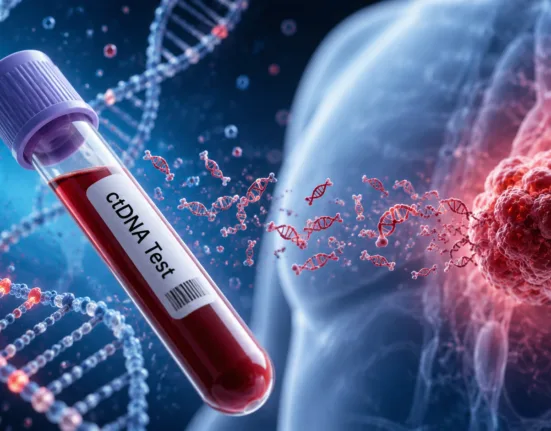
Guardant Health and Trial Library have entered a strategic collaboration aimed at expanding access to oncology clinical trials by connecting genomic data with AI-powered patient navigation systems. The partnership seeks to address entrenched disparities in trial participation by leveraging Guardant Health’s biomarker testing infrastructure and Trial Library’s AI platform to enable faster, more equitable enrollment across the United States.
By uniting large-scale genomic insights with trial-matching automation, the two companies are attempting to remove key logistical and structural barriers that continue to exclude underserved and minority patients from potentially life-saving cancer research opportunities.
What this reveals about the next phase of trial access in precision oncology
The announcement signals a deeper convergence between diagnostics companies and trial-enablement platforms, as stakeholders across the cancer care continuum attempt to reduce friction in trial recruitment. Unlike conventional referral models, where a test result may or may not lead to a viable trial option, this collaboration aims to create a tighter operational loop between testing and trial access.
Guardant Health, whose database includes over one million tested individuals, brings a robust real-world data layer. Trial Library, in turn, activates this data through an AI engine that supports provider-facing alerts and patient navigation tools across more than 320 community clinics and 1,500 providers. In theory, this allows oncologists to surface relevant trial opportunities almost immediately after a patient receives their biomarker profile.
Industry analysts point out that this model challenges the historical assumption that trial recruitment must be site-centric. Instead of waiting for patients to show up at major academic medical centers, sponsors can now reach them in distributed, often overlooked settings—turning diagnostics companies into decentralized trial accelerators.
Why the access problem persists despite growing trial infrastructure
Despite years of effort from sponsors, regulators, and CROs to increase trial enrollment, participation rates remain dismally low. According to the American Cancer Society and other data sources, less than 7 percent of patients with cancer enroll in clinical trials, even though upwards of 70 percent may be open to participation.
This disparity is even starker in rural, minority, and low-income populations, where access is hindered by low trial awareness, logistical burdens, and the absence of active trial sites. These regions often lack the research infrastructure that would enable real-time enrollment, leaving genomically eligible patients out of the precision medicine ecosystem.
The Guardant Health and Trial Library partnership aims to reverse this dynamic. By delivering remote eligibility verification and longitudinal navigation tools directly into community settings, the collaboration could help redefine what trial accessibility actually means in practice.
However, success will depend on more than just AI. It will require genuine integration into clinical workflows, clarity on reimbursement for navigation services, and strong partnerships with healthcare systems that can translate digital insights into human-led action.
What this changes for biopharma sponsors designing biomarker-driven studies
For sponsors running biomarker-driven trials, slow or uneven enrollment remains a primary bottleneck. Complex eligibility criteria tied to genomic profiles create narrow pools of potential participants, increasing both the cost and duration of trial recruitment. This problem is especially acute in Phase 2 and Phase 3 precision oncology studies, where time-to-enroll can become a gating factor for regulatory filings.
Guardant Health’s diagnostics already inform treatment decisions for a significant portion of U.S. oncology patients, giving the company a front-row seat to trial-eligible populations before they ever engage with a sponsor or site. By integrating Trial Library’s platform into this testing flow, sponsors may gain access to a real-time pre-screening mechanism that delivers higher match quality, better geographic spread, and increased diversity.
Clinical development teams may begin treating such partnerships as enrollment infrastructure rather than optional pilots. If platforms like this one demonstrate reduced screen-failure rates and higher consent conversion, they could displace traditional referral networks and CRO-led site recruitment models—particularly for tissue-agnostic or rare-mutation studies.
Where AI-enabled trial navigation might still fall short
Even with promising integration, limitations persist. AI-driven trial matching depends heavily on structured trial metadata, which varies widely across sponsors and protocols. Protocol amendments, inconsistent site activation timelines, and inclusion criteria complexity often create disconnects between what the algorithm identifies and what is truly accessible.
Moreover, community oncologists may still struggle to operationalize trial referrals due to fragmented EHR systems, concerns about continuity of care, and lack of dedicated research staff. Trial Library’s AI system reportedly includes provider activation features, but adoption at scale will likely require significant behavior change and workflow alignment.
Another risk is the technology’s dependence on digital engagement. Patients with low digital literacy, language barriers, or distrust in research institutions may remain underrepresented, even if the platform can technically identify them as eligible. Human-led navigation remains critical in addressing these gaps, and the resource burden to maintain such support at scale cannot be underestimated.
Regulators and patient advocacy groups are also likely to scrutinize outcomes beyond enrollment volume. They will want to see improvements in retention, diversity, safety reporting, and treatment adherence among patients onboarded via automated systems.
How this fits into Guardant Health’s expanding biopharma value proposition
For Guardant Health, this partnership is part of a larger strategy to become a full-stack enabler of precision oncology—not just through diagnostics, but by embedding itself into therapy development pipelines. The company already offers companion diagnostics development, CDx regulatory services, and real-world data analytics to biopharma partners.
Adding a trial enrollment channel via Trial Library effectively gives Guardant a hand in shaping not just who gets tested, but who ends up in the treatment trials those tests inform. This could strengthen its pitch to biopharma sponsors looking for more integrated solutions to accelerate time-to-market for targeted therapies.
It also positions Guardant Health to benefit from policy momentum around diversity and equity in clinical trials. With regulators demanding more representative enrollment across age, race, geography, and socioeconomic background, platforms that deliver diversity on-demand will command increasing strategic value.
Trial Library, for its part, gains a distribution channel deeply rooted in clinical decision-making. By partnering with a diagnostics firm that already influences care pathways, the company can expand its impact far beyond its initial AI-matching thesis.
What comes next as regulatory pressure and sponsor demand rise
The U.S. Food and Drug Administration, the National Cancer Institute, and multiple legislative bodies have signaled clear intent to improve trial access and diversity. That backdrop provides additional tailwinds for the Guardant Health–Trial Library model, especially if it proves effective in surfacing underrepresented populations and linking them to appropriate trials.
Stakeholders will be watching for measurable outcomes. These include time from test to trial enrollment, patient diversity metrics across activated sites, provider engagement trends in non-academic settings, and retention rates among participants recruited via navigation platforms.
If the platform can demonstrate lower dropout rates, higher completion rates, and better alignment with sponsor goals, it could become a key feature of future trial design frameworks.
Some industry observers believe this approach may even open new revenue models. Trial navigation and eligibility services could eventually become reimbursable under value-based oncology care programs or integrated into population health strategies by payers and health systems.
For now, the partnership marks an important test case in what may become a broader realignment of clinical trial access around diagnostics-first and AI-enabled infrastructure.