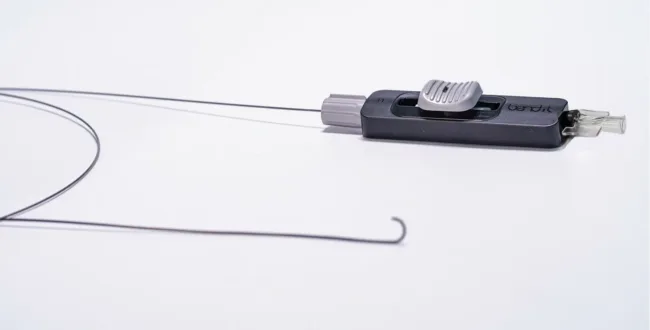
CUC America Inc. said it has entered strategic collaborations with Dr. Yuji Okuno and Dr. Osman Ahmed to accelerate the adoption of musculoskeletal embolization in the United States through a growing network of office-based laboratories. The announcement places genicular artery embolization and related embolotherapy techniques inside a commercial expansion strategy that is as much about care delivery infrastructure and physician standardization as it is about the procedure itself.
Why CUC America’s office-based laboratory strategy matters more than the collaboration headline itself
What makes this development noteworthy is not simply that CUC America is associating itself with two high-profile interventional radiology figures. The more meaningful signal is that the company is trying to solve one of the biggest bottlenecks in minimally invasive pain treatment: how to move promising procedures from specialist interest and early adopter enthusiasm into reproducible, geographically scalable outpatient care. In pain intervention, that jump is often where momentum fades. Novel techniques can look compelling in expert hands, but the real commercial and clinical test comes when operators with varying levels of experience attempt to deliver consistent outcomes across a wider network.
That is why the office-based laboratory angle matters more than the press release language might initially suggest. Office-based labs can offer a lower-friction setting than hospitals for certain image-guided procedures, potentially improving convenience, scheduling flexibility, and operating economics. But they also demand operational discipline. If CUC America wants musculoskeletal embolization to become more than a niche offering, it needs standardized patient selection, dependable imaging workflows, consistent embolic technique, post-procedure follow-up, and a training framework that reduces variation across sites. The announcement points directly to those themes through references to medical quality, protocol standardization, physician training, and clinical oversight systems.
What the Okuno and Ahmed alliances reveal about how MSK embolization may be commercialised in the United States
That positioning reveals the company’s real ambition. This is not only about offering a procedure for chronic pain. It is about building a platform around embolotherapy that could eventually support multiple minimally invasive service lines. CUC America explicitly said the model could extend beyond musculoskeletal embolization into interventional radiology, cardiology, and other outpatient specialties. In other words, MSK embolization may be the wedge product, but the larger thesis is that an office-based interventional network can become a scalable delivery engine for several categories of image-guided care.
For clinicians following the field, the presence of Dr. Yuji Okuno is strategically important because genicular artery embolization still derives much of its identity from specialist-led innovation rather than broad institutional normalization. His role, as described by CUC America, goes beyond symbolic endorsement. The company said he will support protocol development, physician education, oversight systems, and network growth. That suggests CUC America understands that the credibility of musculoskeletal embolization still rests heavily on who teaches it, how it is taught, and whether the procedure can be embedded in a formalized quality structure rather than left to diffuse informally through conference buzz and isolated workshops.
The addition of Dr. Osman Ahmed gives the strategy a distinctly U.S. translational layer. If Dr. Okuno represents the origin and conceptual leadership of genicular artery embolization, Dr. Ahmed represents domestic procedural legitimacy and field-facing relevance in the United States. That combination matters because American adoption of emerging interventional techniques typically depends on more than global clinical prestige. It requires U.S.-based champions who can influence education, shape case selection norms, engage peers, and help convert interest into regular practice patterns. CUC America appears to be trying to bridge exactly that gap by pairing global procedural authorship with local clinical authority.
Why chronic pain remains a large but difficult market for emerging embolotherapy platforms to crack
The pain market also makes this a logical area for experimentation. Chronic musculoskeletal pain is a large, stubborn category in which many patients cycle through conservative therapies without durable relief and where surgical escalation is not always appropriate or desirable. That creates room for interventions that can sit between medication-heavy management and more invasive orthopedic solutions. Musculoskeletal embolization has attracted attention precisely because it offers a different mechanistic approach by targeting abnormal blood vessels associated with inflammatory pain states. CUC America leaned on that unmet-need framing in its announcement, arguing that traditional approaches are often insufficient or burdensome and that embolization may offer a less invasive alternative for select patients.
Still, that opportunity should not be mistaken for a settled clinical pathway. The biggest unanswered question is whether enthusiasm for the procedure can translate into broad and durable acceptance among referring physicians, payers, and mainstream pain care stakeholders. Many emerging interventional procedures look promising at the boundary between radiology and orthopedics, but adoption slows when evidence generation, coding clarity, and reimbursement pathways lag behind clinical curiosity. The press release speaks confidently about expanding access, but access in healthcare is not just a facility issue. It is also an evidence, economics, and referral issue.
What the announcement still does not answer about evidence, reimbursement, and real-world adoption
That is where the announcement is notably cautious in what it does not provide. There are no new trial results, no payer developments, no fresh reimbursement signals, and no commercial utilization metrics. From an industry perspective, that means the announcement is strategically important but still operationally early. It tells the market how CUC America wants to build, not yet whether the model is proving itself at scale. For a company aiming to industrialize a still-emerging treatment category, that distinction matters. Building the platform is one milestone. Demonstrating repeatable demand, case appropriateness, and sustainable economics across sites is the harder one.
The emphasis on physician training and certification is also revealing because it implicitly acknowledges a known fragility in procedure-led expansion stories. When a new intervention depends too heavily on a handful of expert operators, scale becomes fragile. Standardization is the answer on paper, but in practice it is difficult. Musculoskeletal embolization requires not just technical ability but judgment around candidacy, symptom attribution, imaging interpretation, and expectation setting. If CUC America can create a structured education and quality system that preserves technique integrity outside elite centers, it could help de-risk one of the biggest concerns surrounding wider diffusion. If it cannot, the network could expand faster than its clinical consistency.
How outpatient decentralisation could help growth while also inviting more scrutiny on quality and governance
There is also a broader site-of-care story embedded here. Office-based laboratories have become increasingly attractive across interventional specialties because they can shift procedures away from higher-cost institutional settings and into environments designed around throughput and patient convenience. That trend has strategic appeal in a healthcare system still looking for efficiency without sacrificing outcomes. But outpatient decentralization also increases scrutiny around governance, safety protocols, and clinical appropriateness. CUC America’s repeated use of terms such as standardization, oversight, and patient safety suggests the company is already aware that scale in this setting will invite questions from regulators, referring clinicians, and perhaps payers about quality control.
The multi-specialty framing could become either a strength or a distraction. On one hand, using musculoskeletal embolization as the entry point for a broader interventional platform could improve asset utilization and physician recruitment. A network that supports multiple minimally invasive specialties may be more economically resilient than one built around a single emerging procedure. On the other hand, platform ambition can dilute focus if the core service line has not yet proven strong enough to anchor expansion. For now, musculoskeletal embolization remains the identity-defining clinical proposition. Until it shows sustained traction, broader platform language will be viewed by many industry observers as aspirational.
What clinicians, payers, and industry watchers are most likely to monitor after this expansion move
What clinicians and industry watchers are likely to monitor next is fairly clear even if the announcement does not spell it out. They will want signs that CUC America can move from partnership headlines to demonstrable implementation. That could include evidence of how many sites actually begin offering the procedure, whether standardized protocols are adopted consistently, how referral pathways are built, and whether the company can show real-world treatment volume growth without compromising case quality. They will also watch whether the procedure becomes easier to explain and justify to non-interventional stakeholders, especially in a pain market crowded with established habits and competing therapies.
In that sense, this announcement is best read as a structural rather than evidentiary event. It does not settle the clinical debate around musculoskeletal embolization, nor does it remove the usual commercialization risks that accompany emerging interventional techniques. What it does do is show that CUC America believes the next phase of the category will be decided by delivery model design as much as by procedural innovation. That may prove to be the right bet. In healthcare, the therapies that scale are often not merely the ones that work, but the ones that can be taught, standardized, reimbursed, and delivered consistently in real-world settings.
For CUC America, the collaborations with Dr. Yuji Okuno and Dr. Osman Ahmed therefore amount to more than advisory optics. They are an attempt to import authority, codify technique, and build institutional confidence around a treatment area that still sits between promise and normalization. Whether that becomes a turning point for musculoskeletal embolization in the United States will depend less on the prestige of the collaborators than on whether the company can convert clinical excitement into disciplined outpatient execution. For a field searching for scalable alternatives in chronic pain care, that is where the real test begins.