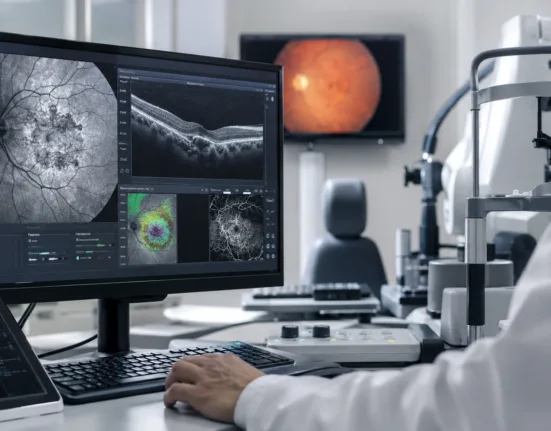
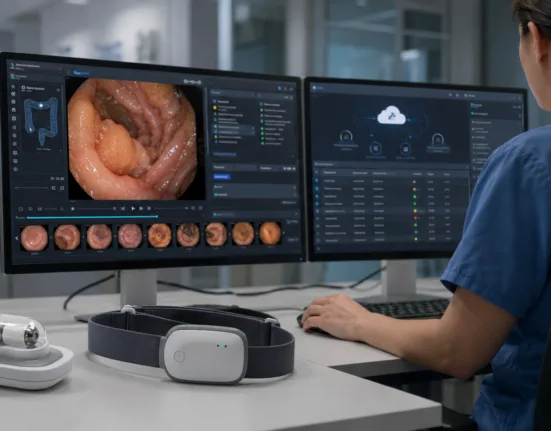
Cytovance Biologics has launched standalone analytical services that allow biotechnology and pharmaceutical companies to use its analytical development and testing capabilities without committing their manufacturing programs to the Oklahoma City-based contract development and manufacturing organization. The expanded offering covers both Good Manufacturing Practice and non-GMP environments and spans analytical method development through release testing and stability work.
The distinction between offering analytical capabilities and offering them independently is important. Cytovance already had analytical expertise within its broader biologics development and manufacturing business, but the new model effectively separates that infrastructure from a manufacturing engagement. Sponsors can now contract for method development, method transfer, qualification, validation, product characterization, release testing, stability studies and storage as individual or continuing services.
For Cytovance, that creates another route into biotechnology programs that may not need a new manufacturer. For sponsors, particularly smaller biotechnology companies with limited internal laboratories, it creates the possibility of outsourcing a technically demanding chemistry, manufacturing and controls function while retaining greater freedom over where the underlying biologic is developed or produced.
The commercial test will therefore be less about whether analytical testing is needed and more about whether Cytovance can convince sponsors to separate analytical outsourcing decisions from their existing manufacturing relationships.
Why is Cytovance making analytical testing available without a manufacturing engagement?
The most important part of the August 18 announcement is the absence of a manufacturing prerequisite. Cytovance said customers can use the analytical team for individual studies, ongoing stability programs or routine GMP testing without placing manufacturing work with the company. The services are intended to cover programs from early development through commercialization.
That potentially enlarges Cytovance’s accessible client base. A biotechnology company may already have drug substance manufacturing at one CDMO, drug product manufacturing at another facility and internal development work elsewhere. Changing a manufacturer can create considerable technical-transfer and comparability work. Engaging a specialist laboratory for a defined analytical package can be a narrower operational decision.
It also provides Cytovance with an earlier opportunity to enter a sponsor’s development ecosystem. Analytical work generates detailed knowledge about a molecule, its quality attributes, testing methods and stability profile. A relationship that begins with method development or characterization could therefore create opportunities for additional development work later, although the standalone model does not itself guarantee that clients will subsequently award Cytovance manufacturing contracts.
Chief Executive Officer Ping Zhang framed the expansion around biotechnology companies facing pressure to advance programs while dealing with limited resources, evolving regulatory expectations and increasingly complicated development pathways. Cytovance is positioning its analytical scientists and quality systems as an external extension of those development teams rather than requiring sponsors to buy a complete CDMO package.

Why can analytical method development become a bottleneck as biologics move toward the clinic?
Analytical development can appear less visible than manufacturing capacity, but it becomes progressively more important as a biologic advances.
Developers need suitable analytical procedures to understand attributes such as identity, potency, purity and impurities and to support decisions around process development, release and stability. A method that is useful during early research may require further development, qualification or validation as the program matures and regulatory expectations increase.
The United States Food and Drug Administration’s Q2(R2) guidance describes analytical procedure validation as part of the analytical procedure lifecycle and says the objective is to demonstrate that a procedure is fit for its intended purpose. The guidance covers procedures used for release and stability testing of commercial drug substances and products while noting that its scientific principles can also be applied in a phase-appropriate manner during clinical development.
That context makes Cytovance’s combination of development, transfer, qualification and validation relevant. The challenge for a sponsor is not simply obtaining a laboratory result. Analytical procedures must evolve with the program and produce data appropriate for their intended role.
A poorly planned analytical strategy can also generate additional work when a program transitions between organizations. Methods may need to be transferred, assessed for suitability in the receiving laboratory and supported by appropriate documentation. Offering method transfer alongside development and validation therefore addresses an important interface in outsourced biologics development.
How do GMP release testing and stability services change the value of the offering?
Cytovance is not limiting the standalone business to early analytical development. Its inclusion of GMP-compliant testing, release testing and stability services extends the proposition into later and potentially more recurring stages of a biologic’s lifecycle.
That matters commercially because one-off method development and recurring testing behave differently as outsourced services. A sponsor might need a specific characterization project once, while stability programs and routine testing can continue across defined intervals or batches as development advances.
The regulatory significance also increases. FDA’s Q14 guidance describes science-based and risk-based approaches for developing and maintaining analytical procedures used to evaluate drug substance and drug product quality. Together, Q14 and Q2(R2) place analytical procedure development, validation and lifecycle management within a broader framework rather than treating testing as an isolated laboratory task.
Cytovance’s ability to offer both GMP and non-GMP work therefore allows it to pursue sponsors at different levels of maturity. An early-stage company may initially require characterization or method development, while a later program may need validated methods, stability support or routine testing performed within an appropriate quality environment.
The important limitation is that outsourcing analytical work does not outsource the sponsor’s responsibility for building an adequate CMC package. Sponsors still need to ensure that methods, specifications, transfers, validation strategies and generated data are suitable for the particular product and stage of development.
Is Cytovance shifting from an integrated CDMO model toward more modular biologics services?
The standalone analytical launch becomes more interesting when viewed alongside Cytovance’s recent capability additions.
In September 2025, Cytovance launched in-house formulation development, presenting the service as another step toward a more integrated biologics development model. In June 2026, it added in-house mammalian cell line development, followed in July by perfusion capabilities within upstream process development.
Those investments strengthened Cytovance’s ability to keep more work inside a single CDMO relationship. The August analytical announcement moves in the other direction commercially, even though it uses the same technical infrastructure.
Rather than saying clients need to adopt the integrated model to access Cytovance’s capabilities, the company is effectively making part of that platform modular.
That gives Cytovance two ways to compete. It can pursue sponsors seeking continuity across multiple stages of biologics development, while separately targeting companies that only need analytical support. A sponsor could theoretically engage Cytovance for one analytical study while keeping process development and manufacturing elsewhere.
This flexibility may be particularly relevant for emerging biotechnology companies that operate through networks of external providers. Such companies may lack the capital or staffing required to build extensive analytical laboratories internally but may also be reluctant to consolidate every development activity under a single CDMO.
Could standalone analytical work become an entry point to larger Cytovance contracts?
The new service creates a potentially useful commercial funnel, although its value should not be overstated before Cytovance provides evidence of client uptake.
Analytical projects can expose a service provider to a program earlier than commercial manufacturing. A successful relationship around method development, characterization or stability could give Cytovance familiarity with a molecule and its analytical requirements. If the sponsor later needs process development, scale-up or manufacturing support, that existing technical relationship could become commercially valuable.
Cytovance’s expanding capabilities make that possibility more relevant. Cell line development can address an earlier stage of mammalian biologics development, perfusion broadens process-development options, formulation work adds another downstream development function, and the company’s established CDMO operations extend into manufacturing.
But the same modularity that makes standalone analytical services attractive to customers also means Cytovance cannot assume that analytical clients will migrate into its broader platform. Sponsors may deliberately use different providers to obtain specialist expertise, preserve negotiating flexibility or avoid excessive dependence on a single vendor.
The performance indicators to watch are therefore not simply the number of services Cytovance can advertise. More meaningful evidence would include repeat analytical engagements, progression from non-GMP development into GMP testing, longer-running stability programs and conversion of analytical relationships into broader development or manufacturing work.
What will determine whether Cytovance’s standalone analytical strategy gains traction?
Execution will depend heavily on technical quality, turnaround times, communication and the ability to manage transfers between Cytovance and other organizations.
Sudha Ankala, Cytovance’s Senior Director of Program Management, indicated that the company wants the analytical operation to function as an extension of clients’ teams, ranging from individual studies to routine GMP testing and ongoing stability support. That positioning fits a market in which sponsors may need external laboratory capabilities without necessarily wanting another full development and manufacturing relationship.
The company has also said it expects demand for United States-based analytical services to expand as biologics pipelines grow and sponsors seek domestic partners. That remains a Cytovance expectation rather than an independently demonstrated outcome of this launch, and the company has not disclosed pricing, expected revenue contribution, customer commitments or utilization targets for the new standalone business.
Those omissions do not diminish the operational significance of the launch, but they define what remains unknown. Cytovance has established that its analytical infrastructure can now be purchased independently. It has not yet shown how much incremental business the model will generate.
The strategic logic is nevertheless notable. After spending the past year expanding capabilities that made Cytovance more vertically integrated, the company is now using that broader technical base to compete for narrower pieces of the development chain. If sponsors adopt that flexibility, standalone analytical services could become more than another item on Cytovance’s CDMO menu. They could become an entry point through which the company builds earlier relationships with biologics developers while allowing those clients to decide later how much of the wider development and manufacturing platform they actually want to use.