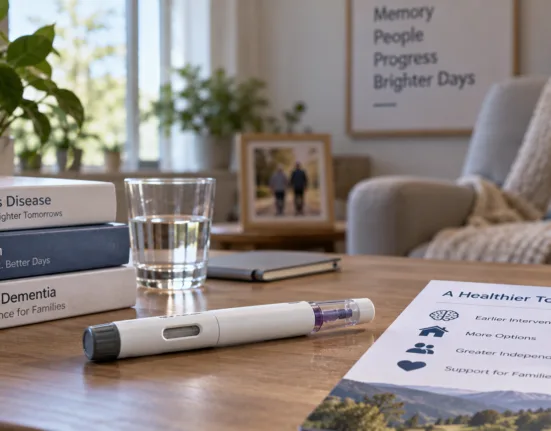
Eisai Co., Ltd. and Biogen Inc. announced that the United States Food and Drug Administration has accepted the supplemental Biologics License Application (sBLA) for LEQEMBI IQLIK (lecanemab-irmb) in a subcutaneous autoinjector format for starting dose use in early Alzheimer’s disease. The sBLA has been granted Priority Review, with a Prescription Drug User Fee Act (PDUFA) action date of May 24, 2026. If approved, LEQEMBI IQLIK would become the first anti-amyloid treatment enabling at-home initiation and maintenance dosing in early-stage Alzheimer’s.
What the proposed SC starting dose reveals about Eisai and Biogen’s shift toward patient-centric delivery models
While the current LEQEMBI treatment pathway begins with biweekly intravenous infusions for the first 18 months, the subcutaneous 500 mg starting dose would allow patients to begin treatment at home with two 250 mg injections administered weekly. This expands on the FDA’s August 2025 approval of LEQEMBI IQLIK 360 mg for subcutaneous maintenance dosing, offering patients and caregivers a fully injectable treatment experience throughout the drug’s therapeutic timeline.
The strategic implication is clear. Eisai and Biogen are aiming to transform the care delivery model for early Alzheimer’s disease by moving away from infusion center dependency and reducing healthcare system friction. The ability to initiate therapy outside of a clinic could also improve diagnosis-to-treatment conversion, a bottleneck previously noted in the slow uptake of anti-amyloid monoclonal antibodies.
Why this formulation change could matter more than the core molecule itself
While LEQEMBI’s mechanism of action has already secured regulatory approvals in over 50 markets, the subcutaneous reformulation represents a paradigm shift in Alzheimer’s disease logistics, not biology. The 15-second injection time per dose introduces convenience but more importantly reduces institutional cost burdens by eliminating infusion-related overheads.
Data from the Clarity AD open-label extension support equivalence in exposure, clinical outcomes, and biomarker impact between subcutaneous and intravenous formats. With a comparable safety profile and lower incidence of systemic infusion reactions, this delivery innovation addresses the operational inertia that has historically slowed anti-amyloid rollout.
The patient and caregiver community has long voiced concern over the practical challenges of frequent infusion-based treatment. If approved, this could reframe LEQEMBI as a self-managed chronic therapy, comparable in usability to subcutaneous regimens used in autoimmune and endocrine diseases.
What this priority review signals about FDA sentiment toward anti-amyloid platform evolution
Regulatory watchers have taken note of the FDA’s decision to assign Priority Review status to the LEQEMBI IQLIK sBLA, despite the agency already approving the drug’s subcutaneous form for maintenance. The signal here is subtle but important. The FDA appears committed to enabling delivery flexibility in neurodegenerative disease management, especially where early intervention is considered pivotal.
That said, the agency will almost certainly scrutinize the ARIA (amyloid-related imaging abnormalities) profile in SC form. While Eisai reports a similar safety profile to IV administration with less than 2 percent systemic reactions, regulators are likely to pay close attention to any genotype-driven risk differentiation in the subcutaneous initiation context. The agency’s evaluation will also weigh the logistical impact of removing clinic-based oversight, especially in the first 14 weeks where ARIA incidence tends to cluster.
Will delivery innovation be enough to change the commercial trajectory of LEQEMBI?
From a commercial perspective, LEQEMBI’s uptake in the United States and abroad has been modest relative to market expectations, due in part to infusion complexity, payer reticence, and public skepticism around clinical value. While clinical efficacy has been shown in early Alzheimer’s disease patients, the challenge remains in translating regulatory wins into real-world patient initiation rates.
By offering a fully injectable pathway from initiation to maintenance, Eisai and Biogen are betting that operational simplicity can help overcome some of these headwinds. However, industry observers suggest that commercial acceleration may still hinge on earlier detection and diagnosis infrastructure, as many eligible patients remain undiagnosed or undelivered to specialty care pathways.
Moreover, payer behavior toward SC anti-amyloid therapies remains uncertain. Reimbursement frameworks that were structured around infusion centers may require adjustment to accommodate home use, potentially affecting formulary access, co-pays, and long-term adherence incentives.
Comparative landscape: How does LEQEMBI IQLIK stack up against other amyloid-targeting approaches?
With other monoclonal antibodies such as donanemab (Eli Lilly) and gantenerumab (Roche) in various stages of clinical development or regulatory limbo, LEQEMBI holds a first-mover advantage in the subcutaneous anti-amyloid space. Notably, donanemab has shown promise in intermediate tau subgroups but has yet to secure a subcutaneous option. Should Eisai and Biogen succeed in bringing both initiation and maintenance SC dosing to market, they would define the SC standard against which all future agents are benchmarked.
However, some analysts caution that delivery innovation alone will not resolve all outstanding debates around net clinical benefit, particularly given the cost, ARIA risk, and modest cognitive slowing seen in trials. What LEQEMBI IQLIK may achieve is operational leadership, even if therapeutic dominance remains contested.
Risk profile and ongoing safety complexity: The ApoE ε4 wildcard
The known association between ApoE ε4 homozygosity and increased risk of ARIA remains a critical clinical consideration in both IV and SC formats. Patients homozygous for ApoE ε4 experienced ARIA rates as high as 45 percent, with symptomatic events in 9 percent of cases. While Eisai’s label advises ApoE testing prior to treatment initiation, it does not require it, placing the onus on clinicians to balance genetic risk with treatment urgency.
The proposed SC starting dose could, paradoxically, reduce early detection of ARIA symptoms that might be caught in infusion center settings. This raises questions about whether home administration may dilute clinical vigilance in the first dose window. Ongoing MRI monitoring and enhanced clinician education are likely to be required for safe roll-out.
What could go wrong next: Manufacturing, logistics, and healthcare system readiness
Even if approved by May 2026, the road to operationalizing LEQEMBI IQLIK at scale will not be without hurdles. Eisai and Biogen must demonstrate that their autoinjector production systems can match market demand and that supply chains can reach in-home care providers efficiently. Training, prescription workflows, and insurance authorization pipelines must all adapt to a self-administered monoclonal antibody model, which is still rare in neurodegenerative medicine.
Furthermore, uptake may remain constrained in geographies without the reimbursement infrastructure or diagnostic pathways to detect early Alzheimer’s disease and channel eligible patients to appropriate care.