Olympus Corporation has received U.S. Food and Drug Administration 510(k) clearance for the POWERSEAL Open Extended Jaw Sealer/Divider, expanding its advanced bipolar surgical energy portfolio into an additional open surgery configuration. The clearance gives surgeons in the United States another vessel sealing and division option at a time when surgical device manufacturers are competing on precision, ergonomics, workflow efficiency, and platform breadth across open and minimally invasive procedures.
Why does the POWERSEAL Open Extended Jaw clearance matter for surgical energy adoption?
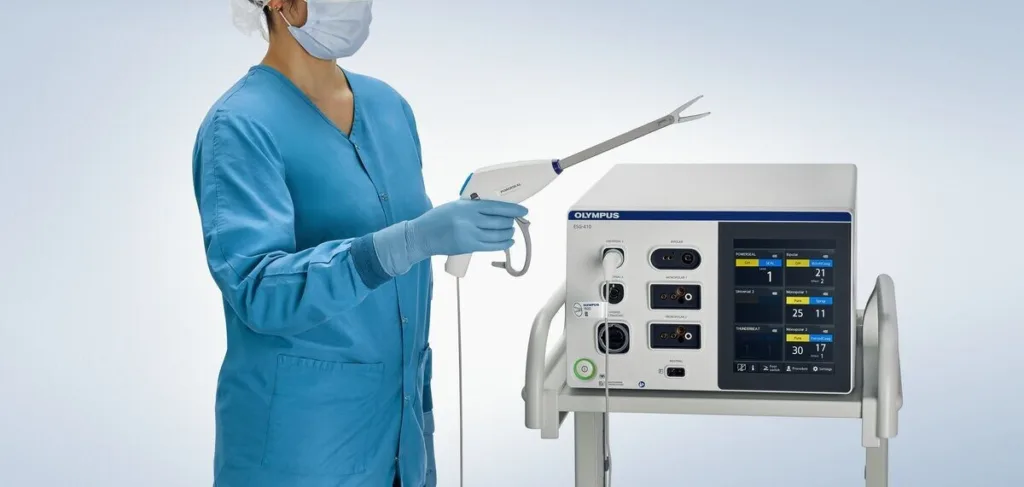
The new clearance is best understood as an incremental but commercially meaningful expansion rather than a disruptive technology reset. Olympus Corporation already had three 5 millimetre devices in the POWERSEAL portfolio, with different jaw configurations and shaft lengths designed to support dissection, grasping, and sealing across open and laparoscopic procedures. The POWERSEAL Open Extended Jaw Sealer/Divider adds a fourth design and gives the medical technology manufacturer a more complete positioning in open surgery, where access, reach, rotation, surgeon control, and tissue handling remain critical.
The clinical relevance sits in the device’s intended role as a bipolar electrosurgical instrument for open procedures where surgeons need ligation and division of vessels, tissue bundles, and lymphatics. The device is designed to seal vessels up to and including 7 millimetres in diameter, including pulmonary vessels, tissue bundles, and lymphatics. For operating room teams, that specification matters because vessel sealing devices are often evaluated not only on seal confidence but also on how they reduce instrument exchanges and help surgeons maintain control in anatomically constrained or high-pressure procedures.
The unresolved question is whether incremental device refinements can shift surgeon preference in a mature and competitive surgical energy market. Advanced bipolar platforms are already familiar in general surgery, gynecology, colorectal surgery, bariatric surgery, urology, thoracic surgery, and vascular surgery. That means Olympus Corporation is not creating a new category with the POWERSEAL Open Extended Jaw Sealer/Divider. It is attempting to strengthen its share of a category where adoption depends on surgeon trust, hospital purchasing behaviour, training, inventory standardisation, and perceived performance consistency across different specialties.
How could open surgery demand shape the commercial opportunity for Olympus Corporation?
The commercial logic behind the clearance is straightforward. Even as minimally invasive surgery continues to expand, open surgery remains clinically necessary across complex, emergent, oncologic, vascular, thoracic, and high-risk cases. Devices built specifically for open surgery still matter because surgeons need reliable vessel sealing and division tools in procedures where visibility, tissue thickness, bleeding risk, and manual control can differ significantly from laparoscopic environments.
The POWERSEAL Open Extended Jaw Sealer/Divider gives Olympus Corporation a device that appears designed around those practical operating room realities. Features such as a proximally located rotation knob for single-handed use, increased rotational range, and a jaw coating intended to reduce tissue sticking suggest that the product is being positioned around control and procedural continuity rather than headline-grabbing novelty. In surgical energy, those details can be more important than they sound, because small ergonomic or tissue-handling advantages may influence whether a device feels intuitive during repeated use.
The limitation is that clinical adoption rarely turns on technical specifications alone. Hospitals often evaluate surgical energy devices through a combination of physician preference, value analysis committee review, contracting terms, device standardisation, training burden, and compatibility with existing operating room workflows. Olympus Corporation can benefit from a broader POWERSEAL portfolio, but the POWERSEAL Open Extended Jaw Sealer/Divider will still need to prove that its incremental design benefits are meaningful enough to justify stocking, training, and procurement decisions in facilities that may already use competing vessel sealing systems.
What is genuinely new in the POWERSEAL Open Extended Jaw device versus the existing portfolio?
The genuine novelty lies less in the core vessel sealing concept and more in the new open surgery design format within the POWERSEAL family. The earlier POWERSEAL devices already offered multifunctional jaw capabilities such as spot coagulation, cold cutting, atraumatic grasping, dissecting, and sealing. They were also built around surgeon ergonomics and reduced hand fatigue. The latest device extends that platform logic into a new configuration with features aimed at open procedures, including single-handed rotation support, broader rotational control, and tissue stick reduction.
That distinction matters because Olympus Corporation is using a portfolio strategy, not a single-product strategy. By offering multiple jaw configurations, shaft lengths, and now an open extended jaw design, the medical device manufacturer can position POWERSEAL as a family of tools that supports surgeon preference rather than a narrow device for one procedural niche. For hospitals seeking some degree of standardisation across surgical energy instruments, a broader device family may simplify training and contracting if performance expectations are met.
The risk is that portfolio expansion can look stronger on paper than it feels in the operating room. Surgeons may welcome a broader range of options, but they also tend to develop strong preferences around instrument feel, jaw responsiveness, seal reliability, thermal spread confidence, and cutting performance. If the POWERSEAL Open Extended Jaw Sealer/Divider is perceived as merely another device in a crowded field, Olympus Corporation may need sustained clinical education and surgeon engagement to convert clearance into repeat usage.
Why are ergonomics and tissue handling becoming strategic differentiators in vessel sealing?
The emphasis on reduced hand fatigue, single-handed rotation, and tissue sticking is not cosmetic. Surgical energy devices are used repeatedly during procedures, and small ergonomic burdens can accumulate over long cases. A device that supports confident grasping, dissection, sealing, rotation, and cutting without forcing frequent hand repositioning can improve procedural flow for surgeons and operating room teams.
This is particularly relevant in open surgery, where tissue planes, exposure, and surgeon positioning may vary more widely than in tightly controlled laparoscopic workflows. A proximally located rotation knob may help surgeons adjust the jaw orientation without disrupting hand position. A wider range of rotation may support access in difficult anatomical angles. A coating intended to reduce tissue sticking may reduce interruptions that occur when tissue adhesion affects instrument performance.
However, ergonomics can be difficult to translate into strong commercial evidence. A device may be described as easier to use, but hospitals and clinicians will look for consistent real-world performance across specialties and procedure types. The claims around comfort, efficiency, and control will need to be supported by surgeon experience, training feedback, and purchasing confidence. In other words, the device’s success will depend on whether operating room teams feel the difference, not just whether the device specification sheet reads well.
How does the clearance fit into broader competition in advanced bipolar surgical energy?
The POWERSEAL Open Extended Jaw Sealer/Divider lands in a market where advanced bipolar energy is already a core part of modern surgical practice. Device manufacturers compete by combining sealing strength, multifunctionality, reliability, ease of use, safety profile, and procedural efficiency. Olympus Corporation’s clearance allows it to deepen its participation in this market by offering a more complete POWERSEAL lineup for both open and laparoscopic surgical needs.
The strategic context is important. Medical technology companies increasingly seek recurring revenue opportunities through single-use devices, procedure-linked consumables, and platform portfolios that can become embedded in hospital workflows. Since the POWERSEAL Open Extended Jaw Sealer/Divider is intended for single use only, the commercial model may align with recurring procedural demand, assuming hospitals adopt the device and surgeons use it consistently.
The challenge is that single-use surgical devices also face scrutiny around cost, inventory management, sustainability concerns, and value demonstration. Hospitals are under pressure to control operating room expenses, and purchasing committees may ask whether a new configuration offers enough incremental benefit over existing instruments. Olympus Corporation’s ability to frame the device around procedural efficiency, surgeon control, and platform standardisation could be important, but price-value alignment will remain a key adoption factor.
What should clinicians, hospitals, and industry observers watch next?
The next phase is not regulatory, but commercial. Full market availability is expected in late spring 2026, which means the key questions will shift toward rollout, surgeon education, hospital contracting, and early user feedback. For clinicians, the practical test will be whether the device delivers consistent vessel sealing and functional handling across the specialties where POWERSEAL is indicated. For hospitals, the test will be whether the additional open extended jaw option fits existing procurement pathways and operating room needs.
Industry observers will likely watch whether Olympus Corporation can use the clearance to strengthen its broader surgical devices business in the United States. A single 510(k) clearance does not transform a surgical portfolio on its own, but it can matter when it fills a product gap, improves competitiveness in a familiar category, and supports a broader platform story. The POWERSEAL Open Extended Jaw Sealer/Divider appears to do exactly that, although the scale of its commercial impact will depend on physician preference and hospital adoption rather than regulatory clearance alone.
The safety and use limitations also remain relevant. The device is not positioned for tubal sterilization or tubal coagulation for sterilization procedures. Its use in patients with electronic implants requires qualified professional consultation because of potential hazards. The single-use design also means re-sterilization is not advised due to risks such as cross-contamination, excessive wear, and degradation. These limitations are standard but commercially meaningful, because safe and appropriate use will shape training, labelling compliance, and institutional confidence.
What the POWERSEAL clearance could mean for Olympus Corporation’s surgical device strategy
The POWERSEAL Open Extended Jaw Sealer/Divider is a practical portfolio extension for Olympus Corporation, strengthening its surgical energy offering without radically changing the competitive landscape. The clearance gives the medical technology manufacturer a more complete story in advanced bipolar vessel sealing, especially for open surgery, but the hard work now moves from regulatory clearance to operating room adoption.
Clinicians tracking surgical energy devices will likely focus on whether the extended jaw design improves control, reduces workflow friction, and performs consistently across vessel types and tissue bundles. Hospital decision-makers will likely evaluate whether the device can deliver enough procedural value to justify adding another configuration to surgical inventory. For Olympus Corporation, the opportunity is clear: the medical technology manufacturer can use the new clearance to deepen its relevance in open surgery while reinforcing POWERSEAL as a broader advanced bipolar platform.
The risk is equally clear. In a mature category, regulatory clearance opens the door, but it does not guarantee behavioural change. Surgeons must prefer the device, hospitals must support it, and the portfolio must demonstrate durable value in daily practice. That makes the POWERSEAL Open Extended Jaw Sealer/Divider less of a dramatic breakthrough and more of a strategically useful test of how far Olympus Corporation can push platform-based growth in surgical energy.