GSK plc has received regulatory approval from China’s National Medical Products Administration (NMPA) to market Trelegy Ellipta, a once-daily inhaled combination of fluticasone furoate, umeclidinium, and vilanterol, for the treatment of adult patients with uncontrolled asthma. This decision expands Trelegy Ellipta’s label beyond its existing indication in chronic obstructive pulmonary disease (COPD), making it the only single inhaler triple therapy currently approved for maintenance treatment of both major chronic respiratory diseases in China. The approval is based on pivotal clinical evidence from the CAPTAIN study and introduces a new escalation pathway for patients whose asthma remains poorly controlled despite dual therapy.
This regulatory milestone strengthens GSK’s respiratory franchise in China at a time when the country is grappling with a high burden of chronic respiratory disease. Approximately 46 million adults in China are estimated to have asthma, with nearly half experiencing uncontrolled symptoms despite access to standard treatments such as inhaled corticosteroids and long-acting beta agonists. The new indication for Trelegy Ellipta addresses a clear therapeutic gap and provides an advanced treatment option for physicians managing high-risk patients with persistent symptoms and exacerbation history.
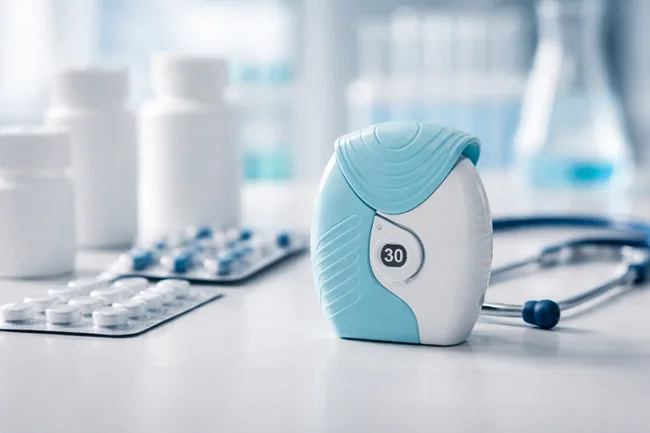
GSK leverages CAPTAIN trial data to validate triple therapy as a clinically meaningful escalation step
The NMPA approval rests on data from GSK’s CAPTAIN study, a global multicenter randomized trial designed to evaluate the efficacy and safety of Trelegy Ellipta in patients with inadequately controlled asthma. The study enrolled more than 2,400 patients across 15 countries and assessed various dosing regimens of the triple therapy in comparison to fluticasone furoate and vilanterol dual therapy. The results demonstrated statistically significant and clinically relevant improvements in lung function as measured by forced expiratory volume in one second (FEV1). Patients treated with Trelegy Ellipta 100/62.5/25 micrograms experienced a 110ml mean improvement in FEV1 over dual therapy with fluticasone furoate and vilanterol at 100/25 micrograms. Similarly, the 200/62.5/25 micrograms dose produced a 92ml improvement over the corresponding dual therapy comparator.
These findings support the clinical rationale for introducing a third bronchodilator mechanism of action via umeclidinium, a long-acting muscarinic antagonist, to augment the anti-inflammatory and bronchodilatory effects of the inhaled corticosteroid and long-acting beta agonist components. Importantly, the patient population studied reflects real-world scenarios where individuals fail to achieve control despite adherence to medium or high doses of inhaled corticosteroids and LABAs, reinforcing the relevance of these results to clinical practice.
The regulatory timing signals a shift in China’s asthma management priorities
China’s NMPA has historically taken a cautious approach to approving combination respiratory therapies, particularly triple inhaler formulations for asthma. However, this approval indicates a regulatory pivot toward aligning more closely with international treatment paradigms. Global asthma guidelines have increasingly endorsed triple therapy options for patients with moderate to severe disease who continue to experience symptoms or exacerbations despite dual maintenance therapy. GSK’s success in securing this expanded label underscores both the growing acceptance of this model in China and the company’s ability to navigate the evolving regulatory landscape.
Industry observers note that the inclusion of Trelegy Ellipta as a triple therapy option for asthma in China could influence upcoming revisions to national clinical guidelines. It may also pave the way for broader regulatory and reimbursement discussions regarding other fixed-dose combination therapies in the respiratory space. GSK’s existing commercialization of the Ellipta platform for COPD since 2019 may ease physician familiarity and device adoption, reducing switching friction for prescribers and patients.
Clinical adoption will depend on payer policy and device preferences in respiratory care
Although Trelegy Ellipta’s approval offers a differentiated solution for difficult-to-control asthma, its uptake will depend heavily on reimbursement dynamics and regional formulary inclusion. China’s centralized volume-based procurement model has introduced cost containment pressures that could affect access and prescribing behavior. Without inclusion in the national reimbursement drug list, many patients may face out-of-pocket costs that limit widespread adoption. Reimbursement clarity will therefore be a critical next step in determining how accessible the therapy becomes beyond top-tier hospitals.
Another key variable will be clinician and patient preference for inhaler devices. Trelegy Ellipta is administered via a dry powder inhaler, which is well-suited for patients with sufficient inspiratory flow but may be less appropriate for older adults or those with comorbidities that impair coordination or lung function. Metered-dose inhalers remain dominant in many Chinese settings, especially in rural clinics. GSK will need to address these practical considerations in its post-marketing strategy to drive broad adoption.
GSK expands its platform-based respiratory strategy beyond biologics and injectables
The approval of Trelegy Ellipta for asthma reinforces GSK’s commitment to maintaining leadership in inhaled respiratory therapies. While the company has invested heavily in biologics for eosinophilic and refractory asthma, including mepolizumab, Trelegy Ellipta allows GSK to serve a wider spectrum of patients who are not yet eligible for or responsive to targeted therapies. Industry analysts note that the triple inhaler’s positioning in step 4 and step 5 of treatment guidelines offers physicians a flexible, device-based escalation tool before progressing to biologics.
This dual-track strategy enhances GSK’s ability to meet both clinical and economic goals. Inhaler-based therapies can be deployed more broadly across China’s tiered healthcare system without requiring the infrastructure needed for cold chain storage or biologic administration. Trelegy Ellipta also supports adherence through its once-daily, single-inhalation design, which simplifies patient routines and reduces the burden of multiple inhalers—a known issue in long-term respiratory disease management.
Dose strength flexibility may support personalized treatment plans across disease severity
GSK has received NMPA approval for two strength variants of Trelegy Ellipta. The 100/62.5/25 micrograms formulation is indicated for both asthma and COPD, while the 200/62.5/25 micrograms dose is reserved for asthma alone. This dual-strength strategy supports physician flexibility in tailoring treatment to disease severity and patient response. It aligns with stepwise management recommendations in the Global Initiative for Asthma (GINA) guidelines and allows for escalation within a single platform rather than requiring a switch in therapy class or device type.
From a market perspective, this also enables GSK to defend its market share across both moderate and severe disease categories, consolidating prescriber loyalty within the Ellipta portfolio. By offering a consistent delivery mechanism and pharmacologic profile across dosing tiers, GSK reduces operational complexity for providers and may improve long-term persistence rates among patients.
Market exclusivity is temporary, and competition from domestic firms could arrive swiftly
Despite first-mover advantage, GSK is unlikely to remain the only player in China’s single inhaler triple therapy segment for long. Domestic pharmaceutical companies are actively pursuing ICS/LABA/LAMA combinations, often with aggressive development timelines and local manufacturing capabilities. Although no competing triple therapies are currently approved in China, industry analysts expect that fast-follow programs will target market entry within the next two to three years.
In addition, price pressure from China’s tendering and procurement system may erode GSK’s pricing flexibility. The success of Trelegy Ellipta in the asthma segment will therefore hinge not only on its clinical value proposition but also on its ability to achieve favorable cost-effectiveness outcomes and withstand competition from generic and biosimilar challengers. GSK’s ongoing investment in respiratory medicine and its deep portfolio breadth may offer insulation, but commercial success in China is rarely guaranteed.
Clinical utility and economic viability will determine Trelegy Ellipta’s long-term role in China
In the short term, Trelegy Ellipta represents a major advancement in asthma care for Chinese adults with uncontrolled symptoms. Its proven efficacy, convenient once-daily dosing, and regulatory approval for dual indications make it an attractive option for clinicians seeking to simplify and intensify treatment regimens. However, the long-term durability of its impact will depend on policy decisions, local implementation practices, and the pace of domestic competition.
Clinicians will be monitoring post-marketing outcomes closely, particularly in terms of exacerbation reduction, adherence rates, and patient satisfaction. Payers will scrutinize cost-benefit data, especially in light of the therapy’s relatively high upfront cost compared to legacy dual therapies. As the respiratory treatment landscape in China continues to evolve, Trelegy Ellipta will serve as a test case for how global pharma companies can introduce advanced therapies into a complex and rapidly maturing healthcare environment.