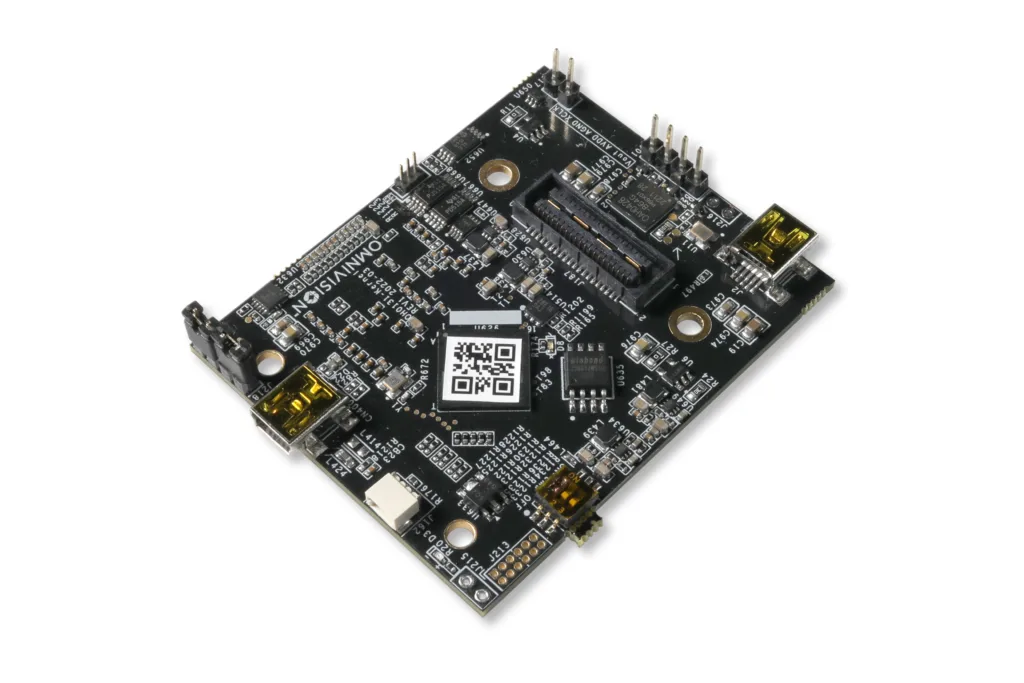
ATL Medical, Inc. has integrated OMNIVISION’s OVMed OH0131 image signal processor into its PREVOYANCE Complete Imaging System with Chip-on-Tip technology for arthroscope camera units, in an updated release that also corrected an earlier certification reference from ISO 13585 to ISO 13485. The announcement positions the PREVOYANCE platform as a turnkey visualization assembly aimed at original equipment manufacturers seeking faster commercialization, lower design complexity, and improved image performance in medical imaging workflows.
Why this integration matters more as a platform move than a component upgrade
The important point is not simply that one component supplier has been added to a camera system. The more meaningful development is that ATL Medical is trying to make PREVOYANCE more attractive as a near-complete commercial building block for medical-device manufacturers that do not want to spend years assembling and validating every part of an arthroscopy imaging stack from scratch. In practical terms, that means packaging image sensing, processing, display, optics, illumination, interconnects, distal-end fabrication, and ergonomic design into an integrated subsystem that can either be used as a standalone platform or inserted into an existing customer architecture. That kind of modularity matters in a device market where product cycles are tightening, regulatory expectations remain high, and OEMs increasingly want to outsource non-core engineering work without sacrificing performance.
What is genuinely new here versus what appears to be a packaging and positioning improvement
OMNIVISION’s OVMed OH0131 itself is not a brand-new processor. The release states that it was originally launched in 2023, which makes this development incremental at the silicon level rather than a breakthrough product debut. What is new is the commercial packaging around it. ATL Medical appears to be using an already-certified and medically oriented image processing component to strengthen the value proposition of PREVOYANCE as a white-label imaging system. That distinction matters because the medical device industry often advances not through dramatic one-off hardware leaps, but through integration moves that reduce validation burden, compress design timelines, and lower program risk for original equipment manufacturer customers.
How image processing performance could affect arthroscopy workflow quality and surgeon usability
From a clinical workflow standpoint, image processing quality in arthroscopy is not a cosmetic issue. Minimally invasive procedures depend heavily on visualization clarity, especially when clinicians are working in confined anatomical spaces with fluid, blood, reflections, smoke, variable illumination, and rapid instrument movement. The release says the OVMed OH0131 is designed to improve brightness, contrast, saturation, hue, sharpness, and noise reduction while maintaining stable performance across changing lighting conditions. For device buyers and design teams, that signals an attempt to improve consistency in visualization rather than simply maximize resolution. In medical imaging, better-looking pictures do not automatically translate into better procedural utility. What matters is whether the system can preserve anatomical detail, reduce visual artifacts, and support reliable hand-eye coordination during live procedures.
That is where medical-grade image processing can differentiate itself from more generic vision hardware. Consumer imaging chips are often optimized for photography or general-purpose video performance, but procedural medicine requires different trade-offs. Low latency, predictable color fidelity, robustness under glare, and stable image rendering during motion can matter more than raw pixel counts. Industry observers tracking endoscopy and arthroscopy know that surgeons do not evaluate imaging systems only on brochure specifications. They care about whether the system performs consistently in challenging procedural environments and whether it integrates smoothly into a workflow that includes capture, display, storage, sterilization constraints, and ergonomic handling.
Why ATL Medical may be using PREVOYANCE to deepen its role as an OEM development partner
The strategic relevance for ATL Medical lies in how this strengthens its position as an outsourced design and manufacturing partner. The Utah-based medical device manufacturer is not merely selling a camera control unit or a sensor interface. It is presenting itself as a vertically integrated partner capable of helping larger OEMs shorten the path from concept to commercial product. That pitch is particularly relevant for mid-sized device companies, specialty OEMs, and newer market entrants that want to launch branded visualization products without carrying the full burden of imaging electronics development in-house. In that sense, PREVOYANCE looks less like a single device and more like an enabling commercialization platform.
Why the ISO 13485 correction still matters in a tightly scrutinized device market
There is also a regulatory and quality implication embedded in the corrected release. The certification correction from ISO 13585 to ISO 13485 is not trivial, even if it appears clerical. ISO 13485 is one of the central quality management standards for medical device manufacturing and design controls. In a market where compliance language can influence procurement confidence, even small wording errors in certification references are worth fixing quickly. Regulatory watchers often view these details as signals of how carefully a supplier manages quality documentation and market communications. The correction does not necessarily indicate a deeper compliance issue, but it does underline how closely medical technology claims are scrutinized once products are positioned for original equipment manufacturer adoption.
Which evidence gaps could still limit commercial credibility for this imaging platform
Even so, there are clear unanswered questions. The announcement does not disclose clinical validation data, comparative imaging benchmarks, customer wins, or procedural outcome evidence. That means the market still lacks proof on whether this integration materially improves surgeon experience or purchasing decisions versus other arthroscopy imaging stacks. Many device announcements highlight image quality enhancements, but commercial traction usually depends on a broader mix of factors including compatibility with existing hospital infrastructure, serviceability, cost, procurement preferences, and the ability to support multiple specialties beyond a narrow use case.
How competitive pressure from established visualization ecosystems could shape adoption
The competitive landscape also deserves attention. Arthroscopy and endoscopy imaging are already crowded with established visualization ecosystems from larger medical technology players that combine scopes, processors, displays, data management, and service networks into bundled offerings. ATL Medical’s opportunity may therefore be strongest in white-label or partner-driven segments where flexibility, speed, and customization matter more than brand dominance. That could make PREVOYANCE attractive for original equipment manufacturers looking to enter the market without building a full imaging architecture from the ground up. But it also means ATL Medical must prove that a modular outsourced system can match the reliability, support, and upgrade path offered by incumbent integrated platforms.
What scalability and lifecycle support questions industry watchers are likely to raise next
Scalability is another issue to watch. It is one thing to demonstrate that a kernel board from OMNIVISION can feed processed images to a host developed by ATL Medical through a MIPI interface and then out to a display. It is another to industrialize that architecture across varying customer requirements, different procedural specialties, and long product lifecycles. Manufacturing consistency, supply assurance, component longevity, software maintenance, and validation support all become more important as original equipment manufacturer customers move from pilot programs to broader commercialization. In medical devices, adoption often fails not because the core technology is weak, but because lifecycle support and integration economics become harder than expected.
Why this partnership reflects a broader shift toward engineering simplification in MedTech
The commercial logic, however, is understandable. Device companies across healthcare are under pressure to move faster while maintaining compliance and performance. That pressure favors component suppliers and subsystem manufacturers that can remove engineering friction. If PREVOYANCE can genuinely reduce development time while delivering acceptable image quality and regulatory readiness, ATL Medical may gain leverage as a behind-the-scenes enabler in a market that increasingly values speed-to-market discipline. OMNIVISION, for its part, benefits by embedding its medically oriented processor deeper into a deployable system rather than remaining a component choice in isolation.
What clinicians, regulators, and OEM buyers are likely to watch before judging success
What clinicians and industry observers are likely to watch next is not the processor specification sheet, but evidence of adoption. The most useful follow-up signals would include named original equipment manufacturer customers, specialty expansion beyond arthroscopy, performance comparisons under difficult visualization conditions, and clearer information on validation pathways. Regulatory watchers may also look for how ATL Medical and OMNIVISION frame quality systems and intended use as the platform gains visibility. Without that next layer of proof, the announcement remains strategically interesting but commercially incomplete.
Taken together, this integration looks less like a disruptive leap and more like a smart industrial move in medical imaging. ATL Medical is attempting to turn subsystem integration into a selling point, while OMNIVISION is extending the relevance of an existing medical image signal processor through a platform partnership. In a market where many original equipment manufacturers want to move quickly without reinventing the visualization stack, that may be exactly the kind of incremental advance that ends up mattering more than flashy hardware launches. The real test now is whether the combined offering can translate engineering convenience into durable demand.