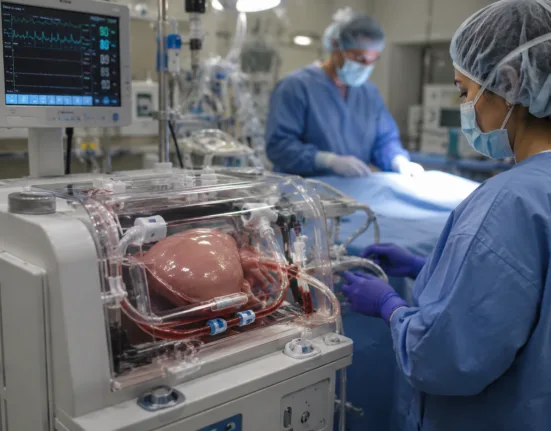
OneLegacy has launched an in-house ex vivo lung perfusion program at its Azusa Recovery and Transplant Center through a partnership with XVIVO Perfusion AB and Perfusion Solution. The program uses the XVIVO Perfusion System with STEEN Solution to assess and preserve donated lungs outside the body, establishing what the partners describe as the first organ procurement organization-based EVLP center of its kind in the Western United States.
The development places an advanced donor lung assessment capability inside the organ recovery network rather than limiting access to individual transplant hospitals. Perfusion Solution will provide specialist staffing, clinical services and equipment support, while XVIVO Perfusion AB, listed on Nasdaq Stockholm under the ticker XVIVO, supplies the EVLP technology and associated consumables.
OneLegacy expects the regional program to make EVLP available to more than 70 transplant centers across the Western United States. The strategic importance therefore extends beyond installing another perfusion machine. The center is designed as shared infrastructure that can receive donor lungs, perform controlled functional assessment and provide transplant teams with additional information before they decide whether to accept an organ.
The model may be particularly relevant for lungs that do not satisfy conventional acceptance criteria during the initial donor evaluation. EVLP cannot turn every declined lung into a transplantable organ, but it creates a controlled window in which specialist teams can ventilate, perfuse and examine the organ under near-physiological conditions instead of relying solely on static information collected during retrieval.
How does an OPO-centered EVLP hub change the lung transplant workflow across the Western United States?
Ex vivo lung perfusion has traditionally been concentrated at large transplant institutions with the funding, clinical expertise, procedural volume and infrastructure required to operate a sophisticated perfusion program. That arrangement can restrict access because smaller programs may not perform enough cases to justify acquiring equipment, maintaining trained teams and supporting an around-the-clock service.
Locating the capability at OneLegacy changes the point at which EVLP enters the transplant pathway. The organ procurement organization already coordinates donor evaluation, recovery, allocation and transport across a broad hospital network. Adding perfusion at that stage may allow potentially usable lungs to be routed through a central assessment center before reaching the recipient hospital.
For participating transplant centers, the hub model could reduce the operational burden associated with building separate EVLP programs. A hospital would still retain responsibility for accepting the organ and managing the recipient, but the specialist assessment process could be performed through shared regional infrastructure.
That distinction is commercially and clinically important. The central challenge in scaling EVLP is not simply selling more machines. Perfusion requires trained personnel, standardized protocols, disposable circuits, perfusate, ventilation support, quality systems, clinical oversight and logistics that can operate within time-sensitive transplant workflows. The combination of OneLegacy’s recovery infrastructure, Perfusion Solution’s staffing and XVIVO Perfusion AB’s platform is intended to address those dependencies together.
Centralization also creates concentration risk. The hub must be available when donor organs become available, including nights, weekends and holidays. Equipment downtime, staffing shortages, transport delays or communication failures could affect several transplant programs rather than a single hospital. The practical value of the center will therefore depend on reliability, turnaround time and the ability to handle overlapping cases.
Why could assessing donor lungs before hospital delivery increase utilization without guaranteeing more transplants?
Donor lungs are vulnerable to injury before recovery and transplantation. Infection concerns, aspiration, pulmonary oedema, ventilation-related damage, uncertain oxygenation and abnormalities seen during imaging or bronchoscopy can lead transplant teams to decline an organ when its functional potential remains unclear.
The XVIVO Perfusion System circulates STEEN Solution through the donor lungs while they are ventilated and warmed. Clinicians can observe physiological performance, monitor pressures and evaluate whether gas exchange and other functional measures support transplantation. The technology provides a period of active assessment rather than leaving teams dependent only on pre-recovery tests and visual inspection.
This process can identify lungs that perform better than initially expected, potentially converting an uncertain offer into an accepted organ. It may also confirm that a lung remains unsuitable, preventing a recipient from being exposed to an organ with unacceptable risk. EVLP therefore has value in both directions: expanding the usable donor pool when evidence supports transplantation and strengthening rejection decisions when function remains inadequate.
The OneLegacy program may improve access to this evaluation for Western transplant centers that previously faced geographical or operational barriers. Additional assessment time can also create more flexibility for surgical coordination, recipient preparation and transport planning, although EVLP does not remove the time sensitivity of lung transplantation.
The number of additional transplants generated by the center cannot be predicted from the launch announcement. Utilization will depend on how frequently potentially eligible lungs are referred, the clinical criteria used to select organs for perfusion, the proportion that subsequently meets transplant standards and the willingness of recipient centers to accept EVLP-assessed lungs.
Clinical teams will also look beyond the number of lungs placed on the system. They will monitor recipient survival, primary graft dysfunction, intensive care requirements, ventilation time, hospital stay and longer-term graft performance. A rising perfusion volume would demonstrate adoption, but sustained confidence will depend on outcomes remaining comparable with appropriately selected conventionally preserved donor lungs.
What makes the XVIVO Perfusion System commercially important within a centralized regional service model?
The XVIVO Perfusion System with STEEN Solution holds United States premarket approval for flushing and temporary continuous normothermic machine perfusion of initially unacceptable donor lungs while their function is reassessed. The regulatory status gives the OneLegacy program an established device pathway rather than positioning the center as an experimental service.
For XVIVO Perfusion AB, the commercial significance lies in the combination of installed equipment and recurring procedure-related demand. EVLP requires disposable components and perfusion solution for each case, meaning a productive center can generate continuing revenue after the initial platform installation. A regional hub serving multiple transplant hospitals may achieve higher utilization than a machine placed at a lower-volume individual center.
The Swedish medical technology company entered 2026 with encouraging momentum in its thoracic business. First-quarter thoracic revenue reached approximately SEK 159.7 million, while sales grew strongly in local currencies. EVLP disposable sales increased by 56 percent during the quarter, demonstrating how rising procedure volumes can translate into recurring product demand.
XVIVO Perfusion AB has also identified organ procurement organization partnerships and hub-based perfusion as an important component of its United States growth strategy. The OneLegacy center broadens that approach into the Western market and places the technology inside one of the country’s largest organ recovery networks by population served.
The immediate financial impact remains uncertain because the partners did not disclose the contract value, expected procedure volume, equipment economics or revenue-sharing structure. It is therefore premature to treat the agreement as a material near-term earnings catalyst. Its larger value may be as a commercial proof point for a model that can potentially be replicated with other organ procurement organizations.

Successful execution could strengthen demand for XVIVO equipment, STEEN Solution, disposable lung kits, training and technical support. It could also reinforce the company’s position as competition increases around organ preservation, perfusion services and transplant logistics.
Which operational and clinical risks will determine whether the OneLegacy EVLP center can scale?
The first major test will be case flow. A regional center needs sufficient eligible donor lungs to maintain staff proficiency and produce economically sustainable utilization. Too few cases would weaken the shared-infrastructure argument, while rapid volume growth could place pressure on staffing, equipment capacity and scheduling.
Referral behaviour represents another variable. Transplant centers must be willing to send uncertain lungs to the OneLegacy hub rather than declining them outright or using another evaluation pathway. Clear eligibility criteria, rapid communication and predictable turnaround times will be needed to ensure that EVLP does not introduce avoidable complexity into an already demanding allocation process.
Transportation must also be tightly coordinated. Donor lungs may need to move from the recovery hospital to Azusa and then to the recipient center. The program will need protocols covering packaging, preservation, documentation, acceptance decisions and contingency planning. Any time gained through perfusion could be lost if handoffs between recovery, assessment and transplantation are inefficient.
Workforce availability may prove equally important. EVLP is not a routine plug-and-play procedure. Perfusion specialists must manage the circuit, monitor the organ and respond to technical or physiological changes. Perfusion Solution’s involvement reduces the need for OneLegacy to assemble the entire specialist workforce independently, but service continuity will depend on recruitment, training, credentialing and round-the-clock coverage.
Economic alignment remains another unresolved issue. The cost of the technology, clinical service, transportation and disposables must be balanced against the value of increasing transplant opportunities. Hospitals, organ procurement organizations and payers may evaluate those costs differently. Broader adoption will be easier when responsibilities for payment are clear and when centers can connect expenditure with measurable increases in successful transplantation.
Standardization will also matter as the network expands. A central hub serving dozens of transplant programs may encounter differences in acceptance thresholds and clinical preferences. One center may accept an EVLP-assessed lung that another considers too risky. The program will need to provide consistent, transparent physiological information while respecting that the final decision remains with the transplant team.
How should investors interpret the partnership ahead of XVIVO Perfusion AB’s next earnings report?
XVIVO Perfusion AB shares closed at SEK 281.20 on July 10, down 0.92 percent for the session but approximately 7.6 percent higher over five trading days and about 4.1 percent higher over one month. The shares were trading within a 52-week range of SEK 160 to SEK 310.40, placing the company relatively close to the upper end of that range.
Investor sentiment appears constructive, supported by first-quarter organic growth, improving profitability and expanding machine perfusion activity. The company reported first-quarter net sales of SEK 241 million, organic growth of 23 percent in local currencies and an EBITDA margin of 21 percent. The strong increase in EVLP disposable sales is especially relevant to the OneLegacy partnership because it illustrates the recurring-revenue potential of higher procedure volumes.
The valuation also reflects demanding expectations. With the shares trading at a high earnings multiple, investors are likely to expect continued growth, successful product adoption and disciplined execution across the thoracic, abdominal and services businesses. A promising partnership may support the long-term investment case, but it will not by itself justify the valuation unless it produces measurable activity.
XVIVO Perfusion AB is scheduled to report second-quarter results on July 14. Investors will likely focus on thoracic procedure trends, EVLP consumable sales, progress with the OPO hub strategy, service economics and whether first-quarter growth continued. Any additional disclosure about the number of active hubs or expected case volumes would help the market assess how quickly the model can become commercially meaningful.
The OneLegacy announcement is best viewed as a strategic expansion signal rather than a standalone financial event. It strengthens XVIVO Perfusion AB’s Western United States presence and places its lung platform within a large donor recovery ecosystem, but revenue visibility remains limited until procedure volumes and contract economics become clearer.
What will show whether the OneLegacy EVLP center is delivering more than technological promise?
The most informative indicators will emerge after the center begins processing a meaningful number of donor lungs. Transplant stakeholders will want to know how many organs enter EVLP, how many are subsequently accepted, how far they travel, which transplant centers use the service and whether recipient outcomes remain consistent.
Operational measures will be equally revealing. Reliable staffing, rapid activation, low cancellation rates and smooth coordination with recipient hospitals will determine whether the program becomes dependable regional infrastructure. A sophisticated device cannot compensate for weak logistics, and a well-designed logistics network cannot overcome inconsistent clinical performance.
For OneLegacy, success would mean that more donor gifts result in transplantation without compromising recipient safety. For Perfusion Solution, it would validate specialist perfusion staffing as a scalable service within organ procurement networks. For XVIVO Perfusion AB, it would strengthen the argument that OPO-centered hubs can increase utilization of its installed technology and recurring consumables.
The launch therefore represents a meaningful shift in how EVLP access may be organized across the Western United States. Its impact will not be determined by the opening of the center alone, but by whether centralized assessment can consistently help transplant teams make faster, better-supported decisions about lungs that might otherwise be declined.