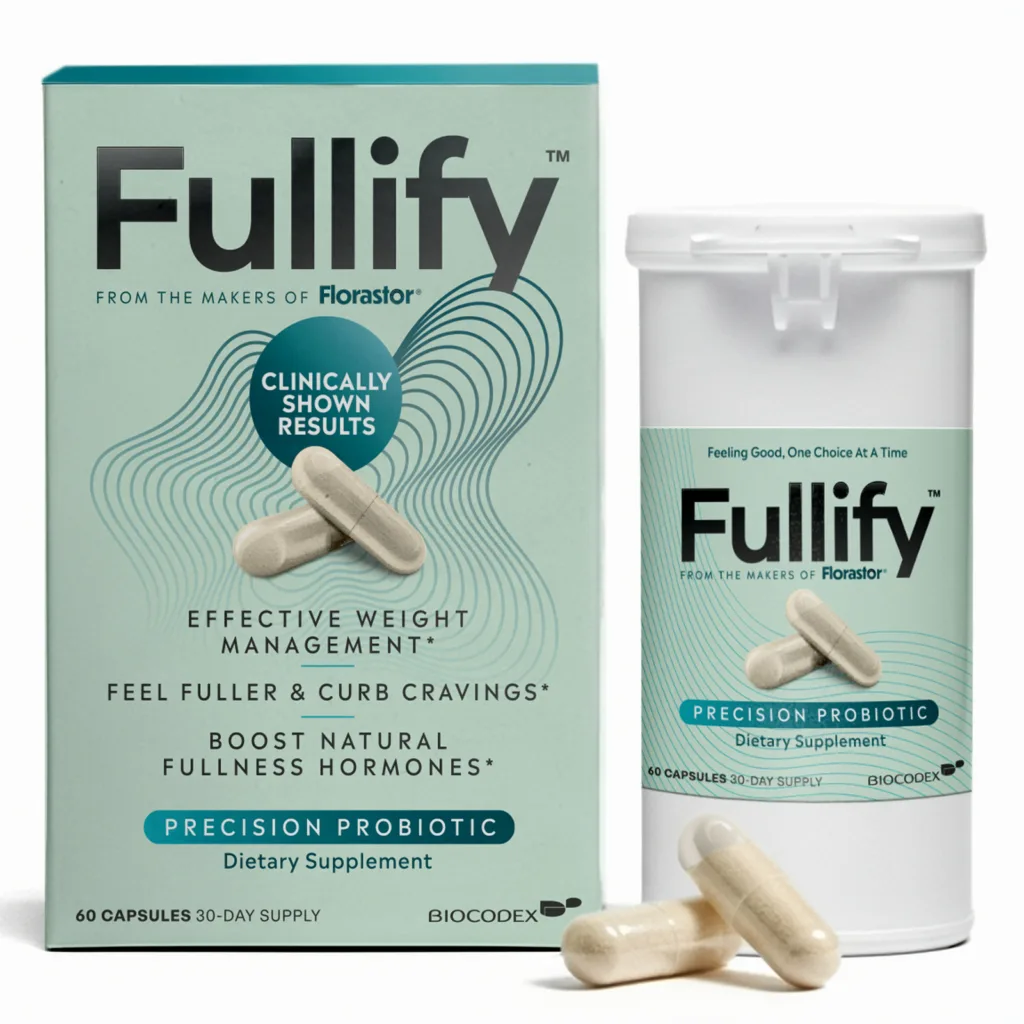
Biocodex has introduced Fullify, a precision probiotic dietary supplement formulated to support appetite management by activating the gut-brain axis. Powered by the proprietary Hafnia alvei HA4597 strain and developed over a decade of research, Fullify has now launched in the United States following prior availability in Europe.
Unlike typical over-the-counter weight-loss aids, Fullify does not rely on stimulants or chemical suppressants. Instead, the supplement leverages microbiome science to stimulate satiety-related peptides such as GLP-1 and PYY via production of the ClpB protein, a biological signal produced by the introduced strain. The launch represents a shift in the consumer nutrition space toward mechanistically validated interventions, and places Biocodex in direct contrast to appetite suppressant trends rooted in caffeine or fiber bulking agents.
What this reveals about the growing convergence of microbiome science and consumer health products
Fullify enters a market saturated with products offering quick-fix promises but little mechanistic backing. What makes this launch notable is not just the underlying probiotic formulation, but the research approach Biocodex has pursued. Hafnia alvei HA4597 was evaluated in a large randomized controlled trial—a rarity in the supplement sector, where observational or underpowered studies are the norm. According to published results from Dechelotte et al., subjects who took the strain alongside a calorie-restricted diet experienced statistically significant weight loss and reduced hip circumference compared to placebo.
Industry observers have noted that this model of strain-specific, outcome-driven development mirrors strategies typically used in prescription probiotics or emerging live biotherapeutic products (LBPs). While Fullify is marketed as a dietary supplement, its research lineage and physiological target—GLP-1 signaling—places it closer to pharmaceutical territory in terms of development rigor.
This is particularly relevant at a time when GLP-1-based therapies like semaglutide and tirzepatide are dominating obesity management headlines. Fullify’s mechanism is orthogonal, activating the same satiety signals via endogenous peptide release, but without requiring injectable delivery or prescription status. This creates a bridge between over-the-counter nutrition and prescription metabolic therapeutics.
Why this launch could reshape expectations for clinical validation in the supplement industry
One of the most disruptive elements of Fullify’s debut lies in its clinical methodology. A 12-week, placebo-controlled study involving over 300 overweight adults is a level of evidence uncommon in the supplement aisle. While outcomes like 4 percent body weight reduction may appear modest compared to GLP-1 receptor agonists, they become contextually significant when achieved without pharmaceutical compounds.
Clinicians tracking the category suggest that this kind of mid-level efficacy, paired with safety and accessibility, could make Fullify attractive to a wider population segment—including those not eligible for or willing to use prescription weight-loss drugs. From a public health perspective, the accessibility of such interventions could reduce dependency on pharmaceutical options as first-line choices, especially when used adjunctively with lifestyle changes.
However, caution remains warranted. Despite the controlled trial, dietary adherence and lifestyle factors remain hard to isolate in real-world use. Critics may argue that the effect size, while statistically significant, is not transformative in isolation. That said, the more critical narrative may be whether the launch establishes a new bar for evidence in the $50+ billion global supplement market.
How the probiotic’s gut-brain axis mechanism reframes satiety and behavioral eating
The active ingredient in Fullify, Hafnia alvei HA4597, triggers the production of ClpB, which has been shown in preclinical models to act as a mimic of alpha-MSH, a neuropeptide involved in appetite regulation. This activation leads to increased GLP-1 and PYY secretion, two key hormones involved in signaling satiety to the brain.
Rather than inducing aversive reactions like nausea or altering nutrient absorption—common in both stimulant-based and prescription interventions—Fullify’s approach is centered on augmenting endogenous fullness signals. Users in the referenced studies reported feeling full sooner, experiencing fewer cravings, and displaying improved appetite awareness.
For clinicians and nutrition researchers, this represents a shift from willpower-based behavior models to neuroendocrine modulation. It also aligns with emerging thinking in obesity science that places greater emphasis on biological determinism and hormonal feedback loops, rather than framing overeating strictly as a behavioral issue.
What risks remain regarding durability, generalizability, and consumer expectations
The appeal of a “biologically natural” appetite modulator is undeniable, but there are still several risk factors in Fullify’s trajectory. First, while short-term data is promising, long-term adherence and sustainability of benefits remain unproven. The trial lasted 12 weeks, and the manufacturer suggests ongoing use beyond this window, but without peer-reviewed longitudinal data, durability remains speculative.
Second, the mechanistic findings around ClpB and GLP-1 upregulation, though compelling, are still developing fields. It remains unclear how strain-specific these effects are, or how strongly they manifest across different microbiome baselines. Variables such as antibiotic use, diet, and genetics may impact efficacy, but these are not yet well understood in the context of HA4597 deployment.
Finally, the marketing challenge lies in managing consumer expectations. While Fullify positions itself as a science-backed tool, it enters a space often saturated with hype and unrealistic promises. Biocodex’s credibility as a company rooted in medical microbiome products like Florastor may help, but if consumer perception leans toward “natural Ozempic,” regulatory scrutiny and disappointment risk will rise.
What this could mean for regulatory posture and the supplement–drug boundary
Fullify occupies an increasingly blurred space between dietary supplements and low-risk, physiologically active interventions. Its launch may reignite debate among regulators about the adequacy of current frameworks for classifying biologically active products that are not strictly drugs but have measurable effects on clinically relevant endpoints.
Regulatory watchers suggest that as consumer-facing microbiome products begin demonstrating hormone-modulating properties, they may fall under renewed scrutiny from agencies like the U.S. Food and Drug Administration. Although Fullify currently operates under the DSHEA (Dietary Supplement Health and Education Act) framework, the GLP-1 and PYY mechanism, if replicated and elaborated in larger trials, could invite reclassification or novel designations such as medical food or LBP-lite categorization.
If Biocodex continues to invest in formal publication, multicenter trials, and biomarker endpoints, Fullify may also become a test case for how far the supplement category can stretch toward regulated, physiology-targeting products without crossing over into prescription territory.