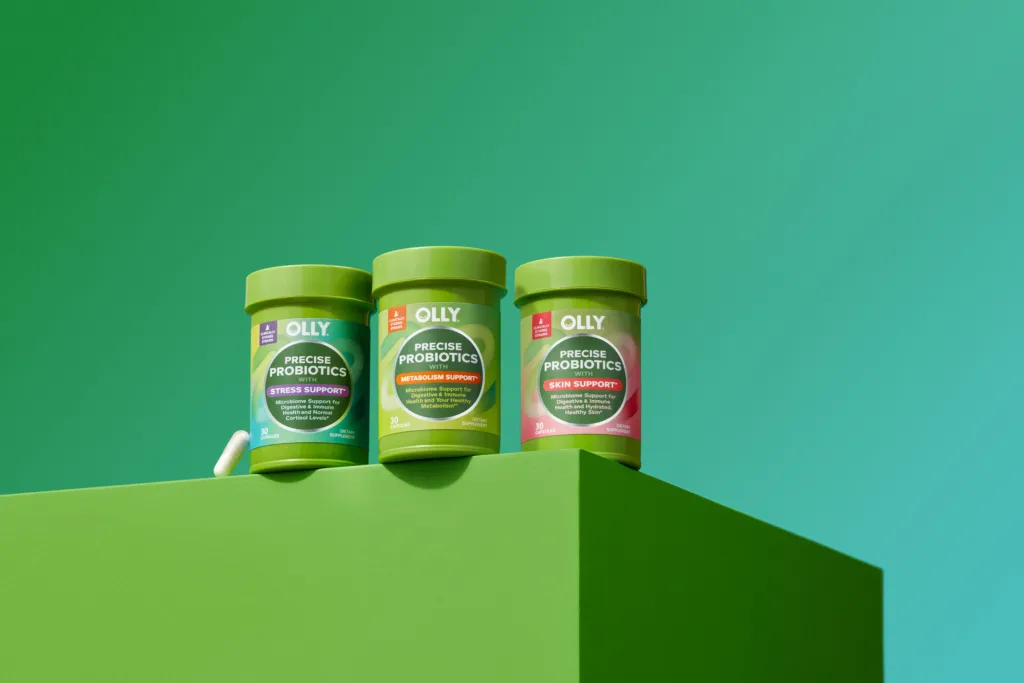
OLLY has introduced its new Precise Probiotics line, a targeted, clinically informed supplement range designed to support stress, metabolism, and skin health through microbiome modulation, with an exclusive retail launch through Walmart.
The move signals a broader shift in the gut health category, where generic probiotic blends are increasingly giving way to condition-specific, science-backed formulations aimed at measurable outcomes rather than general digestive support. For OLLY, a brand already positioned at the intersection of wellness accessibility and consumer-friendly formulation, this launch represents a calculated expansion into a more sophisticated, evidence-driven segment of the supplements market.
Why precision probiotics could redefine the next phase of consumer gut health demand
The introduction of targeted probiotic strains for stress, metabolism, and skin reflects a growing consumer awareness that the gut microbiome influences far more than digestion. Scientific research over the past decade has increasingly linked gut health to systemic functions such as hormonal balance, immune modulation, and even neurological signaling through the gut-brain axis. OLLY’s positioning appears to align directly with this shift, moving away from broad-spectrum probiotics toward formulations that claim specific physiological outcomes.
This transition matters because it elevates the category from a commoditized supplement segment into a quasi-functional health solution space. Consumers are no longer just looking for “gut health support” but are instead seeking outcomes such as improved cortisol regulation, weight management support, or skin hydration benefits. However, this also introduces a new layer of scrutiny. As products become more targeted, expectations around clinical validation, reproducibility, and transparency in strain efficacy increase significantly.
The risk lies in whether consumer-grade probiotic formulations can consistently deliver these targeted benefits outside controlled clinical settings. While OLLY emphasizes clinically studied strains, the variability of individual microbiomes and lifestyle factors could limit real-world effectiveness, creating a gap between marketed benefits and user experience.
How clinically studied strains are becoming the new competitive battleground
OLLY’s use of specific strains such as Bifidobacterium longum 1714 and Bifidobacterium lactis B420 highlights an important trend within the probiotic industry. Differentiation is no longer based solely on colony-forming unit counts or ingredient lists but increasingly on strain-level clinical evidence.
This approach aligns with a broader industry pivot toward precision nutrition, where the efficacy of individual strains is supported by targeted studies rather than generalized assumptions about probiotic benefits. In theory, this strengthens credibility and aligns the product with evolving regulatory expectations around functional claims.
However, the competitive landscape is intensifying. Established players and emerging biotech-backed supplement companies are also investing heavily in strain-specific research, often leveraging proprietary or patented strains to create defensible product differentiation. OLLY’s challenge will be maintaining credibility in a space where scientific nuance can be difficult to communicate effectively to mass-market consumers.
At the same time, regulatory ambiguity remains a key constraint. In many markets, probiotics are still regulated as dietary supplements rather than therapeutic products, which limits the extent to which clinical claims can be formally validated or enforced. This creates both an opportunity for rapid innovation and a risk of consumer skepticism if claims outpace demonstrable outcomes.
What the Walmart exclusivity strategy reveals about retail and distribution dynamics
The decision to launch Precise Probiotics exclusively through Walmart is strategically significant. It reflects the growing role of large-format retailers in shaping the wellness category, particularly in making premium or science-backed products accessible to a broader consumer base.
Walmart’s expanding focus on wellness merchandising suggests a deliberate attempt to position itself as a trusted destination for health-related products, moving beyond price-driven retail toward credibility-driven assortment curation. For OLLY, this partnership offers immediate scale and visibility, particularly among mainstream consumers who may not typically shop at specialty health retailers.
However, exclusivity also introduces constraints. Limiting distribution to a single major retailer can restrict brand reach in the short term and potentially create dependency on that channel for performance metrics. Additionally, as Walmart continues to build its own private-label wellness offerings, there is an underlying competitive tension that could emerge over time.
From a market perspective, this move underscores a broader consolidation of influence within the retail ecosystem, where a handful of large players increasingly dictate product visibility, pricing dynamics, and consumer access.
How the gut-brain-skin-metabolism axis is reshaping product innovation pipelines
The three formulations within the Precise Probiotics line reflect a deliberate focus on interconnected biological systems rather than isolated health outcomes. The stress support variant targets cortisol balance through the gut-brain axis, the metabolism support formulation addresses weight management through microbiome interactions, and the skin support product leverages the gut-skin connection to influence hydration and pH balance.
This integrated approach is becoming a defining feature of next-generation wellness products. Rather than addressing symptoms in isolation, brands are increasingly framing health through systemic interactions, positioning the microbiome as a central control hub.
The opportunity here is substantial. By linking gut health to widely recognized concerns such as stress, weight, and skin quality, companies can tap into multiple high-growth wellness categories simultaneously. However, the complexity of these interactions also introduces scientific uncertainty. While correlations between the microbiome and these systems are well documented, causation and consistent intervention outcomes remain areas of ongoing research.
This creates a scenario where innovation is advancing faster than definitive scientific consensus, requiring brands to carefully balance ambition with credibility.
What this launch signals about the future of personalized wellness at scale
OLLY’s messaging around “personalized” gut health solutions reflects a broader industry ambition to bring individualized wellness into the mainstream. While true personalization typically requires diagnostic inputs such as microbiome testing, most consumer products currently rely on segmentation rather than full customization.
The Precise Probiotics line represents a step toward scalable personalization, offering targeted options without requiring individualized data. This approach lowers the barrier to entry for consumers while still providing a sense of tailored health support.
However, the long-term trajectory of the market is likely to move toward deeper personalization, potentially integrating digital health tools, at-home testing kits, and AI-driven recommendations. In that context, OLLY’s current offering could be seen as an intermediate stage, bridging the gap between generic supplements and fully personalized health solutions.
The challenge will be staying relevant as the ecosystem evolves. Companies that can integrate data, diagnostics, and product delivery into a cohesive platform are likely to gain a competitive edge over those offering standalone products.
Why consumer education and trust will determine category growth
As probiotic products become more complex and claims more specific, consumer education becomes a critical success factor. OLLY’s collaboration with nutrition experts and its advisory coalition indicates an awareness of this requirement.
Building trust in the category will depend on clear communication of benefits, limitations, and appropriate usage. Overpromising outcomes could undermine credibility, particularly in a space where results can vary widely between individuals.
At the same time, the increasing involvement of healthcare professionals and nutrition experts in product development and marketing could help bridge the gap between scientific complexity and consumer understanding. This trend may also influence regulatory oversight, as authorities respond to more sophisticated claims with stricter evaluation frameworks.