Bayer Aktiengesellschaft has agreed to acquire Perfuse Therapeutics in a transaction valued at up to $2.45 billion, adding PER-001, an investigational endothelin receptor antagonist implant being developed for glaucoma and diabetic retinopathy. The deal gives Bayer a mid-stage ophthalmology asset at a time when Eylea, the company’s long-running retinal disease franchise outside the United States, is facing pricing pressure, generic competition, and a tougher post-patent commercial environment.
Why Bayer’s Perfuse acquisition is really a post-Eylea pipeline test
Bayer’s acquisition of Perfuse Therapeutics is less a routine bolt-on deal than a strategic attempt to preserve relevance in ophthalmology as the commercial profile of Eylea becomes harder to defend. Eylea gave Bayer a major position in retinal disease, but that strength is no longer enough on its own. Lower prices in key international markets, generic pressure, and the migration toward longer-acting anti-VEGF options have changed the economics of a franchise that once offered clearer growth visibility.
That is why PER-001 matters. Bayer is not merely buying another eye disease candidate. It is buying a different therapeutic thesis. Eylea and related anti-VEGF medicines are mainly associated with managing vascular leakage and abnormal blood vessel activity in retinal diseases. PER-001 is positioned around the endothelin pathway, ischemia, vascular dysfunction, inflammation, and neuroretinal injury. If that mechanism translates into durable clinical benefit, Bayer could move from defending a legacy injection franchise to shaping a broader disease-modifying ophthalmology platform.
The risk is that this promise remains clinically early. PER-001 is still in Phase 2 development, and the transaction structure reflects that uncertainty. Only $300 million is being paid upfront, with the remaining value tied to development, regulatory, and commercial milestones. That protects Bayer from paying the full $2.45 billion unless the asset advances, but it also signals that the most important proof points are still ahead. For industry observers, the acquisition is therefore a measured bet rather than a definitive replacement strategy.

How PER-001 changes the clinical conversation in glaucoma and diabetic retinopathy
PER-001 is being developed as a small molecule endothelin receptor antagonist delivered through an intravitreal implant, with prior trial disclosures suggesting a sustained-release profile that could support dosing around every six months. That delivery model is commercially important because ophthalmology markets are increasingly shaped not only by efficacy, but also by treatment burden, clinic capacity, patient adherence, and physician workflow.
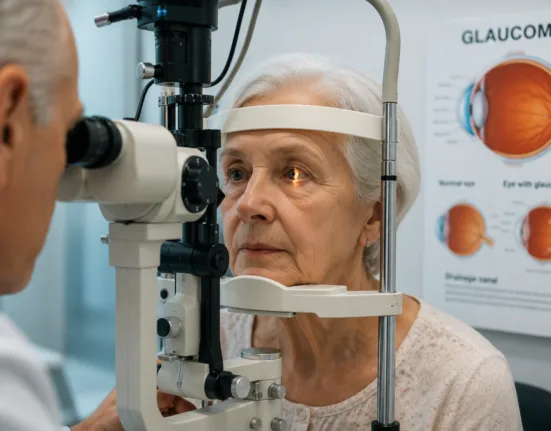
In glaucoma, the clinical proposition is particularly interesting because current care still revolves heavily around lowering intraocular pressure. That approach remains foundational, but it does not fully address progression in all patients. A therapy that targets ocular blood flow, optic nerve structure, and visual function could create a new clinical category if later trials confirm the early signal. The concept of a disease-modifying glaucoma therapy would be highly attractive because glaucoma remains a chronic, progressive condition where preventing structural and functional decline is the ultimate goal.
Diabetic retinopathy offers a different but equally important opportunity. Anti-VEGF treatment has transformed retinal disease management, yet many patients remain undertreated because disease progression, visit burden, access limitations, and injection fatigue complicate real-world care. PER-001’s proposed relevance to retinal ischemia gives Bayer a mechanism that could complement or potentially sit alongside established retinal therapies. However, diabetic retinopathy is clinically heterogeneous, and demonstrating consistent benefit across disease stages, baseline severity, and treatment backgrounds will be essential.
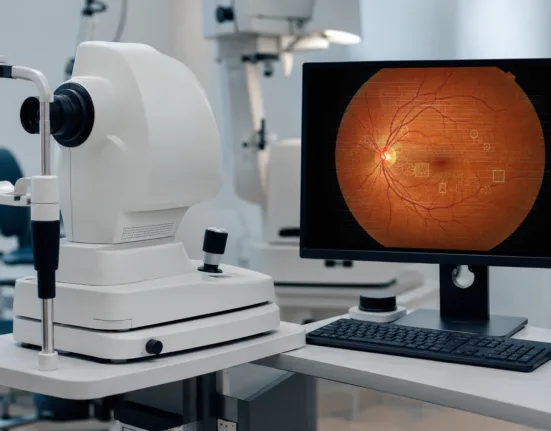
The unresolved question is whether PER-001 can move from promising biomarker and functional signals to robust, regulator-ready evidence. Small and mid-stage ophthalmology trials can create excitement, but pivotal studies must show reproducible benefit on endpoints that regulators, retina specialists, glaucoma specialists, and payers trust. Visual field measures, optical coherence tomography findings, ischemia-related markers, safety outcomes, and durability will all need to align convincingly.
Why the deal shows Bayer is rebuilding selectively rather than buying scale
The Perfuse transaction also says something about Bayer’s broader capital discipline. Bayer has been under investor scrutiny because of litigation liabilities, debt concerns, agricultural business pressures, and pharmaceutical patent exposure. In that context, a $2.45 billion headline value may look large, but the deal structure is comparatively cautious. The upfront payment is modest relative to the maximum potential value, pushing much of the economic risk into milestone-based execution.
That structure makes strategic sense. Bayer needs pipeline optionality, but it also needs to avoid overpaying for assets that remain scientifically unproven. Buying Perfuse gives Bayer control of PER-001 before pivotal-stage value inflation, while preserving some protection if the asset disappoints. It is the kind of deal that can be defended to investors because it addresses a known therapeutic area strength without requiring a transformational acquisition or immediate balance sheet shock.
At the same time, the acquisition does not solve Bayer’s pharmaceutical growth problem overnight. Eylea pressure, Xarelto erosion, and the need to scale newer assets mean Bayer still needs multiple growth drivers to work. PER-001 could become one of them, but only if the clinical development program moves cleanly into later-stage validation. For now, the acquisition improves Bayer’s ophthalmology narrative more than it changes near-term earnings expectations.
What makes the ophthalmology market harder than Bayer’s Eylea era
Bayer’s Eylea success was built in a period when anti-VEGF therapy became central to the treatment of multiple retinal diseases. That market is now more crowded and more demanding. Roche’s Vabysmo has raised expectations around durability and dual-pathway targeting. High-dose aflibercept formulations have attempted to defend the Eylea franchise by extending treatment intervals. Biosimilars and payer pressure are also changing the economics of mature anti-VEGF therapy.
This backdrop matters because PER-001 will not enter a static market. It will enter a field where clinicians are already comparing therapies through the lens of injection frequency, durability, anatomical outcomes, vision preservation, safety, reimbursement, and patient selection. A new mechanism can attract attention, but commercial adoption will depend on whether physicians see a clear reason to add or switch therapy in everyday practice.
For glaucoma, the competitive framework is different. Existing care includes drops, laser therapy, surgical interventions, and sustained-release approaches, but the central paradigm remains intraocular pressure control. PER-001’s differentiation would depend on demonstrating that it addresses disease biology beyond pressure reduction. That could be compelling, but it also increases the burden of proof because regulators and clinicians will look for durable, clinically meaningful evidence rather than mechanistic plausibility alone.
For diabetic retinopathy, the adoption challenge may be even more complex. Retina specialists already manage patients through a mix of observation, anti-VEGF therapy, laser, corticosteroids in selected settings, and systemic disease coordination. A new intravitreal implant would need to fit into that care pathway without adding unclear burden or safety uncertainty. Bayer’s commercial ophthalmology infrastructure gives it an advantage, but the product profile must still earn its place.
Why PER-001’s delivery model could become an advantage or a constraint
The sustained-release implant design is central to PER-001’s potential appeal. A six-month dosing profile could reduce treatment burden if efficacy is durable and safety remains clean. In ophthalmology, convenience is not a soft endpoint. It affects clinic scheduling, patient adherence, bilateral disease management, caregiver burden, and payer perceptions of real-world value.
However, implant-based delivery can also introduce adoption questions. Physicians will need confidence in insertion technique, reversibility, tolerability, inflammation risk, implant behavior, and long-term ocular safety. Even if the drug mechanism is attractive, the delivery platform must be practical enough for routine use across specialist settings. The more differentiated the product becomes, the more Bayer must support education, real-world evidence generation, and clinician confidence.
Manufacturing and quality control will also matter. Sustained-release intravitreal products require consistency in drug release, implant performance, sterility, and device-like reliability. Bayer has deep pharmaceutical and ophthalmology experience, but scaling a specialized implant therapy is different from commercializing a conventional injectable medicine. If PER-001 advances, chemistry, manufacturing, and controls could become a major part of the regulatory and commercial story.
What regulators and clinicians are likely to watch next
Regulatory watchers will focus on how Bayer designs the next stage of PER-001 development. The key issue is whether Bayer can define a pathway that satisfies both glaucoma and diabetic retinopathy expectations without overextending the asset too early. A dual-indication narrative is commercially attractive, but each indication has different clinical endpoints, comparator expectations, disease progression patterns, and safety considerations.
For glaucoma, the most important question is whether improvements in visual function and optic nerve structure can be reproduced in larger, longer, controlled trials. Since glaucoma progression can be slow, trial design will need to show meaningful benefit within a feasible timeframe. Regulators may also scrutinize whether the observed effects are independent of background intraocular pressure-lowering therapy and whether patient selection explains part of the signal.
For diabetic retinopathy, the focus will be on whether PER-001 can show improvements that matter clinically and commercially. Vision outcomes, retinal ischemia, anatomical structure, disease progression, and rescue therapy requirements may all shape the evidence package. Bayer will also need to show that PER-001 can be used safely in a population that may already require repeat ophthalmic interventions and close monitoring.
Clinicians tracking the field are likely to view PER-001 with cautious interest. The mechanism addresses a biologically plausible pathway, and early trial results have created momentum. Yet ophthalmology has seen many promising early assets struggle when exposed to larger trials, longer follow-up, and real-world heterogeneity. The next data readouts will therefore determine whether the Perfuse buyout becomes a landmark ophthalmology deal or another example of mid-stage promise meeting late-stage complexity.
How investors may read Bayer’s ophthalmology reset
Investor sentiment around Bayer is likely to remain mixed. On one side, the Perfuse acquisition reinforces the view that Bayer is willing to rebuild its pharmaceutical pipeline with targeted, science-led transactions. The upfront cost is manageable, the milestone structure is disciplined, and the asset fits an area where Bayer already has commercial credibility. That makes the deal strategically cleaner than a diversification move into an unfamiliar therapeutic category.
On the other side, investors are unlikely to treat PER-001 as a near-term solution to Bayer’s structural challenges. The asset is not yet approved, pivotal validation remains pending, and Eylea pressure is already visible. Bayer’s shares have had periods of recovery in 2026, but the company’s equity story continues to be shaped by litigation exposure, portfolio execution, pharmaceutical replacement risk, and confidence in management’s restructuring agenda.
The most constructive reading is that Bayer is trying to convert an aging ophthalmology franchise into a next-generation platform story. That is sensible, but not guaranteed. PER-001 gives Bayer a credible option in glaucoma and diabetic retinopathy, yet the acquisition’s real value will depend on whether the therapy can deliver disease modification, sustained benefit, clean safety, and payer-relevant differentiation.
The strategic conclusion is straightforward. Bayer is not buying Perfuse because Eylea can be extended forever. It is buying Perfuse because the next phase of ophthalmology competition may reward companies that move beyond vascular leakage control and toward broader disease biology. If PER-001 succeeds, Bayer could protect more than an Eylea legacy. It could regain momentum in one of the most commercially and clinically important areas of eye disease. If it fails, the deal will still remind the market how difficult it is to replace a blockbuster once patent, pricing, and competitive pressures begin to close in.