BioArctic AB’s partner Eisai Co., Ltd. has presented a new sales simulation for Leqembi, projecting that the Alzheimer’s disease therapy could reach around JPY 300 billion, or approximately SEK 17.6 billion, in sales for Eisai’s fiscal year 2028, which ends in March 2029. The update gives investors a fresh reference point for BioArctic’s royalty-linked growth story as Leqembi moves through a critical global commercialisation phase.
BioArctic said Eisai published the simulation during its Investor Relations Day. The Swedish biopharma company also stressed that the simulation should not be treated as formal Eisai guidance, a distinction that matters because Leqembi’s commercial trajectory remains exposed to diagnostic bottlenecks, infusion capacity, reimbursement decisions, physician adoption and regional regulatory timelines.
Leqembi, also known as lecanemab, is one of the most closely watched drugs in Alzheimer’s disease because it targets amyloid pathology and has been positioned as a disease-modifying treatment for early Alzheimer’s disease. For BioArctic, the drug is commercially important because the company invented Leqembi and is entitled to sales milestones and royalties on global sales under its long-running collaboration with Eisai.
The new sales simulation is not a guarantee. But it reinforces a central investment question around BioArctic: can Leqembi move from a scientifically important Alzheimer’s therapy into a commercially durable global franchise?
Why does Eisai’s Leqembi sales simulation matter for BioArctic?
Eisai’s latest simulation matters because BioArctic’s financial leverage to Leqembi depends heavily on global sales momentum. BioArctic does not carry the full commercial burden for Leqembi globally. Eisai is responsible for regulatory interactions and commercialisation worldwide, while BioArctic benefits through milestone payments and royalties.
That creates a highly attractive but also externally dependent model. BioArctic’s upside is tied to Eisai’s ability to expand Leqembi access, convert eligible patients into treated patients, manage payer negotiations and support real-world use of an Alzheimer’s therapy that requires careful diagnosis and monitoring.
The JPY 300 billion simulation for fiscal 2028 gives the market a number to anchor expectations beyond the near-term rollout. Earlier this month, BioArctic said Eisai had projected Leqembi revenue of JPY 143.5 billion for fiscal year 2026, covering April 2026 to March 2027, representing 63 percent growth year-on-year.

That makes the fiscal 2028 simulation important because it suggests continued scaling beyond the initial commercial ramp. Investors are not merely watching whether Leqembi sells. They are watching whether the drug can grow fast enough to justify the premium expectations already reflected in BioArctic’s share price.
What is Leqembi and why is its rollout different from conventional drugs?
Leqembi is a humanised immunoglobulin gamma 1 monoclonal antibody directed against aggregated soluble protofibril and insoluble forms of amyloid-beta. BioArctic said the therapy is approved in 53 countries and remains under regulatory review in six countries.
That broad regulatory footprint is meaningful, but Alzheimer’s commercialisation is not like launching a conventional oral chronic-care drug. Leqembi requires a more complex care pathway. Patients must be identified early, undergo appropriate diagnostic work-up, be assessed for amyloid pathology, receive treatment in suitable clinical settings and be monitored for safety risks.
This creates a slower and more infrastructure-dependent commercial ramp. Alzheimer’s disease has a huge patient population, but not every patient is eligible for anti-amyloid treatment. Health systems need memory clinics, imaging or biomarker capacity, infusion infrastructure, physician education and reimbursement support. In many markets, those systems are still catching up.
That is why Leqembi’s commercial story is both promising and frustrating. The addressable need is enormous, but the practical funnel from symptoms to treatment is narrow. Eisai’s ability to widen that funnel will determine whether the simulation becomes realistic.
How subcutaneous Leqembi could change the commercial equation
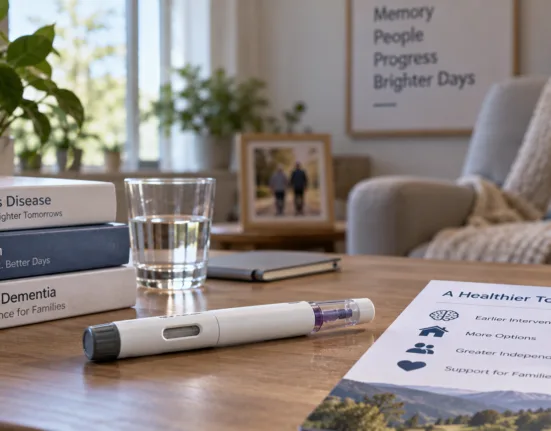
One of the most important future catalysts is the subcutaneous formulation of Leqembi. BioArctic said Leqembi Iqlik is approved in the United States for subcutaneous dosing with an autoinjector for maintenance treatment of early Alzheimer’s disease. The company also said a supplemental biologics license application for a subcutaneous starting dose was granted Priority Review by the United States Food and Drug Administration, with a PDUFA date set for August 24, 2026.
This matters because administration burden is one of the key barriers in Alzheimer’s therapy. Intravenous dosing can require infusion centre capacity, appointment scheduling and trained staff. A subcutaneous option could improve convenience, reduce system strain and make long-term treatment easier to manage if regulators approve broader use.
BioArctic also said a new drug application for subcutaneous Leqembi was submitted in Japan in November 2025, while the biologics license application for the subcutaneous formulation was accepted in China in January 2026 and designated for priority review in February 2026.
The commercial implication is clear. If subcutaneous dosing expands beyond maintenance treatment and gains broader regulatory acceptance, Leqembi could become easier to scale. That could improve persistence, reduce treatment friction and help Eisai reach larger patient populations. The small caveat, because biotech always keeps the party snacks locked away, is that regulatory acceptance and real-world adoption still have to happen.
What does the sales simulation imply for BioArctic’s royalty outlook?
BioArctic’s attraction to investors lies in the royalty economics. The company has no development costs for Leqembi in Alzheimer’s disease and is entitled to payments linked to sales milestones as well as royalties on global sales.
That structure can create operating leverage if Leqembi sales accelerate. Rising global sales could flow into BioArctic through royalties without the company bearing the same level of commercial spending as Eisai. This is why Leqembi sales updates tend to carry outsized importance for BioArctic’s equity story.
However, the royalty model also means BioArctic is highly dependent on another company’s execution. Eisai controls the global commercial engine. BioArctic can benefit from success, but it cannot independently force faster adoption in the United States, Japan, China, Europe or other major markets.
The fiscal 2028 simulation therefore acts as a sentiment marker. It tells investors that Eisai continues to see a substantial global sales opportunity. But because BioArctic itself notes that the simulation is not guidance, the market will likely want to see quarterly evidence before treating JPY 300 billion as a base-case outcome.
Why Alzheimer’s infrastructure remains the real bottleneck
Leqembi’s commercial challenge is less about whether Alzheimer’s disease is a large market and more about whether health systems can identify and treat the right patients efficiently.
The drug is designed for early Alzheimer’s disease, which makes early diagnosis critical. Yet many patients are diagnosed late, after cognitive decline has progressed. Even when patients present earlier, access to specialists, biomarker testing and imaging can vary significantly by country and region.
There is also the issue of safety monitoring. Anti-amyloid therapies require attention to amyloid-related imaging abnormalities, which means clinical adoption depends on physician comfort, MRI access and structured protocols. Payers also need to decide how broadly they will reimburse treatment and what diagnostic evidence they will require.
This creates a commercial paradox. Alzheimer’s disease represents one of the largest unmet needs in medicine, but the infrastructure for disease-modifying treatment is still being built. Leqembi’s sales curve will depend on how quickly that infrastructure matures.
How should investors read BioArctic’s stock sentiment?
BioArctic’s B share is listed on Nasdaq Stockholm Large Cap. Recent market data showed the stock trading around SEK 329.80, with the share price up more than 80 percent over the past year, while Yahoo Finance data showed gains across shorter time frames including one-month, six-month and year-to-date periods.
That strong performance suggests investors have already priced in a meaningful portion of Leqembi optimism. The new Eisai simulation can support sentiment, but it may not be enough by itself to drive a major re-rating unless investors see clearer proof that sales are tracking toward the longer-term scenario.
The sentiment is best described as constructive but evidence-sensitive. Investors are likely to welcome the JPY 300 billion fiscal 2028 simulation because it supports the royalty-growth narrative. At the same time, the stock’s strong one-year run means expectations are not exactly hiding under the sofa.
Near-term sentiment will likely depend on Leqembi sales trends, regulatory progress for subcutaneous formulations, reimbursement decisions, patient access growth and whether Eisai continues to narrow the gap between sales simulations and real-world revenue.
What risks could slow Leqembi’s path to JPY 300 billion sales?
The first risk is commercial execution. Alzheimer’s therapy adoption requires coordinated work across neurologists, memory clinics, diagnostics, payers and infusion networks. Even strong demand can be slowed by weak system capacity.
The second risk is reimbursement. Governments and insurers may apply strict eligibility criteria, especially in markets with constrained healthcare budgets. If reimbursement is narrow or slow, Leqembi’s addressable treated population may remain smaller than its clinical opportunity.
The third risk is competition. Alzheimer’s drug development remains active, and rival therapies or next-generation approaches could challenge Leqembi’s position over time. Even if Leqembi remains a leader, competition could pressure pricing, physician preference or treatment sequencing.
The fourth risk is safety perception. Anti-amyloid therapies have changed the Alzheimer’s landscape, but they require careful patient selection and monitoring. Any negative safety signal or real-world concern could influence adoption.
The fifth risk is the distinction between simulation and guidance. BioArctic’s own release notes that the Eisai simulation should not be seen as guidance. That gives investors a useful reminder: the number is strategically important, but not a formal forecast.
Can Leqembi become a durable Alzheimer’s franchise?
Eisai’s latest sales simulation keeps Leqembi at the centre of the Alzheimer’s commercialisation debate. A potential JPY 300 billion sales level in fiscal 2028 would represent a meaningful scale-up and could significantly strengthen BioArctic’s royalty-linked growth profile.
For BioArctic, the opportunity remains powerful. The company invented Leqembi, retains royalty exposure to global sales and has no Alzheimer’s disease development costs tied to the therapy. That gives it a clean financial upside if Eisai can turn clinical and regulatory progress into broader commercial adoption.
The challenge is that Alzheimer’s drug markets are not built overnight. Leqembi must move through diagnostic bottlenecks, reimbursement reviews, physician learning curves, safety-monitoring requirements and patient-access barriers. Subcutaneous formulations could help, but they are not a shortcut around the need for system-wide adoption.
The sales simulation is therefore a useful signal, not a settled outcome. It tells investors that Eisai still sees a large future market for Leqembi. The next test is whether quarterly sales, regulatory expansion and real-world treatment infrastructure can make that scenario feel less like a spreadsheet and more like a franchise.
For now, BioArctic’s Leqembi story remains one of the more closely watched Alzheimer’s commercialisation plays in European biotech. The science opened the door. The market is now asking whether global healthcare systems can walk through it fast enough.