Medtronic plc announced two pivotal regulatory and clinical milestones for its Affera Sphere-360 pulsed field ablation (PFA) catheter for the treatment of paroxysmal atrial fibrillation. The device has received CE Mark approval in Europe and initiated first patient procedures in the United States under the Horizon 360 Investigational Device Exemption (IDE) trial. The catheter is part of the Affera mapping and ablation system, which is designed to streamline atrial fibrillation workflows through an all-in-one, single-shot PFA solution.
What the CE Mark and IDE initiation reveal about Medtronic’s PFA strategy in 2026
These dual developments confirm that Medtronic plc is doubling down on a platform-based approach in the rapidly evolving field of pulsed field ablation, where clinical efficiency, anatomical adaptability, and catheter precision are becoming defining features of competition. With the Sphere-360 catheter now approved for commercial use in Europe and cleared for pivotal study in the United States, Medtronic is taking aggressive steps to broaden its PFA footprint beyond its PulseSelect system and into next-generation integration with mapping and navigation.
The CE Mark is not just a regulatory win. It represents Medtronic’s ability to align its engineering roadmap with European trial endpoints, as data from a prospective, single-arm, multi-center European study formed the foundation for regulatory approval. According to physicians familiar with the trial, the Sphere-360 device demonstrated safety and lesion durability consistent with or exceeding expectations for a rotation-free, single-shot ablation approach. Clinical durability at one year was a key benchmark that moved the system toward CE approval, and its presentation at the Heart Rhythm Society in 2025 added external validation to the data package.
In parallel, the U.S. IDE trial known as Horizon 360 signals that the company is now preparing to stake a larger claim in the American PFA market, where Boston Scientific’s FARAPULSE and other players have made significant inroads. Horizon 360 is a single-arm, prospective pivotal trial designed to evaluate safety and effectiveness in treating paroxysmal atrial fibrillation using the Sphere-360 catheter integrated into the Affera system. Industry observers see this as a sign that Medtronic intends to use its experience with the FDA on PulseSelect to accelerate its PFA pipeline across indications.
How Sphere-360 could redefine the single-shot PFA category through lattice-based design
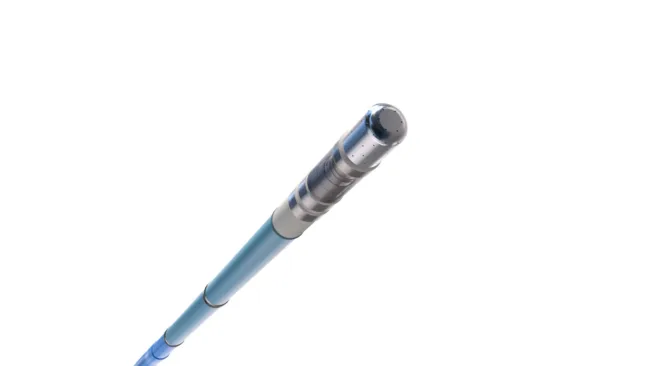
What sets Sphere-360 apart from existing PFA catheters is its adjustable, non-rotational lattice design. Unlike balloon-based or traditional circular catheters, Sphere-360 employs a 34 mm conformable lattice that reshapes to fit diverse pulmonary vein anatomies without requiring catheter rotation. This offers procedural simplicity and the potential for lesion consistency, which are both major selling points in atrial fibrillation ablation where operator variability and anatomical diversity often complicate outcomes.
The system is also designed to deliver circumferential lesions in a single shot, which can reduce procedure time and catheter exchanges. It combines navigation, mapping, and ablation in one catheter, requiring only a single transseptal puncture. The catheter integrates with the FlexCath Contour sheath and provides real-time local impedance feedback, allowing for energy delivery adjustments based on tissue proximity. Physicians have also highlighted its over-the-wire design as a factor improving access and stability during pulmonary vein isolation.
Clinicians tracking the field believe this architecture addresses two major pain points in PFA adoption: procedural complexity and intra-patient anatomical variability. A single-shot solution that avoids rotation while maintaining lesion durability could provide a competitive edge over balloon-based or multi-step systems that require repositioning and energy titration at multiple sites.
Why Medtronic’s Affera platform play raises stakes in the PFA platform war
The Affera ecosystem is no longer just a mapping and ablation system—it is shaping up to be Medtronic’s centerpiece for building an integrated PFA platform. Sphere-360 joins Sphere-9, the previously approved all-in-one catheter that delivers both thermal and pulsed field energy, in expanding the use cases for the Affera system. Sphere-9 is already indicated for persistent atrial fibrillation and atrial flutter, and its dual-energy profile differentiates it from single-modality systems in the market.
While PulseSelect continues to serve as Medtronic’s commercial workhorse across more than 35 countries, Sphere-360 appears positioned to push the Affera platform deeper into high-throughput electrophysiology labs. Its entry into the U.S. market, if approved, would allow the company to drive procedural consolidation—mapping, navigation, and ablation—within a single vendor ecosystem. This could increase physician loyalty and reduce cross-platform friction, both commercially and clinically.
Industry analysts suggest that this vertical integration strategy mirrors broader medical device trends, where platform dominance is increasingly valued over standalone device performance. The Affera system, with its dual-catheter options and compatibility across multiple geographies, fits into this emerging pattern.
What regulatory and adoption risks remain as Medtronic ramps global rollout
Despite strong early trial data, the Sphere-360 device remains investigational in the United States. The Horizon 360 trial is critical not only for regulatory approval but also for confirming whether its European performance metrics hold up across more heterogeneous patient populations and procedural standards. The single-arm nature of both trials—European and U.S.—leaves open questions about comparative efficacy versus other PFA systems already on the market.
Regulatory watchers also note that the pathway for approval in Japan, Australia, and other regions remains undefined for Sphere-360, even as Sphere-9 and the core Affera system have secured clearance. The speed and consistency of global regulatory synchronization will influence market uptake and physician switching costs.
In terms of adoption, scalability of manufacturing for lattice-based catheters, sheath compatibility constraints, and pricing models may influence uptake. It remains unclear whether reimbursement authorities will treat the Sphere-360 system differently from traditional PFA systems given its added mapping capabilities and catheter complexity. These variables will factor heavily into hospital procurement decisions, particularly in value-conscious markets.
Why this raises broader implications for PFA trial design and catheter evolution
The Sphere-360 milestone may also influence how future pulsed field ablation systems are evaluated. As single-shot systems become more sophisticated and combine mapping and ablation, traditional trial endpoints based solely on lesion durability or acute safety may no longer suffice. Multi-modal evaluation—including procedural time, operator consistency, and anatomical adaptability—could become more important.
For device manufacturers, this adds pressure to invest in catheter designs that do more with fewer procedural steps. The success or failure of Sphere-360 may define whether future PFA catheters will be judged by their lesion consistency alone or by their ability to function as workflow accelerators in busy labs.
Clinicians and regulators alike will be watching how well the Horizon 360 trial translates Sphere-360’s European momentum into broad U.S. clinical utility—and whether this signals a shift in how PFA systems are benchmarked in the years ahead.